 All Posts


A strong chargeback escalation process is not about fighting every dispute.
It is about controlling risk before it spreads.
Processors evaluate patterns, volatility, deadline discipline, and response consistency. If your dispute escalation ecommerce strategy lacks structure, your merchant account becomes unstable.
This guide explains how to build a scalable chargeback escalation process that protects revenue, improves win rates, and strengthens processor relationships.
Why a Formal Chargeback Escalation Process Matters
Every chargeback affects more than a single transaction.
It impacts:
• Your chargeback ratio
• Your merchant risk score
• Monitoring program placement
• Rolling reserve exposure
• Payout stability
If you understand how processors evaluate merchants in Chargeback Risk Scoring: How Processors Evaluate Merchants, you already know that behavior patterns matter more than isolated cases.
Escalation determines whether disputes reduce or amplify risk.
Without structure, brands:
• Miss deadlines
• Submit inconsistent evidence
• Escalate weak cases
• Refund strong cases
• Ignore issuer performance trends
That is how reserves start. If you have seen how this unfolds in How Chargebacks Trigger Rolling Reserves (and How to Stop Them), you know prevention must start earlier.
Escalation is risk control.
What a Real Chargeback Escalation Framework Includes
A true chargeback escalation process defines:
• Which disputes auto-refund
• Which disputes are contested
• Which disputes escalate to representment
• Which disputes move to pre-arbitration
• Which cases require processor outreach
It also defines ownership and automation triggers.
Most ecommerce teams treat disputes equally.
That is inefficient.
Issuer behavior varies significantly. As explained in Why Issuer Behavior Matters More Than Reason Codes, issuers have different recovery patterns.
Escalation must account for that data.
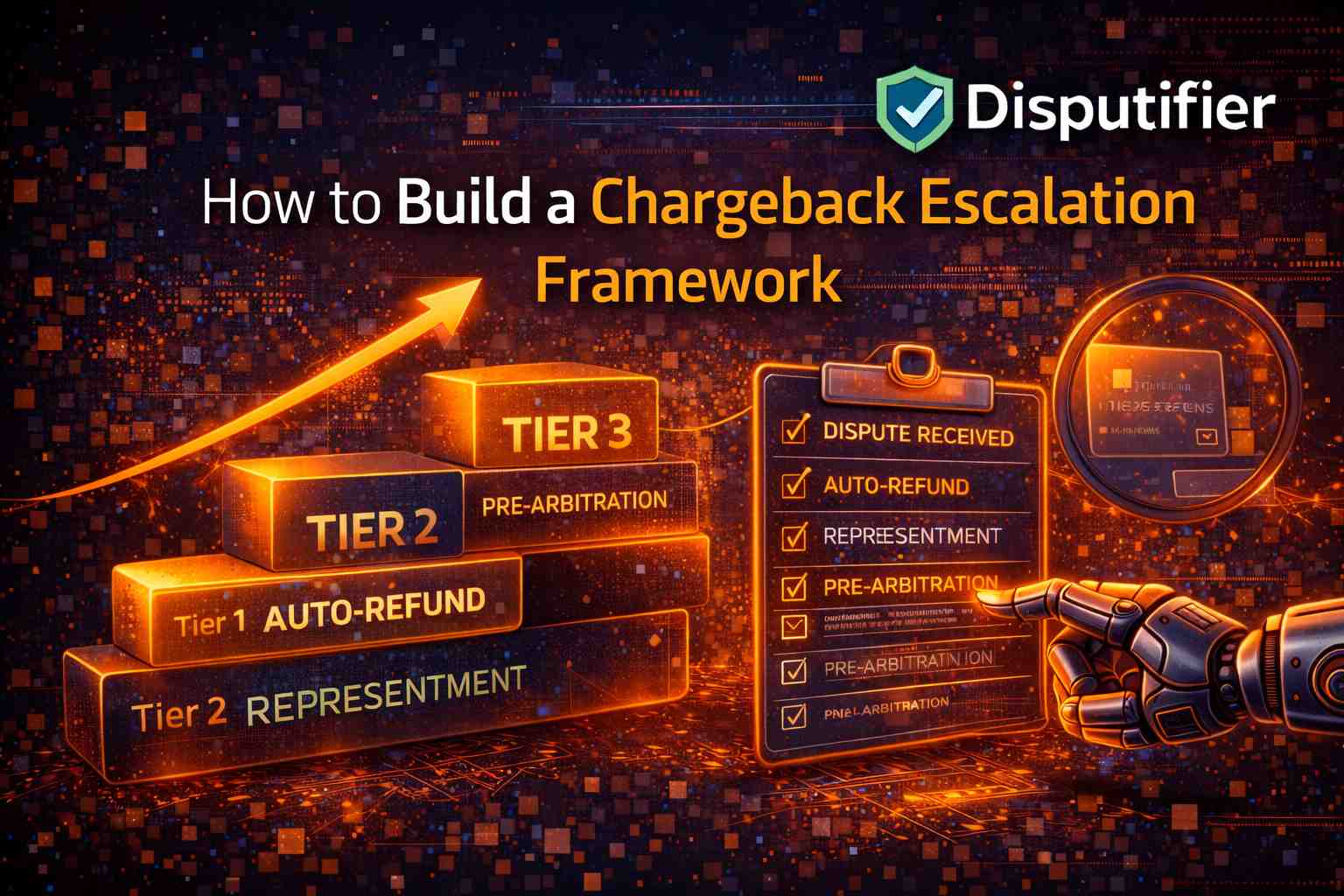
Step 1: Build Escalation Tiers
Start with three tiers.
Tier 1: Low-value or low-evidence disputes
Auto-refund when recovery odds are low.
Tier 2: Standard disputes
Submit structured evidence packages automatically.
Tier 3: High-value or high-risk disputes
Escalate with enhanced review, stronger documentation, and potential pre-arbitration action.
Manual workflows collapse under volume. We outline the failure point in When Manual Chargeback Handling Breaks Down for Ecommerce Brands.
Tiering improves efficiency and recovery outcomes.
Step 2: Use Data to Drive Escalation Decisions
Escalation must rely on signals.
Key inputs include:
• BIN intelligence
• Historical issuer win rates
• Fraud risk scoring
• Carrier confirmation
• Order history
• Reason code clustering
If you are not analyzing BIN data, you are missing a major issuer performance indicator. Review BIN Numbers Explained: How Banks, Regions, and Risk Scores Affect Your Payouts.
You can also evaluate issuer data instantly with Disputifier’s free BIN lookup tool.
Escalation becomes smarter when issuer risk analysis is embedded.
Step 3: Align Escalation With Deadlines and SLAs
A dispute escalation ecommerce strategy fails if deadlines slip.
Networks enforce strict timelines. Missing one response window can permanently forfeit recovery.
We detail this in Chargeback SLAs, Deadlines, and Automation Triggers Explained.
Your system must:
• Auto-track representment windows
• Trigger alerts before SLA expiration
• Escalate cases prior to pre-arbitration deadlines
• Log compliance rates
Manual tracking increases risk.
Automation protects margin.
Step 4: Integrate Escalation With Fraud Intelligence
Escalation does not begin at dispute receipt.
It begins at checkout.
Strong fraud controls improve dispute outcomes. Integrated systems that combine alerts, carrier validation, BIN data, and AI reduce friendly fraud exposure.
We explain how this works in Ecommerce Fraud Prevention Strategy: How AI, BIN Data, and Alerts Work Together.
Escalation improves when prevention data feeds dispute logic.
Step 5: Track Escalation Performance
Measure escalation effectiveness with:
• Win rate by issuer
• Win rate by reason code
• Refund-to-contest ratio
• Deadline compliance rate
• Chargeback ratio trend
If you need benchmark context, see How Often Do Merchants Win Chargebacks - and How to Improve Your Odds.
Escalation without measurement creates blind spots.
Step 6: Automate the Chargeback Escalation Process
A chargeback escalation process must be enforced automatically.
High-volume brands cannot rely on inbox alerts or spreadsheets. True scale requires automation.
See what scalable systems look like in Chargeback Automation for High-Volume Ecommerce Stores.
Automation ensures:
• Disputes route into correct tiers
• Evidence compiles consistently
• Deadlines trigger alerts
• Risk signals adjust priority
Automation enforces discipline.
How Disputifier Powers a Structured Chargeback Escalation Process
Disputifier was built for ecommerce brands that need control.
It combines:
• AI dispute classification
• BIN intelligence and issuer behavior analysis
• Automated SLA tracking
• Structured evidence assembly
• Escalation routing logic
• Real-time risk monitoring
Instead of reacting to disputes, Disputifier evaluates them.
It identifies which cases justify escalation.
It flags issuer risk patterns before they increase processor pressure.
If you want to understand how AI improves recovery outcomes, review AI Chargeback Management: How Machine Learning Increases Win Rates.
If your focus is long-term protection, read How Chargeback Software Protects Merchant Accounts Long-Term.
The objective is not just winning disputes.
It is reducing volatility and protecting your merchant account.
Escalation and Merchant Account Stability
Processors monitor volatility closely.
Inconsistent escalation increases perceived risk.
Structured escalation reduces spikes.
Lower volatility reduces reserve risk.
Improved compliance strengthens processor trust.
Escalation protects long-term payout stability.
Why Founders Must Prioritize Dispute Escalation Ecommerce Strategy
Chargebacks influence:
• Cash flow
• Processor confidence
• Monitoring thresholds
• Brand risk profile
Escalation maturity signals operational strength.
Reactive dispute handling signals instability.
If you scale revenue without escalation discipline, processor scrutiny follows.
Frequently Asked Questions
What is a chargeback escalation process?
A chargeback escalation process is a structured system that determines which disputes are refunded, contested, escalated, or closed based on risk data and issuer behavior.
How does dispute escalation ecommerce improve recovery?
It uses tiering, automation, and issuer intelligence to prioritize high-recovery disputes and reduce wasted effort.
When should a dispute be escalated?
Escalate high-value cases, strong-evidence cases, and disputes involving issuers with favorable recovery trends.
Can automation improve escalation outcomes?
Yes. Automation enforces deadlines, standardizes evidence, and routes disputes correctly based on risk signals.
How does Disputifier strengthen escalation performance?
Disputifier integrates AI, BIN analysis, deadline tracking, and structured escalation routing to improve win rates and protect merchant accounts.
Build Escalation Discipline Before Risk Escalates
Processors escalate risk when merchants fail to control it.
A structured chargeback escalation process reduces volatility, improves recovery, and stabilizes your merchant account.
Use automation.
Use issuer intelligence.
Use structured tiering.
Use Disputifier.
Start by analyzing issuer exposure with the free BIN lookup tool and build escalation logic backed by data.