 All Posts


Payment processors don’t wait for your chargeback ratio to cross an official threshold before they act.
They score risk continuously. And once your chargeback risk score climbs, you can see fund holds, rolling reserves, payout delays, higher processing fees, or even account termination.
Most ecommerce brands focus on disputes after they happen. Processors focus on whether you look predictable, controlled, and low-risk before the next wave hits.
This guide explains how merchant risk scoring works, what factors drive it, and how Disputifier helps you reduce chargeback risk signals before processors pull financial levers.
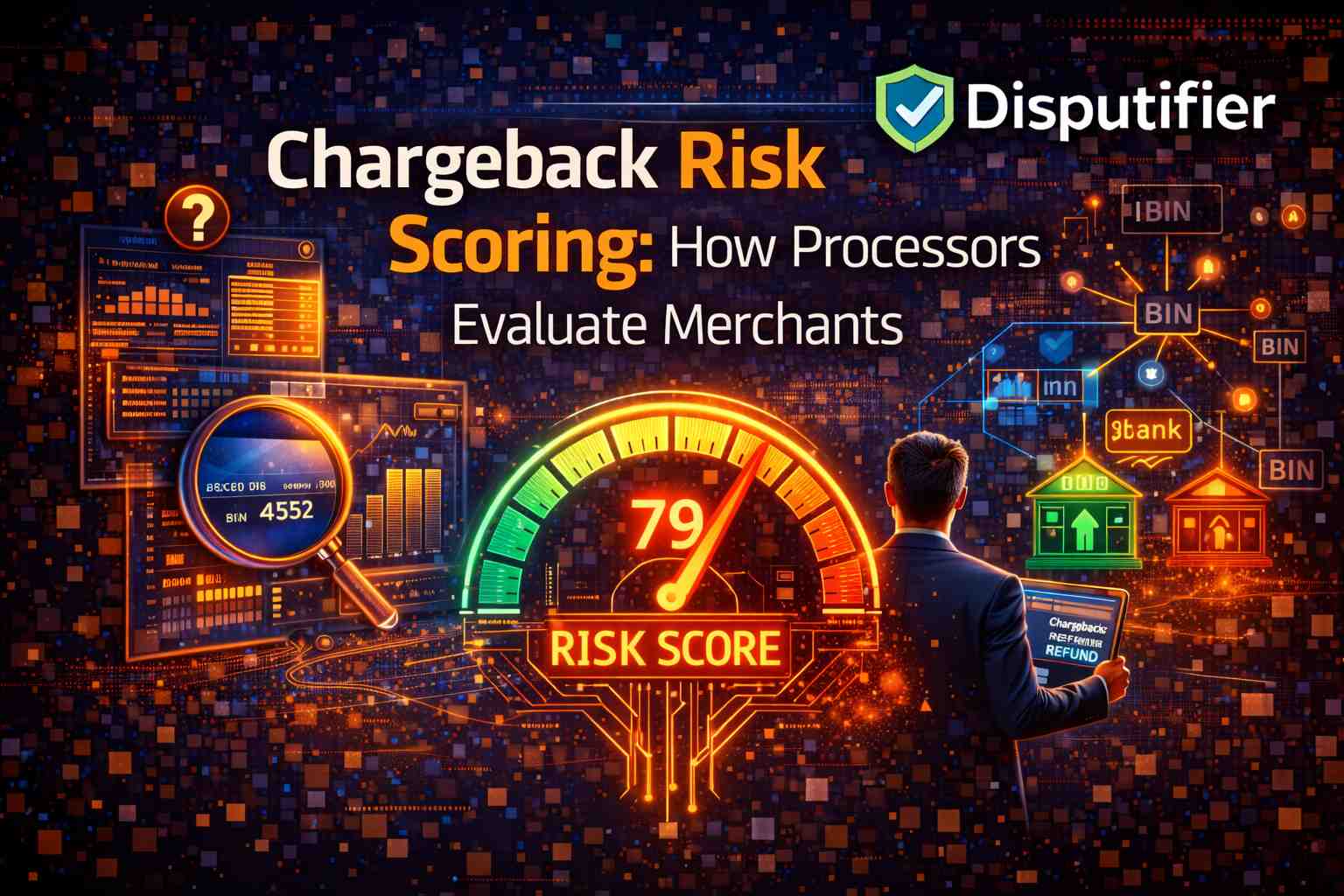
What Is a Chargeback Risk Score?
A chargeback risk score is not a single universal number that every processor shares. It’s a risk model.
Processors use internal scoring systems to estimate the likelihood you will generate future losses. Chargebacks play a major role because they correlate strongly with fraud, customer dissatisfaction, and operational issues.
Think of it this way: processors run a continuous “should we restrict this merchant?” calculation. Your risk score determines how quickly they escalate.
This is why merchants get blindsided. You can feel “fine” while your processor’s model says you are trending toward “high risk.”
Why Processors Care More Than Card Networks
Card networks create monitoring programs and ratio thresholds. Processors deal with the day-to-day exposure.
Processors sit closest to the cash flow. They carry reputational and financial risk when merchants spike disputes, fail to respond, or generate fraud-heavy volume.
That’s why processors act early.
If you want a clear picture of what happens when risk signals increase, start with How chargebacks trigger rolling reserves (and how to stop them).
The Top Signals That Increase Merchant Risk Scoring
Processors score merchants across multiple categories. Chargebacks influence most of them.
Here are the biggest drivers.
Chargeback ratios and trend velocity
Processors score not just your current ratio, but the direction it’s moving.
A rising ratio is often more dangerous than a high but stable one. Sudden spikes signal future losses.
If you want a clean breakdown of ratio math and why it matters, see Chargeback ratios explained: why they matter for your merchant account.
If you’re actively trying to pull your ratio down, this is the most tactical next read: How to lower your chargeback ratio below 1%.
Dispute response behavior and missed deadlines
Processors monitor whether you respond on time and how often you fail to represent.
Even one missed deadline can create a pattern in the processor’s model. At scale, manual workflows break and missed deadlines become predictable.
This is why manual dispute handling becomes a risk factor by itself, covered in When manual chargeback handling breaks down for ecommerce brands.
Refund rate and refund timing
Refunds can lower chargeback volume, but certain refund patterns can still look risky.
Late refunds, inconsistent refund decisions, or refund spikes after disputes begin signal operational issues. Processors interpret these patterns as poor customer experience control.
Fraud exposure and order risk profile
High-risk transactions increase exposure even before disputes happen.
That includes international shipping, digital goods, subscription models, and high-AOV orders with weak verification.
This is why prevention systems matter. If you want a modern prevention framework, read Ecommerce fraud prevention strategy: how AI, BIN data, and alerts work together.
Evidence quality and dispute outcomes
Win rate matters, but processors also look at how “clean” your disputes are.
Messy evidence packs, inconsistent documentation, or repeated friendly fraud patterns signal weak operational control.
If you want realistic expectations about outcomes, start here: How often do merchants win chargebacks and how to improve your odds.
Issuer Behavior Is a Hidden Risk Scoring Layer
A lot of merchants assume reason codes explain their dispute reality.
They don’t. Issuer behavior drives outcomes and patterns.
Processors know this. They track which issuers generate disputes that merchants struggle to win. If your customer base skews toward aggressive issuers, your risk score can climb even if you do “everything right.”
This is why issuer behavior deserves its own strategy layer, explained in Why issuer behavior matters more than reason codes.
BIN Data Connects Risk Scoring to Real Issuer Patterns
BIN intelligence links transactions to banks, regions, and issuer-level risk tendencies.
When you track BIN trends, you can identify:
- which issuers generate the most disputes
- which regions produce the lowest win rates
- which BIN ranges correlate with fraud patterns
- which payment methods or order types attract disputes
This is not academic. It is one of the most practical ways to lower chargeback risk score because it reduces repeatable dispute sources.
If you want the foundation, read BIN numbers explained: how banks, regions, and risk scores affect payouts.
You can also explore BIN patterns directly using Disputifier’s free BIN checker.
Why Some Merchants Get Holds Even With “Normal” Ratios
Processors don’t only score chargeback ratios. They score fragility.
You can have a “reasonable” ratio and still trigger holds if:
- your disputes spike unpredictably
- your refund behavior looks reactive
- your evidence submission looks inconsistent
- you operate a high-risk model without strong prevention controls
This is why many merchants see unexpected fund restrictions, explained in Why Stripe and Shopify hold funds and how to avoid payout delays.
How Disputifier Lowers Your Chargeback Risk Score
Disputifier helps merchants reduce the signals processors score.
It does that by tightening control across disputes, prevention, and analytics.
Here’s what that looks like in practice.
Centralized dispute workflow control
Disputifier removes the chaos of scattered inboxes, spreadsheets, and manual evidence building.
You get a single system that helps ensure consistent responses and fewer missed deadlines.
This aligns with the need to upgrade away from manual workflows described in Dispute management software vs manual workflows.
Automation that scales with volume
Processors score operational stability. Automation creates stability.
Disputifier reduces human error and increases response consistency, which helps lower perceived merchant risk.
If you want to see what scaling merchants need, read Chargeback automation for high-volume ecommerce stores.
Analytics that prevent future disputes
Disputifier doesn’t stop at dispute response. It uses analytics to identify patterns that create chargebacks.
That predictive layer matters because processors care about what happens next.
For the analytics foundation, see How AI chargeback analytics predict future disputes.
Merchant account protection outcomes
At the executive level, merchant account stability matters more than winning one dispute.
Disputifier supports long-term account protection by reducing chargeback signals and increasing processor trust.
For that founder-level framing, read How chargeback software protects merchant accounts long-term.
Use Disputifier to Reduce Risk Scoring in 3 Steps
Step 1: Identify your risk drivers
Use analytics to pinpoint the chargeback sources causing instability and rising ratios.
Step 2: Automate dispute handling
Reduce missed deadlines, inconsistent submissions, and operational fragility that processors score heavily.
Step 3: Prevent repeat disputes using BIN intelligence
Flag high-risk BIN patterns and improve fraud and order screening using BIN insights. Start with the free BIN checker.
FAQ
What is a chargeback risk score?
A chargeback risk score is how processors estimate your likelihood of future dispute-related losses based on chargebacks, fraud signals, operational behavior, and trend patterns.
Is merchant risk scoring the same as chargeback ratio?
No. Ratios are one input. Processors also score volatility, dispute workflow quality, fraud exposure, refund behavior, and issuer patterns.
Why do processors apply rolling reserves?
Processors apply rolling reserves when your risk signals suggest future losses. The relationship between disputes and reserves is explained in How chargebacks trigger rolling reserves (and how to stop them).
Can BIN data help lower chargeback risk score?
Yes. BIN data helps identify issuer and regional patterns that predict disputes, which improves prevention and reduces repeatable loss sources.
How fast can Disputifier help reduce processor risk signals?
Merchants typically stabilize risk signals within one to two billing cycles once dispute automation and prevention controls are implemented consistently.
Lower Your Chargeback Risk Score Before Processors Restrict Your Cash Flow
Processors don’t wait for you to “figure it out.” They score risk continuously.
Disputifier helps you reduce chargeback signals, tighten dispute workflows, and prevent repeat disputes with analytics and BIN intelligence.
If you want to spot risk patterns before they become reserves or holds, start with the free BIN checker.