 All Posts


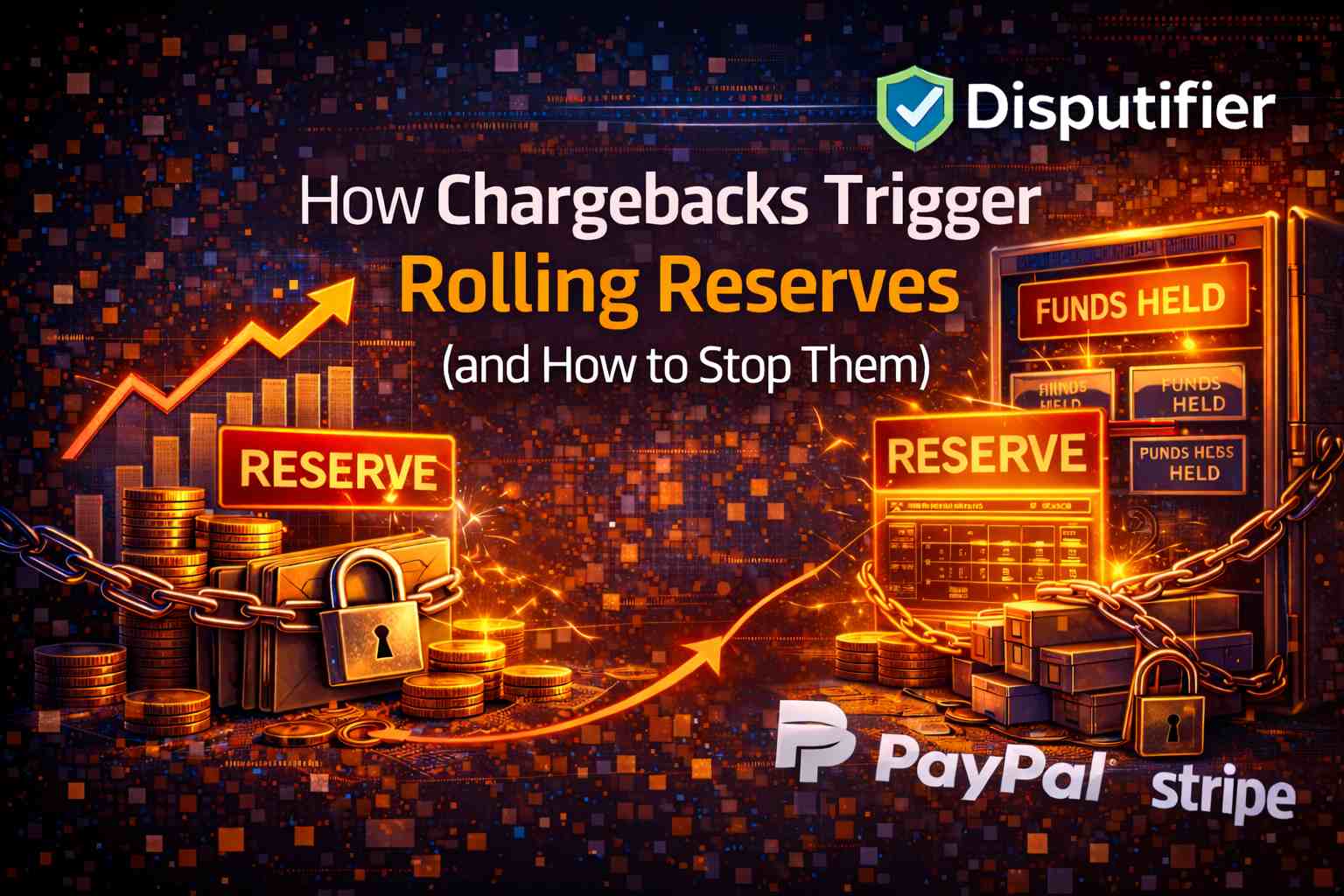
Rolling reserves are one of the fastest ways payment processors limit a growing ecommerce business. They freeze cash flow, restrict scale, and signal that your merchant account is under review. While processors rarely explain reserve decisions clearly, chargebacks sit at the center of almost every case.
Understanding how chargebacks trigger rolling reserves gives merchants leverage. More importantly, it shows why prevention, analytics, and automation matter more than reacting after the damage is done.
What Rolling Reserves Actually Are
A rolling reserve is a portion of your revenue that a payment processor withholds for a fixed period, often 90 to 180 days. Processors use reserves to protect themselves against chargeback losses, refunds, and fraud risk.
Unlike outright account termination, reserves are a warning shot. They tell you the processor believes your business presents elevated financial risk.
The most common triggers include rising chargeback ratios, inconsistent dispute responses, refund delays, and poor fraud controls. Among these, chargebacks carry the strongest signal.
If your chargeback ratio approaches or exceeds network thresholds, processors often respond before card brands intervene. This is why understanding how reserves start matters more than knowing the official rules.
Why Chargebacks Signal Risk to Payment Processors
Processors do not evaluate chargebacks the same way merchants do. Merchants look at reason codes and individual disputes. Processors look at patterns.
High chargeback volume suggests poor customer experience, weak fraud controls, or operational instability. Even when you win disputes, the presence of frequent chargebacks still raises concern.
This is why many merchants are shocked when reserves appear even though their win rates are solid. Winning disputes does not eliminate processor risk perception.
Articles like how often merchants win chargebacks and how to improve your odds explain dispute outcomes. Reserve decisions sit one layer above that.
Processors care about predictability. Chargebacks introduce uncertainty.
The Chargeback Ratio Problem
Card networks define acceptable chargeback thresholds, but processors rarely wait until you cross them. They act early.
If you are not tracking your ratio carefully, you may not realize how close you are to a risk review. This is why understanding ratios matters, especially as order volume grows.
The breakdown in chargeback ratios explained and why they matter for your merchant account shows how quickly ratios can spike with just a small increase in disputes.
When processors see a ratio trending upward, reserves often follow.
Why Manual Chargeback Handling Makes Reserves More Likely
Manual workflows introduce delays, inconsistency, and blind spots. When disputes come in across multiple processors or sales channels, it becomes difficult to maintain clean response timelines and evidence quality.
This breakdown is covered in detail in when manual chargeback handling breaks down for ecommerce brands.
From a processor perspective, manual handling looks risky. Missed deadlines, partial responses, or inconsistent outcomes signal a lack of control.
Even if your team is competent, manual systems do not scale. At volume, mistakes compound.
Rolling Reserves and Platform-Specific Risk
Processors like PayPal and Stripe monitor chargebacks aggressively because they sit between merchants and card networks.
PayPal, in particular, uses rolling reserves as a first-line risk response. This behavior is covered in PayPal chargeback automation and how to stop disputes from turning into rolling reserves.
Stripe behaves similarly, often applying holds when dispute activity suggests future losses. The mechanics behind this are explained in why Stripe and Shopify hold funds and how to avoid payout delays.
The takeaway is simple. If your chargebacks look unmanaged, reserves become the default safety mechanism.
Why Dispute Prevention Matters More Than Dispute Recovery
Fighting chargebacks matters. Preventing them matters more.
Processors care about what happens before a dispute reaches the network. Alerts, early refunds, customer communication, and fraud screening all reduce risk signals.
This is why brands that invest in prevention tend to avoid reserves even at scale. The strategy behind this is outlined in ecommerce fraud prevention strategy and how AI, BIN data, and alerts work together.
Once reserves are applied, reversing them takes time. Preventing them avoids the damage entirely.
How Disputifier Stops Rolling Reserves Before They Start
Disputifier is designed to reduce the exact signals that trigger rolling reserves.
It centralizes dispute data across processors, analyzes chargeback patterns, and automates response workflows. More importantly, it feeds insights back into prevention.
Instead of reacting dispute by dispute, merchants see trends in issuer behavior, fraud sources, and customer patterns. This predictive layer is what processors want to see.
The system’s analytics engine builds on concepts covered in how AI chargeback analytics predict future disputes, but applies them operationally.
Disputifier also integrates BIN intelligence, allowing merchants to identify high-risk issuers and regions before disputes spike. This approach is explained in BIN numbers explained and how banks, regions, and risk scores affect payouts.
You can test this layer directly using Disputifier’s free tool at the free BIN checker.
Automation Creates Processor Confidence
Processors look for consistency. Automated dispute handling provides it.
When responses are timely, evidence is standardized, and outcomes are predictable, processors see control. This lowers perceived risk even when volume grows.
The difference between manual workflows and automated systems is outlined in dispute management software vs manual workflows and when ecommerce brands need to upgrade.
Disputifier acts as a control layer that processors implicitly trust because it reduces uncertainty.
High-Volume Merchants Face Higher Stakes
As volume increases, even small increases in disputes carry outsized impact. This is why high-growth brands face reserves more often.
The mechanics of scaling safely are covered in chargeback automation for high-volume ecommerce stores.
Without automation and analytics, growth increases reserve risk. With the right system, growth becomes safer.
How to Use Disputifier to Reduce Reserve Risk in 3 Steps
First, centralize all chargeback data into one system so patterns become visible.
Second, automate dispute responses to eliminate delays, errors, and inconsistency.
Third, use analytics and BIN intelligence to prevent disputes before they reach processors.
This process aligns with what payment processors want to see: control, predictability, and proactive risk management.
Why Waiting Is Risky
Many merchants wait until reserves appear before changing their systems. At that point, cash flow damage is already done.
Rolling reserves are not random. They follow signals. Chargebacks are one of the strongest.
Disputifier exists to remove those signals.
FAQ
What chargeback ratio triggers rolling reserves?
Processors may act before network thresholds are breached. Even ratios below 1 percent can trigger reserves if trends look unstable.
Can winning disputes prevent reserves?
Winning helps but does not eliminate risk. Processors care about dispute volume and predictability, not just outcomes.
Do rolling reserves go away automatically?
Usually not. Processors review accounts periodically, and reserves lift only after sustained improvement.
How fast can Disputifier reduce reserve risk?
Many merchants see risk signals stabilize within one to two billing cycles as automation and prevention take effect.
Is BIN data really that important?
Yes. Issuer behavior often matters more than reason codes. BIN-level analysis reveals hidden risk patterns.
Protect Your Cash Flow Before Processors Intervene
Rolling reserves freeze growth and strain operations. They are not inevitable.
Disputifier gives ecommerce brands the tools processors expect at scale. If chargebacks threaten your cash flow, now is the time to fix the signal, not manage the fallout.
Explore Disputifier, activate intelligent automation, and protect your merchant account long-term.