 All Posts


Every ecommerce transaction carries more information than just card digits. Hidden in the first six to eight numbers of every card is the BIN - the bank identification number. These numbers determine the issuing bank, card type, card level, country of origin, and even risk factors that influence whether an order is safe, fraudulent, or likely to turn into a chargeback.
Understanding what a BIN is and how BIN data impacts your risk scoring, fraud exposure, and payout stability is essential for merchants processing online payments. If you run international orders, subscription billing, or higher-risk products, BIN analysis becomes even more important.
This guide breaks down what BIN numbers mean, how banks use them, how regions influence risk, and how merchants can use BIN intelligence to prevent fraud, reduce chargebacks, and protect payouts.
What Is a BIN?
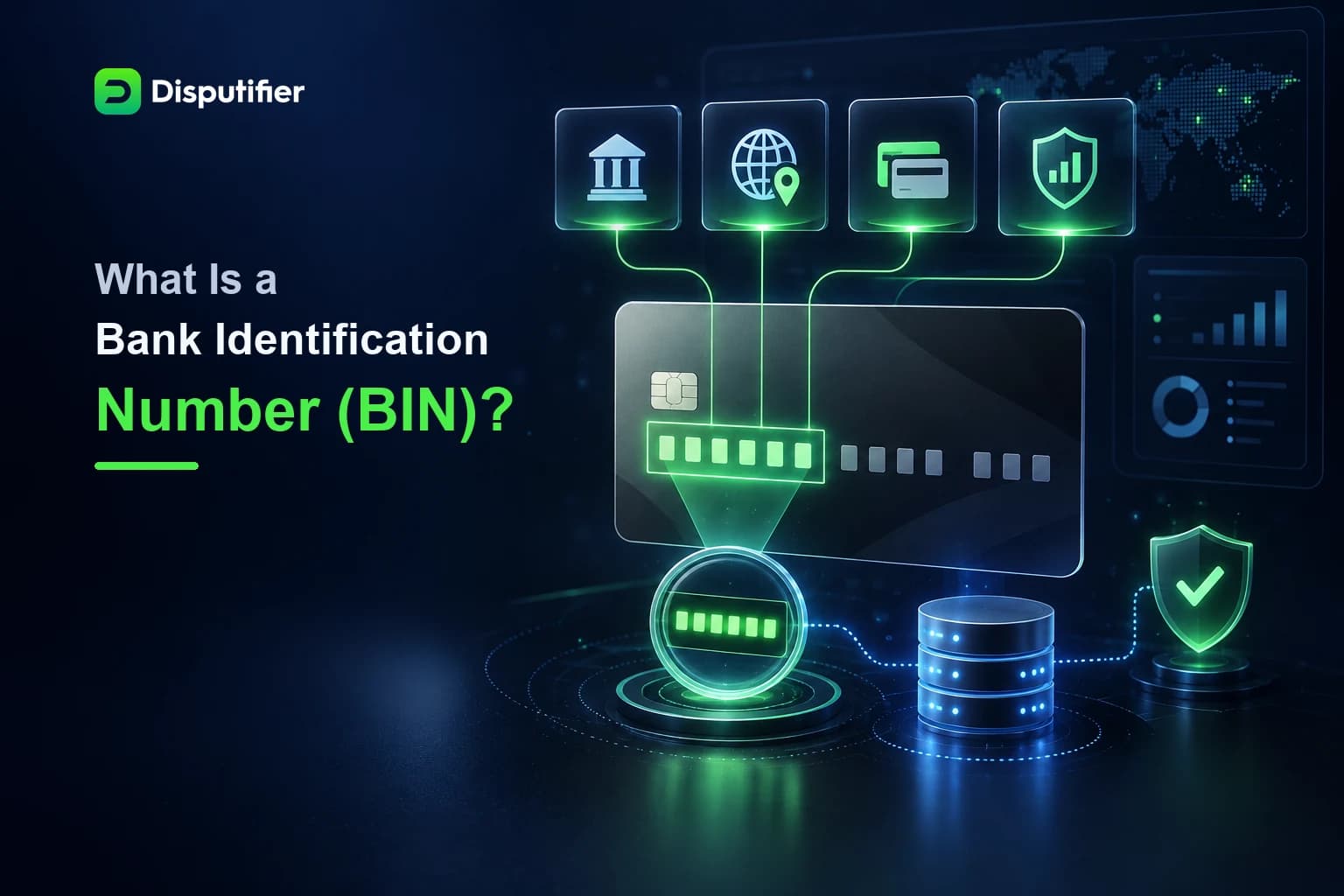
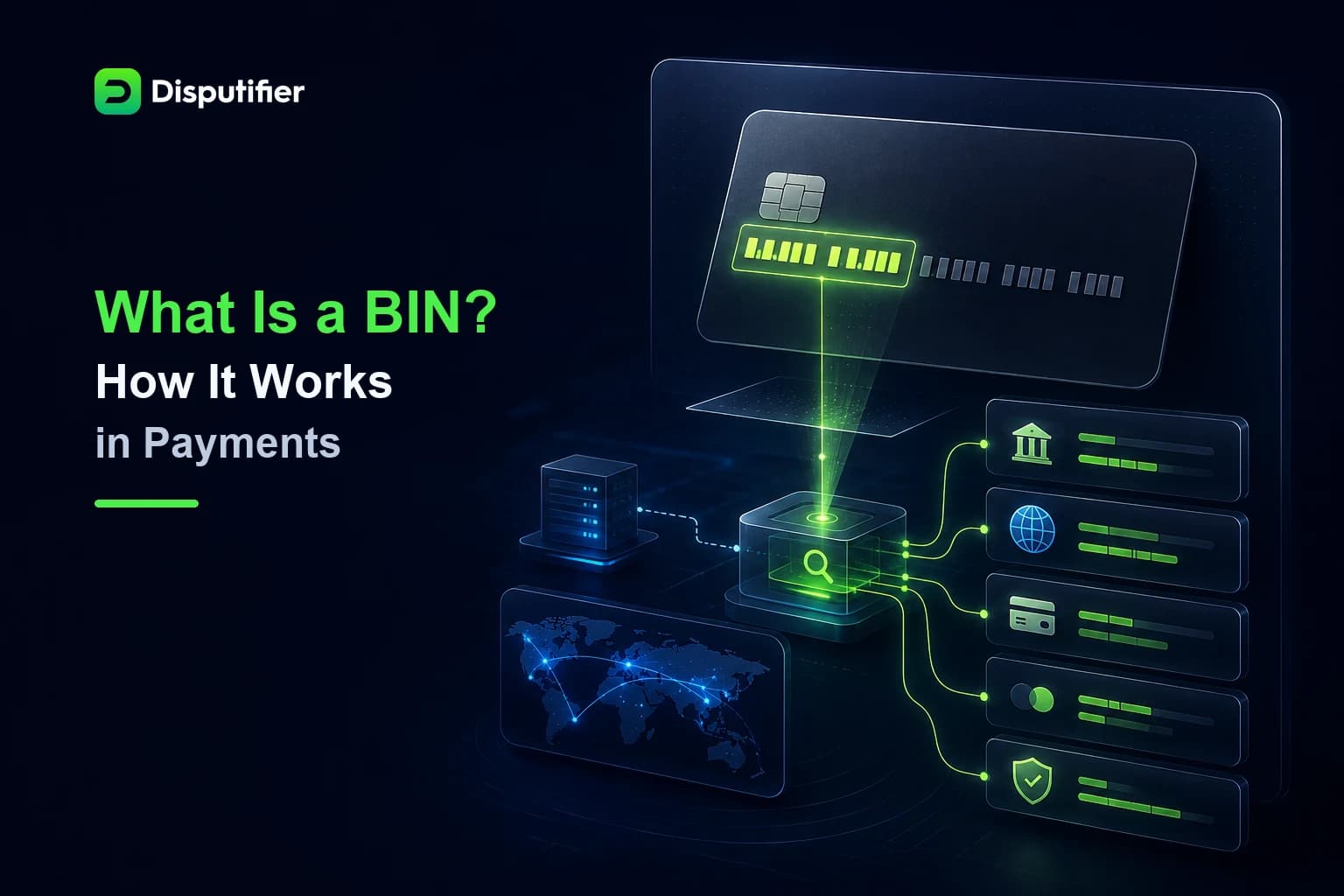
A BIN (bank identification number) is the first set of digits on a payment card. It identifies the issuing bank, the card type, the region, and sometimes the risk category. Payment processors, gateways, and fraud tools use BIN data to determine how likely a transaction is to result in fraud or a chargeback.
For merchants asking what a BIN is or what a bank identification number means, the simple explanation is: the BIN tells you who issued the card and what type of customer is using it.
If you want a quick lookup for any card, Disputifier provides a free tool:
https://www.disputifier.com/bin-lookup
What BIN Numbers Reveal About Customers and Risk
Each BIN communicates several important characteristics.
Issuing bank
The BIN reveals which bank issued the card. Some banks are known for fast approvals, while others have higher fraud or dispute rates. This matters when analyzing chargeback exposure.
Card type and level
BINs differentiate between debit, prepaid, credit, corporate, and premium cards. Prepaid cards often carry elevated risk. Corporate cards behave differently from consumer cards. Premium cards sometimes lead to tougher disputes because cardholders expect superior protections.
Country and region
BINs identify the country of issuance. International orders carry different risk profiles depending on region. If you routinely process cross-border orders, you may want to review your international strategy here:
Handling International Orders Without Spiking Your Chargebacks
Processor and network
Visa, Mastercard, Discover, Amex, Klarna, and others each have BIN structures. This affects dispute deadlines, evidence rules, and refund timelines. For timing, you can reference:
How Long Do Chargebacks Take?
Risk scoring
Fraud tools assign risk scores based in part on BIN data. Orders from certain regions, certain card types, or certain banks may automatically be flagged as a higher-risk category.
How BIN Numbers Impact Disputes and Chargebacks
BIN analysis doesn’t stop at fraud prevention. It also influences whether a transaction is likely to become a chargeback and how that dispute will unfold.
High-risk BINs correlate with more chargebacks
Some issuing banks and regions historically produce more chargebacks due to customer behavior, fraud prevalence, or local regulations. BIN screening helps merchants decline suspicious transactions before fulfillment.
BIN data affects evidence strategies
Knowing the issuing bank helps merchants align their evidence with bank-specific dispute tendencies. If you need templates for building stronger cases, this resource helps:
What Counts as Compelling Evidence by Reason Code
Helps identify friendly fraud
If a customer disputes orders frequently or if an issuing bank has high friendly fraud rates, BIN analysis can help merchants decide whether to fulfill future orders from similar profiles.
Helps protect chargeback ratios
Declining risky orders prevents disputes from ever entering your ratio. That’s essential because your chargeback ratio determines processor stability. For deeper insight:
How to Lower Your Chargeback Ratio Below 1
How BIN Numbers Influence Payout Delays
Merchants often overlook how BIN data can affect payout timing. Stripe, Shopify, PayPal, and other processors evaluate transaction risk based on card type, customer region, and issuer behavior. High-risk patterns lead to withheld payouts or extended review periods.
If your payouts are being delayed or held, this resource helps explain why:
Why Stripe and Shopify Hold Funds and How to Avoid Payout Delays
Why BIN Intelligence Opposes Chargebacks Before They Happen
BIN screening is one of the earliest signals for fraud and dispute risk. When integrated properly, it prevents chargebacks by removing high-risk orders before shipping.
Merchants use BIN data to:
- block prepaid cards for high-value orders
- require additional verification for high-risk countries
- adjust fraud scoring models
- tighten rules for certain issuing banks
- decline or manually review first-time international customers
BIN intelligence acts as a shield before the order ever reaches the dispute stage.
To learn more about using BIN data as part of a broader prevention strategy, read:
Tokenization and BIN Intelligence Cut Fraud
The Problem: Most Merchants Don’t Use BIN Data Properly
Many stores rely on basic fraud filters but never analyze BIN data at scale. This leads to:
- unnecessary chargebacks
- poor fraud detection
- preventable losses
- avoidable payout delays
- wasted ad spend on fraudulent orders
BIN intelligence becomes even more important if you ship globally, sell digital goods, or run subscription billing.
How Disputifier Uses BIN Intelligence to Protect Merchants
Disputifier’s platform integrates real-time BIN lookups, AI-driven fraud scoring, and automated dispute management to prevent fraudulent orders and improve win rates when disputes occur.
Here’s how Disputifier turns BIN data into meaningful protection.
Real-time BIN identification
Disputifier identifies the issuing bank, region, card type, and risk indicators instantly. This allows merchants to make informed decisions before fulfilling orders.
Fraud prediction using BIN patterns
The platform uses BIN-level trends to identify high-risk order patterns over time. This includes:
- regions with rising fraud
- banks with high dispute rates
- BIN ranges linked to friendly fraud
- card types frequently used for scams
Merchants can adjust workflows automatically based on risk.
Tight integration with the free BIN checker
Merchants can check any BIN number with Disputifier’s free tool:
https://www.disputifier.com/bin-lookup
For structured guidance on BIN tool selection, this resource helps:
Free BIN Lookup vs Paid
Better dispute outcomes using BIN-linked evidence insights
Understanding the issuer and card type helps Disputifier tailor evidence packages for higher win rates. For example, certain banks prioritize delivery proof, while others require detailed communication logs.
For deeper insights into win strategies, see:
How Often Do Merchants Win Chargebacks
Reducing international chargeback risk
International orders behave differently across regions. BIN data helps Disputifier detect high-risk cross-border activity and prevent disputes.
More context here:
Handling International Orders Without Spiking Your Chargebacks
Automation that prevents human error
Disputifier automates everything from fraud assessment to evidence creation and submission. This reduces workload for support teams and ensures consistent, compliant handling of every dispute.
See how automation works here:
Chargeback Automation in Practice
How to Use BIN Data to Improve Payout Stability
If you want smoother payouts, fewer fund holds, and cleaner transaction profiles, here’s how to use BIN intelligence effectively.
1. Review high-risk regions
Some countries consistently produce more chargebacks. BIN data reveals these patterns.
2. Adjust fraud rules by card type
For example, decline prepaid cards on high-ticket items.
3. Use BIN checks for first-time international customers
Identify risky banks before fulfillment.
4. Verify orders with mismatched data
BIN region mismatched with IP or shipping location often signals fraud.
5. Combine BIN checks with automation
Modern dispute systems like Disputifier unify fraud screening with dispute outcomes, giving merchants a complete risk-reduction workflow.
FAQs About BIN Numbers
What is a BIN number?
A BIN is the first six to eight digits of a payment card that identify the issuing bank, card type, region, and risk profile.
How does a BIN affect fraud risk?
Different BINs correlate with different fraud levels depending on region, bank behavior, and card type.
Do BIN numbers impact chargebacks?
Yes. High-risk BIN patterns often lead to more disputes. BIN intelligence helps merchants block risky orders.
Can BIN data help prevent chargebacks?
Absolutely. BIN screening is one of the most effective early indicators of transaction risk.
How does Disputifier use BIN data?
Disputifier uses BIN intelligence to detect fraud, improve dispute win rates, and help merchants prevent payout delays.
Strengthen Fraud Prevention and Protect Your Payouts With BIN Intelligence
Understanding BIN numbers gives merchants an advantage in preventing fraud, reducing chargebacks, and improving payout stability. With Disputifier, BIN intelligence becomes part of a complete system that protects revenue, automates dispute handling, and shields merchants from unnecessary losses.
Use smarter data. Block high-risk orders.
Start protecting your payouts with Disputifier today.