 All Posts


Chargeback ratios don’t just affect dispute losses. They affect your cash flow.
Once your chargeback ratio trends upward, payment processors start watching your account more closely. That can lead to payout delays, rolling reserves, stricter fraud monitoring, or sudden account restrictions.
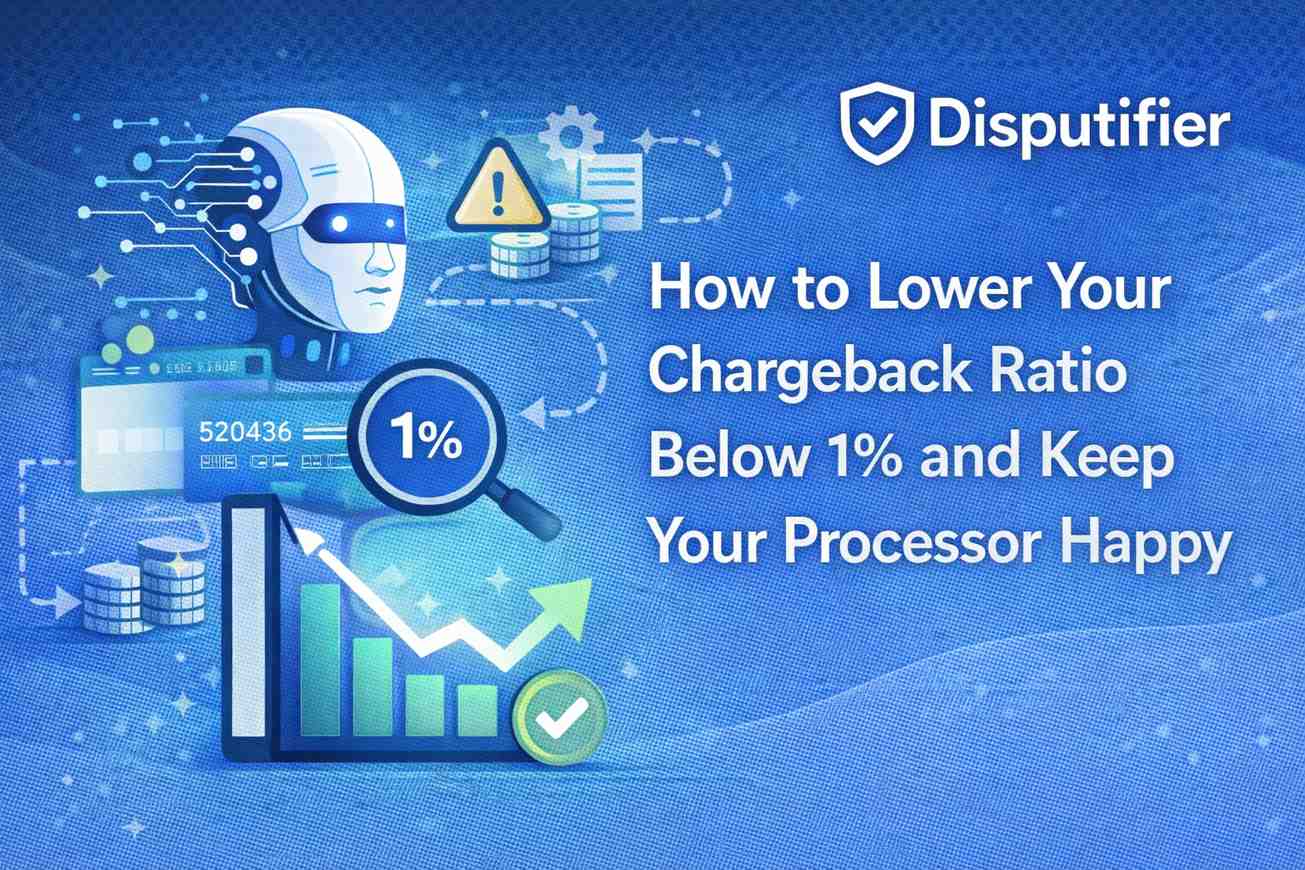
If you want to scale an ecommerce brand without payment chaos, you need a process that keeps your chargeback ratio below 1% consistently. This guide breaks down what chargeback ratios are, what actually causes them to rise, and the fastest ways to bring them down using alerts, analytics, fraud prevention, and automation.
What is a chargeback ratio and why does 1% matter?
A chargeback ratio measures chargebacks as a percentage of total transactions over a set period. Even small increases matter because ratios compound quickly when you scale order volume.
Here’s what catches merchants off guard:
A store can be growing fast and still get flagged, because risk teams care about ratios, not revenue.
If you want a clear explanation of why chargeback ratios matter and what they signal to banks and processors, read Chargeback Ratios Explained: Why They Matter for Your Merchant Account.
What causes ecommerce chargeback ratios to spike
Chargeback ratio spikes usually come from one of these patterns:
Friendly fraud that support teams never see
Customers claim they didn’t authorize the purchase, didn’t recognize the billing descriptor, or say the item never arrived even though it did.
If you don’t have a system to catch and defuse these early, they become chargebacks and hit your ratio.
A focused breakdown of what to do about this is in Chargeback Prevention Strategies Specifically for Friendly Fraud.
Refund delays that trigger disputes
If refunds take too long, customers go to their bank.
A bank dispute counts against your ratio even when the customer was “right.” You don’t get credit for good intentions. You only get punished for slow processes.
High-risk traffic sources you never segmented
Affiliate traffic, aggressive paid social, coupon sites, and some international segments can carry higher fraud and higher dispute rates.
If you don’t track chargebacks by source, you can’t fix the real leak.
That’s why analytics matters (we’ll get to that).
Manual workflows that miss deadlines
At scale, most chargeback losses happen because teams miss deadlines or submit weak evidence. That increases losses, triggers more disputes, and keeps your ratio elevated longer.
If your team has ever missed a deadline, this post is required reading: What Happens If a Merchant Doesn’t Respond to a Chargeback.
The fastest ways to lower your chargeback ratio below 1%
Chargeback ratios drop when you do two things at the same time:
- Prevent disputes from becoming chargebacks
- Win more of the disputes that do happen
1) Add real-time alerts to stop chargebacks before they count
Alerts notify you when a dispute is initiated, giving you a short window to refund or resolve the issue before it becomes a chargeback.
That matters because if you resolve the issue early, the chargeback never finalizes and never hits your ratio.
If you haven’t implemented alerts yet, use this walkthrough: Prevent Chargebacks With Real-Time Alerts: A Step-by-Step Setup Guide.
2) Fix the evidence process so you win more disputes
Winning disputes reduces financial loss and helps stabilize your risk profile over time.
But you don’t win with random screenshots. You win with structured, reason-code aligned proof.
If your team isn’t consistently building strong evidence packets, start here: What Counts as Compelling Evidence by Reason Code: A Merchant’s Template Library.
Also, customer communication often decides outcomes. Banks want proof the customer received what they paid for and had a clear path to resolution.
Use this as your standard: Customer Communication Proof That Actually Wins Disputes.
3) Use analytics to stop repeat chargebacks from the same root cause
If you only fight disputes case-by-case, you’ll stay stuck in reactive mode.
Chargeback analytics helps you identify patterns like:
- One product driving “not as described”
- One shipping lane driving “not received”
- One traffic source driving fraud
- One support delay driving disputes
This is how you prevent the same dispute from happening 100 more times.
If you want the exact framework for finding root causes and reducing fund holds, read Chargeback Analytics: Find Root Causes and Reduce Fund Holds.
4) Use BIN data to block high-risk transactions before fulfillment
BIN data helps you spot mismatch patterns like:
- Billing country vs shipping country mismatch
- High-risk issuer regions
- Repeat fraud tied to issuing banks
- Suspicious prepaid usage patterns
This matters because prevention lowers dispute volume, and lower dispute volume lowers your ratio.
Start with BIN Numbers Explained: How Banks, Regions, and Risk Scores Affect Your Payouts.
Then use the tool directly: Free BIN Lookup Tool.
5) Automate dispute handling so you stop missing deadlines
Manual dispute handling fails at scale because it depends on humans remembering steps across multiple systems.
Automation fixes that by:
- Centralizing disputes
- Tracking deadlines automatically
- Pulling evidence from connected systems
- Creating consistent evidence packets
- Submitting on time, every time
- Reporting win rates and trends
If you want to see what this looks like end-to-end, read Chargeback Automation in Practice: From Dispute Detection to Evidence Submission.
Where Disputifier fits in chargeback ratio control
Disputifier is designed for ecommerce brands that want chargeback ratios under control without turning disputes into a full-time job.
It brings the pieces together that usually sit in separate tools or messy spreadsheets:
- Chargeback automation that keeps deadlines and submissions consistent
- Evidence workflows that build stronger dispute responses
- Real-time alert handling so disputes don’t become chargebacks
- Analytics that find the root causes behind repeat disputes
- BIN intelligence that prevents high-risk orders upfront
This matters because processors don’t just punish losses. They punish instability. When your dispute handling is inconsistent, your risk score suffers.
If you want a clear breakdown of what to look for when choosing automation software, use Chargeback Automation Software for Ecommerce: What to Look For in 2025.
If you want a broader view of the tools stack, read Best Chargeback Management Tools for Ecommerce Brands (And What to Automate).
What to do this week to reduce your chargeback ratio
If you want fast progress, do this in order:
- Turn on real-time alerts and set a refund/response rule
- Audit your top 10 disputes and identify repeat reason codes
- Standardize evidence collection by reason code
- Review BIN patterns for disputes from the last 30-60 days
- Automate the process so deadlines and evidence stop slipping
If your brand is scaling, this isn’t optional forever. You either build an internal system that works, or you use software that already does.
FAQ
What is a good chargeback ratio for ecommerce?
Most merchants aim to stay below 1%. Lower is always safer because dispute spikes happen during promotions, Q4, or international expansion.
Do refunds lower your chargeback ratio?
Refunds help only if they happen before a customer files a dispute. After a chargeback is filed, the ratio impact usually still happens.
How long does it take to bring a chargeback ratio down?
It depends on your sales volume and dispute volume. Many brands see improvements within 30-60 days once alerts and prevention measures go live. Dispute timelines also vary by network. See How Long Do Chargebacks Take? Real Timelines by Network.
Are chargebacks always refunded to customers?
Not always. Merchants can recover funds if they win the dispute. See Are Chargebacks Always Refunded? When You Can Recover Funds.
What’s the fastest way to reduce chargebacks?
Alerts plus prevention. Stop disputes from finalizing into chargebacks, then reduce high-risk transactions with BIN intelligence and better fraud signals.
Start lowering your chargeback ratio before payout problems start
Chargeback ratios control your payment stability.
If you want to scale without reserves, holds, or endless dispute admin work, Disputifier gives ecommerce brands the tools to prevent disputes, automate workflows, and track what’s driving chargebacks in the first place.
If your ratio is trending upward, fix it now while your processor still trusts you.