 All Posts


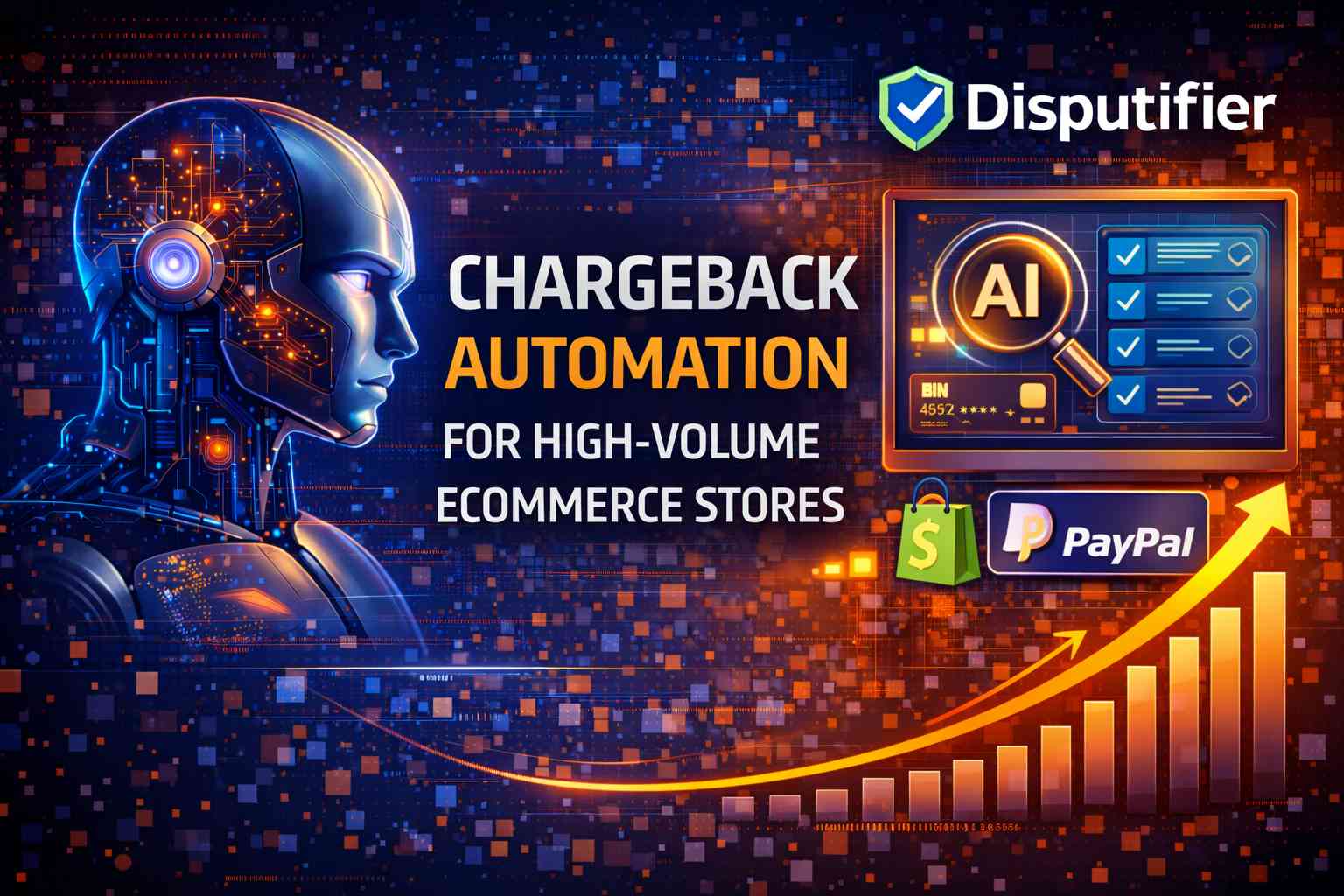
Chargeback automation for ecommerce is no longer a nice-to-have for high-volume stores. It’s operational infrastructure.
Once an ecommerce business reaches meaningful scale, chargebacks stop being occasional issues and start becoming a constant operational risk. More orders mean more disputes, more friendly fraud, more issuer scrutiny, and far less margin for error.
High volume chargeback management is not about fighting every dispute harder. It’s about automation, prioritization, and prevention at scale.
This article explains why chargeback automation becomes mandatory for high-volume ecommerce stores, what breaks when you rely on manual workflows, and how platforms like Disputifier help merchants grow without sacrificing revenue or account stability.
Why Chargebacks Scale Faster Than Revenue
Chargebacks don’t scale linearly.
A 20% increase in orders can result in a 40-60% increase in disputes, especially for stores selling:
• Subscription products
• Digital goods
• International orders
• High-velocity SKUs
As volume increases, even small inefficiencies in dispute handling compound quickly. Manual review times increase. Deadlines get missed. Friendly fraud slips through unnoticed.
This is where manual systems start to collapse, as outlined in When Manual Chargeback Handling Breaks Down for Ecommerce Brands.
The Unique Risks High-Volume Stores Face
High-volume ecommerce brands face risks that smaller stores never encounter.
These include:
• Payment processor monitoring programs
• Rolling reserves and fund holds
• Issuer-level scrutiny
• Automated dispute decisions by banks
At scale, chargeback ratios matter more than individual disputes. One bad month can trigger long-term consequences.
This risk is explained clearly in How to Lower Your Chargeback Ratio Below 1% and Why Stripe and Shopify Hold Funds.
Why Manual and Semi-Automated Workflows Fail at Scale
Manual chargeback workflows rely on people, memory, and static processes.
Even basic automation tools struggle when:
• Disputes arrive across multiple platforms
• Deadlines vary by network
• Evidence requirements change
• Issuer behavior differs by region
High volume chargeback management requires systems that can process, prioritize, and adapt automatically.
This breakdown is explored further in Dispute Management Software vs Manual Workflows.
What Chargeback Automation Ecommerce Actually Means
Chargeback automation ecommerce is not just about auto-submitting evidence.
True automation includes:
• Centralized dispute intake
• Automated evidence collection
• Predictive dispute prioritization
• Real-time alerts and refunds
• Analytics that feed prevention
This layered approach ensures that as volume increases, operational effort does not increase at the same rate.
The difference between surface-level automation and scalable automation is outlined in AI vs Rules-Based Chargeback Automation.
The Role of AI in High Volume Chargeback Management
High volume environments generate enough data for machine learning to be effective.
AI-powered chargeback automation uses historical outcomes to:
• Predict which disputes are worth fighting
• Identify friendly fraud patterns
• Adapt to issuer behavior
• Improve win rates over time
This predictive model is covered in depth in AI Chargeback Management and How AI Chargeback Analytics Predict Future Disputes.
At scale, AI doesn’t replace teams. It protects them from overload.
Shopify Chargeback Automation at Scale
Shopify merchants often experience rapid growth, which exposes chargeback weaknesses quickly.
High-volume Shopify stores face:
• High order velocity
• Multiple payment gateways
• Subscription disputes
• International buyers
Chargeback automation becomes essential to prevent ratio spikes and payout delays.
This environment is explored further in Shopify Chargeback and Dispute Management Automation for High-Volume Stores.
PayPal Chargeback Automation and Payout Protection
PayPal introduces unique challenges for high-volume sellers.
Disputes escalate quickly, and unresolved cases often lead to rolling reserves or account limitations.
Chargeback automation ecommerce systems must integrate alerts, refunds, and dispute workflows to reduce PayPal exposure.
This strategy is outlined in PayPal Chargeback Automation.
Why BIN Intelligence Matters More at Scale
As order volume increases, issuer behavior becomes more visible.
Some issuing banks approve disputes aggressively. Others require stronger documentation. Treating all disputes the same wastes time and money.
Disputifier integrates BIN-level intelligence to help merchants adjust strategies based on issuer behavior. This approach builds on insights from BIN Numbers Explained.
Merchants can explore issuer risk directly using the free BIN checker to understand dispute behavior before escalation.
Prevention Is More Important Than Recovery at High Volume
At scale, preventing disputes matters more than winning them.
Chargeback automation ecommerce systems must support:
• Real-time alerts
• Proactive refunds
• Customer communication triggers
Prevention reduces chargeback ratios and protects merchant accounts, as explained in Prevent Chargebacks With Real-Time Alerts.
How Disputifier Supports High-Volume Ecommerce Brands
Disputifier is built specifically for high volume chargeback management.
It combines:
• AI-driven dispute prioritization
• Automated evidence generation
• BIN and issuer intelligence
• Friendly fraud detection
• Real-time alerts and prevention
• Deep analytics tied to outcomes
Instead of reacting to disputes, Disputifier helps ecommerce brands control them.
This unified approach aligns with the broader stack described in Ecommerce Chargeback Prevention Tools.
Scaling Without Losing Control
High-volume ecommerce growth should not mean higher chargeback risk.
With the right automation, merchants can:
• Maintain stable payout cycles
• Keep chargeback ratios low
• Reduce operational workload
• Scale into new markets safely
Disputifier gives merchants the infrastructure needed to manage disputes intelligently as volume grows.
To understand how issuing banks impact your current disputes, start by reviewing recent transactions using the free BIN checker.
FAQ: Chargeback Automation Ecommerce
What is chargeback automation ecommerce?
Chargeback automation ecommerce refers to using software to automate dispute detection, evidence submission, prevention, and analytics.
Why is automation important for high-volume stores?
High volume chargeback management requires automation to prevent missed deadlines, reduce fraud, and protect merchant accounts.
Can automation reduce chargeback ratios?
Yes. Automation combined with alerts and analytics helps prevent disputes before they file and improves win rates.
Is Disputifier suitable for Shopify and PayPal sellers?
Yes. Disputifier supports high-volume ecommerce brands across platforms, including Shopify and PayPal.
When should a store invest in chargeback automation?
As soon as chargebacks start consuming time, affecting payouts, or limiting growth.