 All Posts


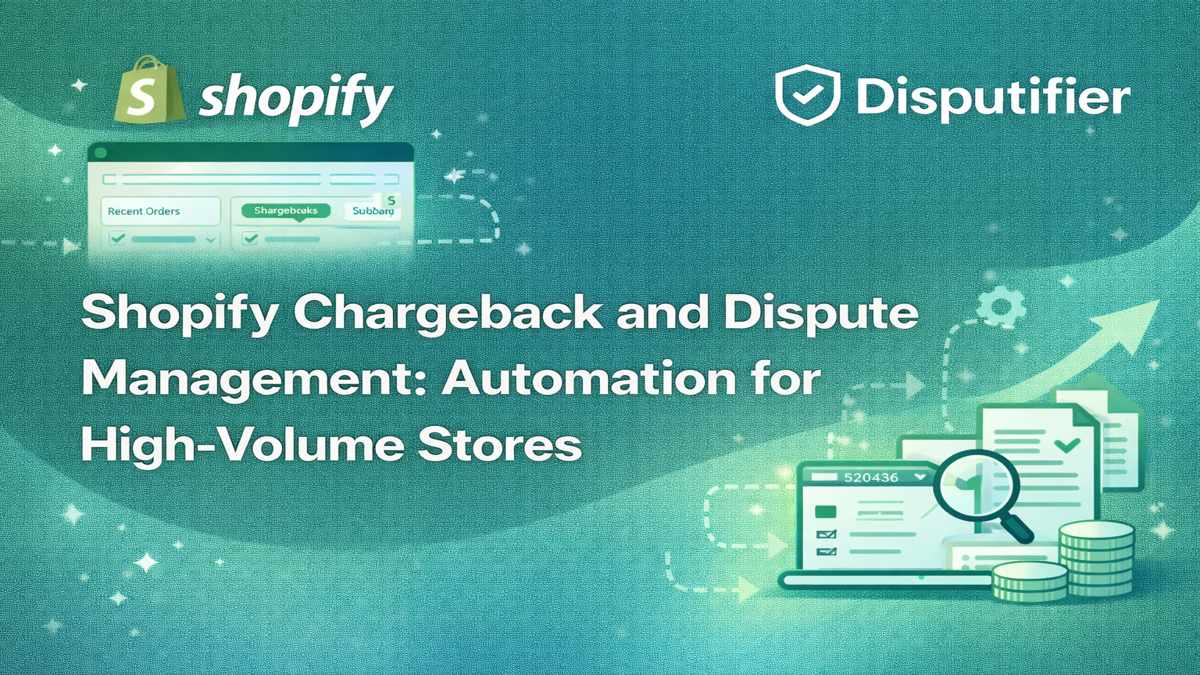
Shopify makes it easy to scale fast. What it does not make easy is managing chargebacks once order volume crosses a few hundred per month.
If you’re running a Shopify store doing 1,000+ orders a month, manual chargeback handling becomes a liability. Missed deadlines, incomplete evidence, and rising dispute ratios can quickly trigger payout delays, rolling reserves, or even account restrictions.
This guide breaks down how Shopify chargeback and dispute management actually works, why manual workflows fail at scale, and how automation helps high-volume stores protect revenue and payouts.
How Shopify Handles Chargebacks and Disputes
Shopify does not process disputes itself. Chargebacks flow through your payment processor, most commonly Shopify Payments (powered by Stripe), PayPal, or alternative gateways.
When a dispute occurs, Shopify surfaces it inside the admin, but the rules, deadlines, and evidence requirements come from the card network and processor. That disconnect is where many merchants get burned.
If you want a clear explanation of how chargebacks differ from disputes and refunds, start with this breakdown on chargeback vs dispute vs refund for merchants.
What Shopify Merchants See Inside the Dashboard
Inside Shopify, disputes appear as chargebacks, inquiries, or fraud notifications.
Each one includes a response deadline, a reason code, and a limited evidence submission window.
Failing to respond on time almost always results in an automatic loss. If you want a concrete look at the fallout, read what happens when a merchant doesn’t respond to a chargeback.
Why Manual Chargeback Handling Breaks at Scale
Manual dispute handling might work at 50 orders a month. It breaks completely at 1,000+.
High-volume Shopify stores struggle with tracking deadlines across processors, pulling screenshots from multiple systems, submitting incomplete evidence, and responding too late because disputes get buried.
Even strong support teams lose cases because the workflow is fragmented.
If your team is exporting spreadsheets or copying order details by hand, you’re already behind. This is exactly why manual dispute workflows stop working as ecommerce brands scale.
Shopify Chargeback Ratios and Payout Risk
Shopify merchants are especially sensitive to chargeback ratios. Once disputes rise, processors may delay payouts, impose rolling reserves, or flag accounts for monitoring.
Keeping your ratio under 1% is critical. This guide shows exactly how merchants do that in practice: how to lower your chargeback ratio below 1.
The problem is that marketing often scales faster than operations. Ads drive volume, but fraud checks, alerts, and dispute workflows stay static. That imbalance creates risk.
What Automation Looks Like for Shopify Stores
Automation does not mean set it and forget it. It means removing repetitive work and enforcing consistency.
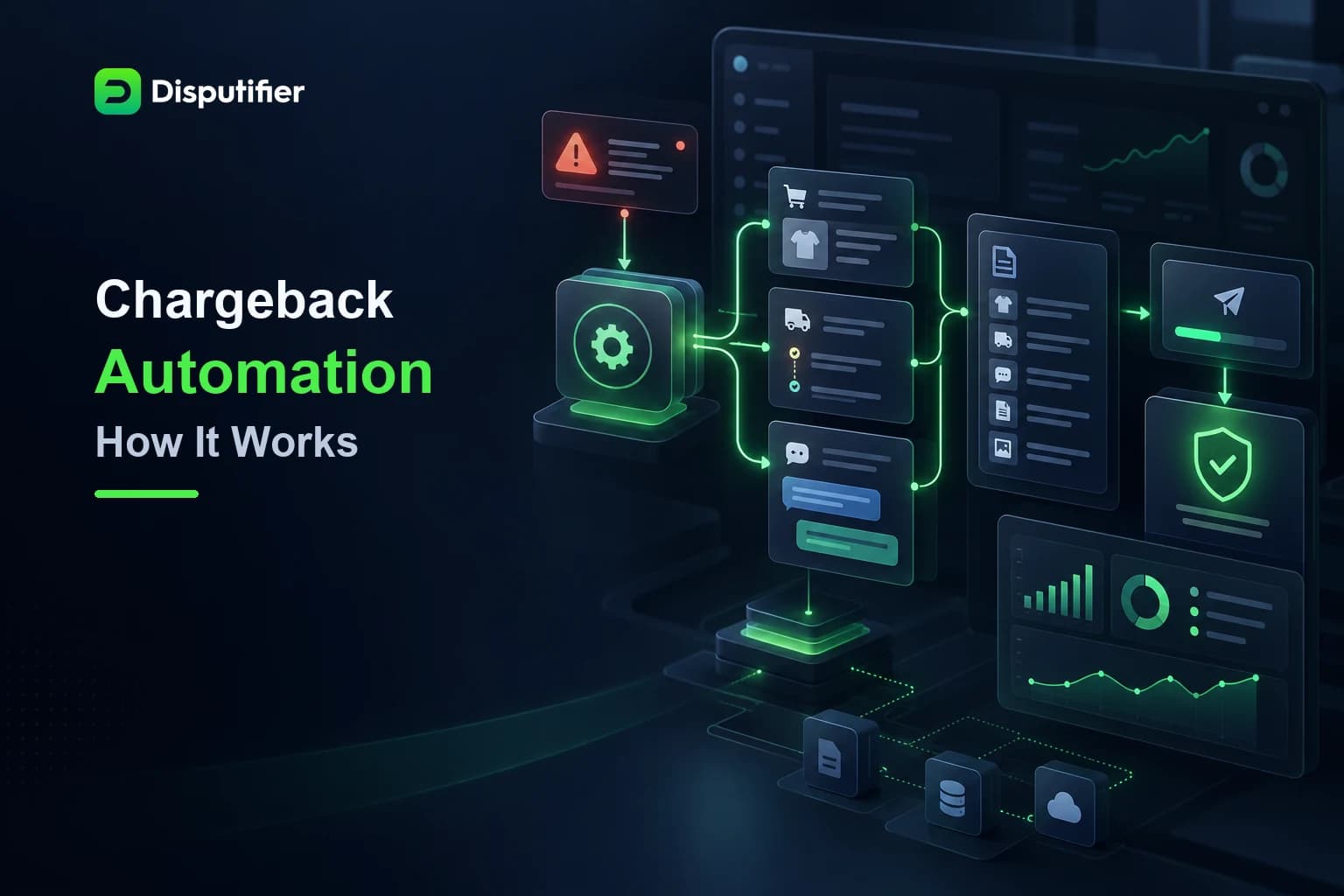
For Shopify chargeback management, automation should handle dispute intake, deadline tracking, evidence assembly, submission across networks, and win-rate analytics.
This walkthrough shows how that process works end to end in a real ecommerce environment: chargeback automation in practice from detection to evidence submission.
The Role of Alerts Before Disputes Escalate
Many Shopify disputes can be stopped before they become chargebacks.
Real-time alerts notify merchants when a customer initiates a dispute, giving a short window to refund or resolve the issue before it hits the chargeback stage.
If you’re not using alerts, preventable disputes are quietly damaging your ratio. This step-by-step guide explains how alerts actually work: prevent chargebacks with real-time alerts.
Where BIN Intelligence Fits for Shopify Merchants
High-volume Shopify stores often ship internationally, which increases exposure to friendly fraud and card-not-present abuse.
BIN data helps identify issuer country mismatches, high-risk banks, and patterns tied to repeat fraud.
If you’re not using BIN intelligence, you’re reacting instead of preventing. Start with this breakdown of how BIN numbers affect payouts and risk.
You can also test Disputifier’s free BIN lookup tool here: free BIN checker for ecommerce fraud prevention.
How Disputifier Fits Into Shopify Chargeback Management
Disputifier is built for ecommerce brands that have outgrown manual dispute handling.
For Shopify merchants, Disputifier centralizes disputes across Shopify Payments, PayPal, and other processors, tracks deadlines automatically, builds evidence packages using order, shipping, and communication data, submits disputes on time, integrates alerts to stop disputes early, and layers in BIN intelligence to flag risk.
Instead of juggling dashboards and spreadsheets, teams manage disputes from one system.
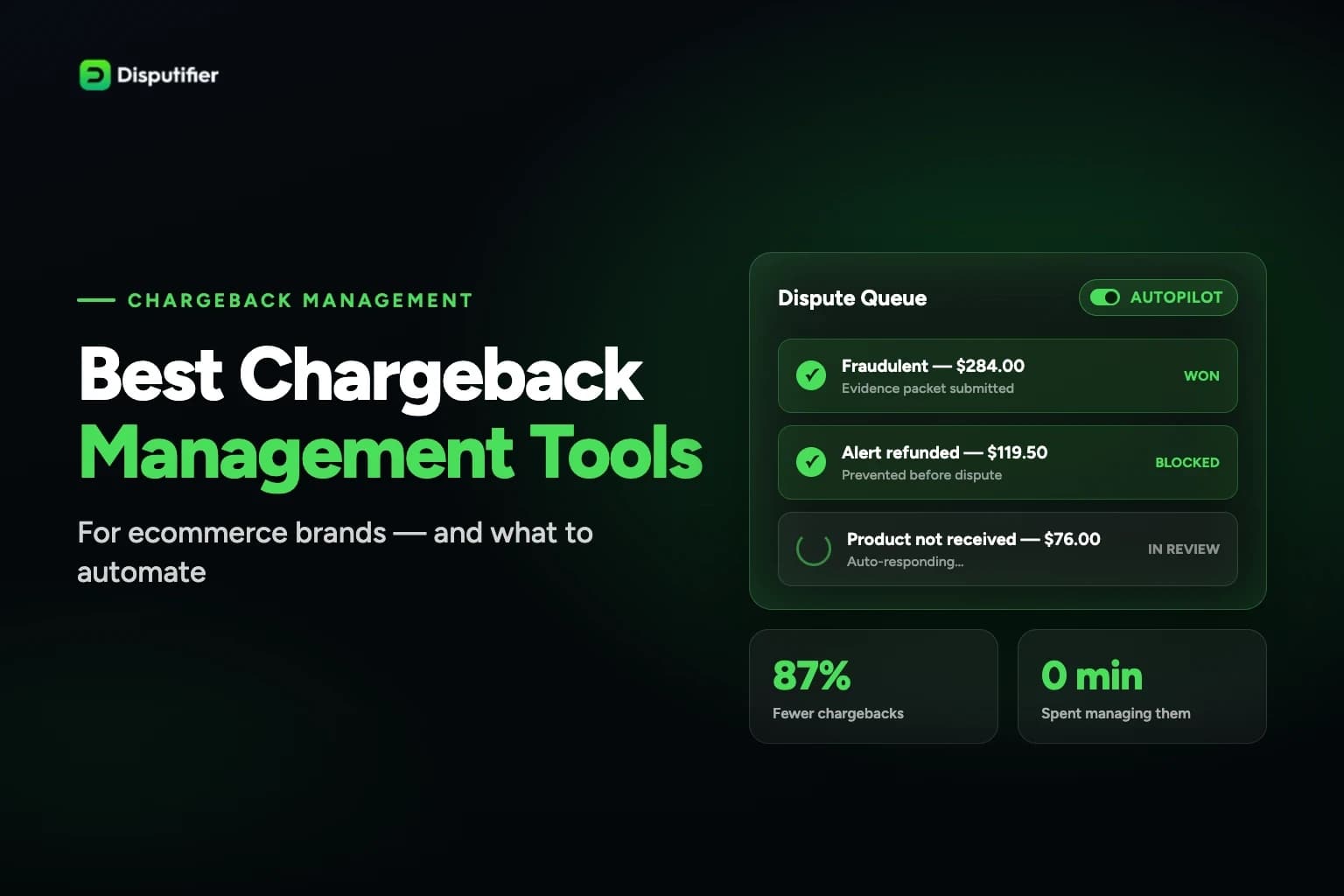
If you’re comparing tools, this overview explains what chargeback management tools should actually automate.
When Shopify Merchants Should Upgrade to Automation
If any of the following apply, manual workflows are already costing you money: 1,000+ orders per month, multiple payment processors, international shipping, rising dispute ratios, or support teams spending hours per week on disputes.
Automation improves win rates, protects payouts, and removes operational drag.
For brands evaluating solutions, this guide outlines what to look for in chargeback automation software.
FAQs
Does Shopify handle chargebacks for merchants?
No. Shopify surfaces disputes, but merchants are responsible for responding, submitting evidence, and meeting deadlines.
Can automation improve Shopify chargeback win rates?
Yes. Automation improves consistency, ensures deadlines are met, and produces stronger evidence submissions.
Are chargebacks always refunded to customers?
Not always. Merchants can recover funds when disputes are won. Here’s when recovery is possible: are chargebacks always refunded.
Do Shopify disputes affect payouts?
Yes. Rising dispute volume can trigger payout delays or reserves.
Can Disputifier integrate with Shopify stores?
Yes. Disputifier is designed to work with Shopify payment flows and scale with high-volume stores.
Start Automating Shopify Chargebacks Before They Cost You More
If your Shopify store is scaling, chargeback automation is no longer optional.
Disputifier helps Shopify merchants reduce dispute volume, improve win rates, protect payouts, and free teams from manual dispute work.
Start using Disputifier to automate chargeback and dispute management before volume turns into risk.