 All Posts


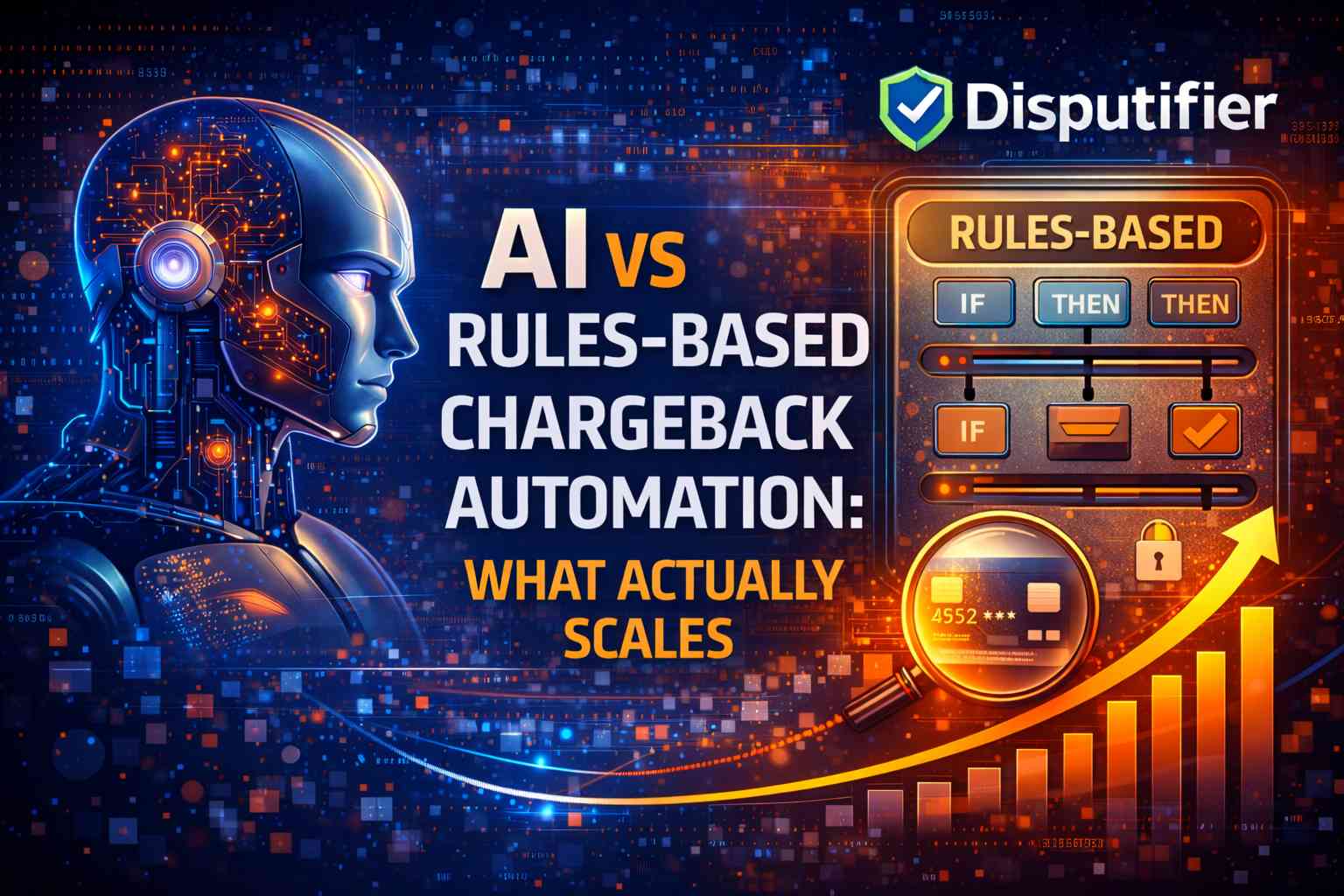
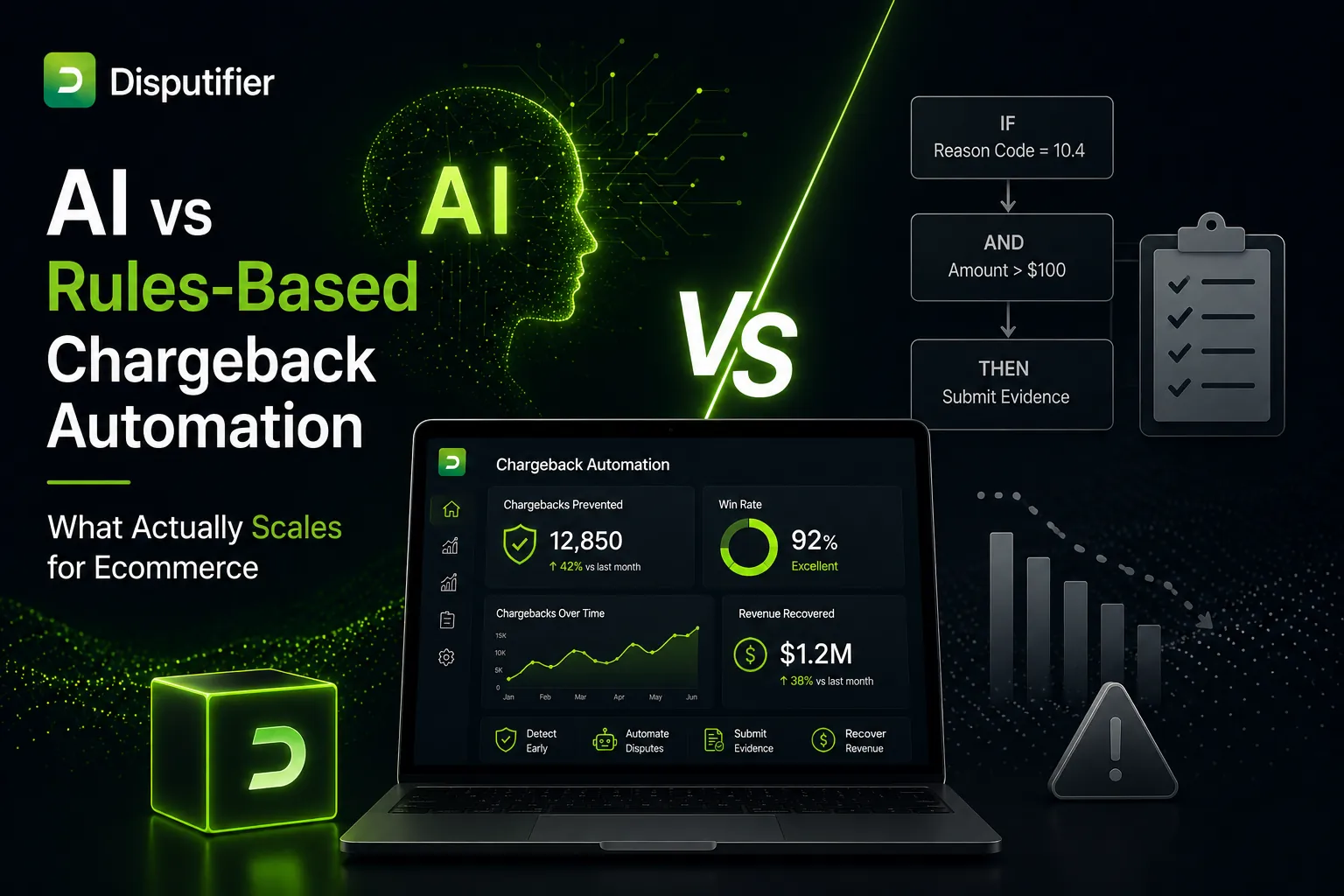
AI chargeback automation has become a turning point for ecommerce brands that have outgrown manual and rules-based systems.
Rules-based chargeback automation was a step forward from spreadsheets and inbox chaos. But as dispute volume increases, fraud patterns evolve, and issuers automate decisions, static rules stop scaling.
This is where AI chargeback automation separates itself. It doesn’t just automate tasks. It learns, adapts, and improves outcomes over time.
This article breaks down the real differences between AI and rules-based chargeback automation, explains where rules fail at scale, and shows why platforms like Disputifier are becoming essential for modern ecommerce operations.
What Rules-Based Chargeback Automation Actually Does
Rules-based chargeback automation relies on predefined logic.
Examples include:
• Automatically submitting evidence when a dispute appears
• Auto-refunding disputes with specific reason codes
• Routing disputes based on fixed criteria
• Triggering alerts under specific conditions
These systems follow instructions exactly as written. They do not learn from outcomes. If conditions change, the rules must be manually updated.
For lower-volume merchants, this approach can be sufficient. At scale, it creates blind spots.
Where Rules-Based Chargeback Automation Breaks Down
Rules-based systems assume the future looks like the past.
In reality, chargebacks change constantly. Issuers update behavior. Fraud patterns shift. Customer expectations evolve. Static rules can’t keep up.
Common limitations include:
• Treating all disputes with the same reason code equally
• Ignoring issuer-specific behavior
• Over-fighting low-probability disputes
• Missing new friendly fraud patterns
• Creating operational noise instead of clarity
These issues often surface once brands reach higher volume, as explained in Dispute Management Software vs Manual Workflows.
What AI Chargeback Automation Does Differently
AI chargeback automation uses machine learning models trained on historical dispute data, transaction behavior, issuer outcomes, and fraud signals.
Instead of following fixed instructions, AI systems identify patterns and adjust decisions based on what actually works.
AI chargeback automation focuses on:
• Predicting win probability before a dispute is fought
• Prioritizing disputes dynamically
• Adapting to issuer behavior over time
• Feeding analytics back into prevention workflows
This predictive approach builds on the framework outlined in AI Chargeback Management: How Machine Learning Increases Win Rates.
AI vs Rules-Based Automation in Practice
The difference becomes clear when dispute volume increases.
Rules-based systems ask:
“If X happens, do Y.”
AI chargeback automation asks:
“Based on history, what is most likely to work here?”
That distinction matters when:
• Issuers approve disputes inconsistently
• Friendly fraud increases without clear signals
• International orders behave differently by region
• Evidence requirements vary by reason code
AI models adjust automatically. Rules do not.
How AI Improves Chargeback Win Rates
Chargeback win rates improve when merchants fight the right disputes with the right evidence.
AI chargeback automation evaluates which disputes are worth fighting based on historical outcomes. This avoids wasting effort on low-probability cases.
This win-rate optimization aligns with the data in How Often Do Merchants Win Chargebacks and the analytics-driven approach discussed in What Ecommerce Data Actually Improves Chargeback Win Rates.
The Role of BIN Data in AI Automation
BIN intelligence is where AI automation gains a major edge.
Issuing banks behave differently. Some favor cardholders aggressively. Others require stronger evidence. Rules-based systems rarely account for this nuance.
AI chargeback automation incorporates BIN-level outcomes to predict issuer behavior. This allows merchants to:
• Adjust refund and alert strategies
• Prioritize disputes with higher issuer approval likelihood
• Reduce friendly fraud tied to specific banks
Disputifier integrates BIN intelligence directly into its AI engine, as explained in How Disputifier Combines Free BIN Checker With AI for Better Fraud Protection.
Merchants can explore issuer behavior firsthand using Disputifier’s free BIN checker.
Why AI Automation Scales Better Than Rules
Rules-based systems grow more complex as volume increases. More rules create more exceptions. Over time, systems become brittle.
AI chargeback automation scales because it simplifies decisions instead of multiplying logic.
As volume grows, AI:
• Learns from new dispute outcomes
• Adapts to emerging fraud patterns
• Reduces manual oversight
• Improves accuracy over time
This scalability is critical for high-volume Shopify and PayPal merchants, where dispute growth often triggers payout risk, as outlined in Shopify Chargeback and Dispute Management Automation and PayPal Chargeback Automation.
Rules-Based Automation Still Has a Place
Rules are not useless.
Rules-based automation works well for:
• Basic alerts
• Compliance triggers
• Simple refund logic
But rules should support AI, not replace it.
The most effective systems combine rules for guardrails and AI for decision-making. This hybrid approach is part of modern chargeback stacks outlined in Ecommerce Chargeback Prevention Tools.
How Disputifier Uses AI Chargeback Automation
Disputifier is built around AI-first chargeback automation.
Instead of static workflows, Disputifier combines machine learning, BIN intelligence, real-time alerts, and analytics into one adaptive system.
Disputifier helps ecommerce brands:
• Predict dispute outcomes before responding
• Prioritize high-value disputes automatically
• Reduce friendly fraud through pattern detection
• Automate evidence generation intelligently
• Protect chargeback ratios and payouts
This unified approach supports prevention and recovery, aligning with strategies outlined in Chargeback Automation in Practice.
AI Automation and Merchant Account Protection
Chargeback automation is not just about efficiency. It directly impacts merchant account health.
High chargeback ratios lead to fund holds, rolling reserves, and account monitoring. AI automation helps merchants stay below thresholds by reducing dispute volume and improving outcomes.
This relationship is explained in How to Lower Your Chargeback Ratio Below 1% and reinforced in Why Stripe and Shopify Hold Funds.
Choosing Automation That Actually Scales
The question is not whether to automate chargebacks.
The question is whether your automation improves over time or stays frozen while fraud evolves.
Rules-based chargeback automation can reduce workload. AI chargeback automation reduces risk.
For ecommerce brands serious about scale, AI is no longer optional.
Disputifier gives merchants the tools to automate disputes intelligently, reduce fraud, and protect revenue as volume grows. To see how issuer behavior impacts your disputes today, test recent transactions using the free BIN checker.
FAQ: AI vs Rules-Based Chargeback Automation
What is AI chargeback automation?
AI chargeback automation uses machine learning to predict dispute outcomes, prioritize cases, and adapt workflows based on historical data.
How is rules-based chargeback automation different?
Rules-based automation follows predefined logic and does not adapt to new patterns or issuer behavior without manual updates.
Can rules-based systems scale for high-volume merchants?
Rules can support basic automation, but they struggle to scale as dispute volume, fraud patterns, and issuer behavior change.
Does AI automation improve chargeback win rates?
Yes. AI automation focuses effort on high-probability disputes and improves evidence relevance, which increases win rates.
Is Disputifier only for large merchants?
Disputifier supports growing ecommerce brands that need automation now and scalability later, especially those processing international or subscription-heavy transactions.