 All Posts


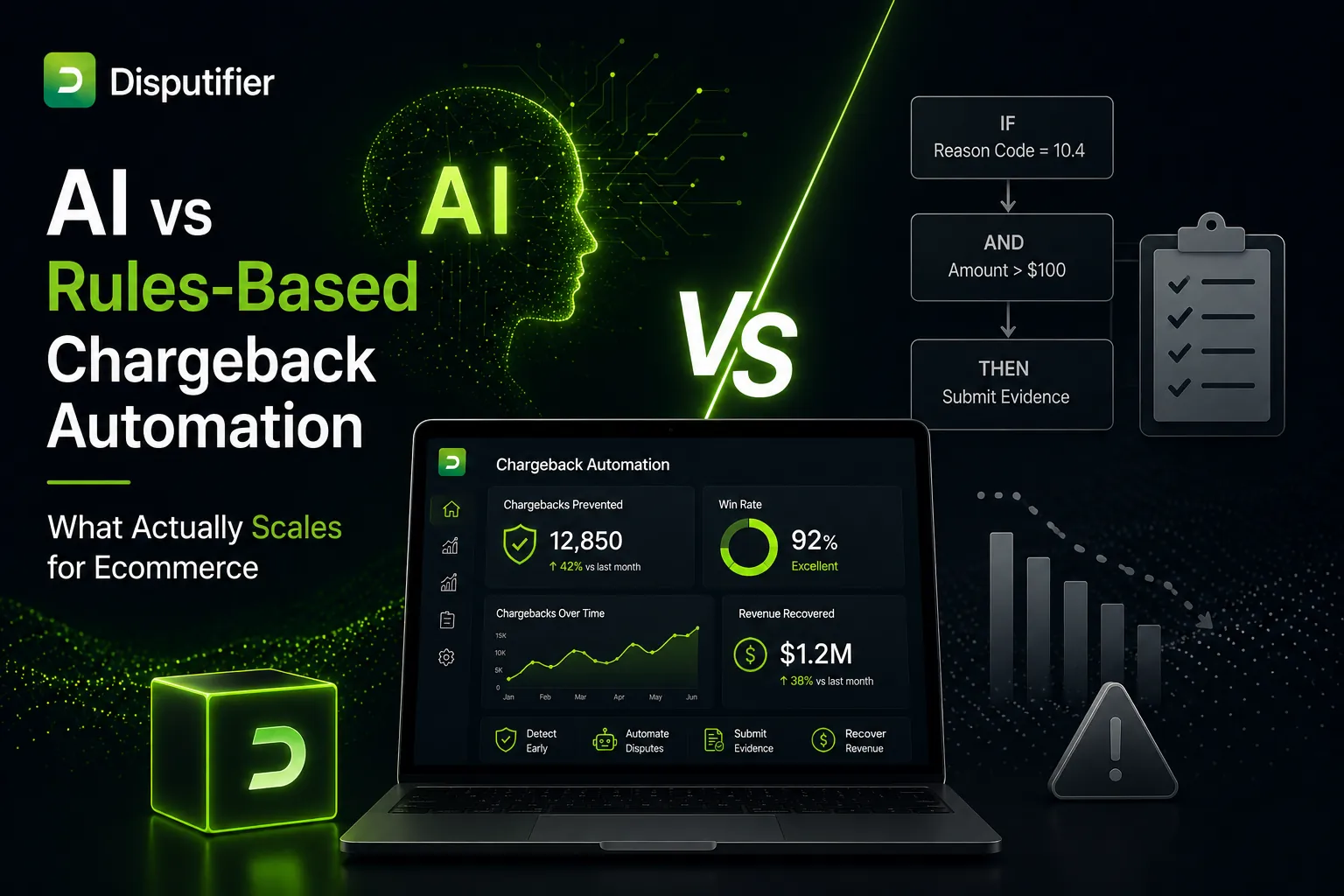
Chargebacks are one of the biggest operational risks for ecommerce businesses. As order volume grows, dispute management becomes harder to handle manually. Many merchants attempt to solve this with automation, but not all automation systems scale effectively.
The biggest divide in modern dispute management is between rules-based automation and AI-driven automation.
Understanding the difference helps ecommerce brands choose systems that actually reduce disputes, improve win rates, and protect merchant accounts long term.
If you want to see how modern automation works in real workflows, read Chargeback Automation in Practice.
What Is Rules-Based Chargeback Automation?
Rules-based automation uses predefined instructions that trigger actions when certain conditions occur.
For example, a rules-based system might:
• Automatically refund transactions above a certain risk threshold
• Submit the same evidence package for every dispute
• Flag transactions from certain countries
• Route disputes based on reason codes
These systems operate on simple logic:
If X happens → trigger Y action.
Rules-based systems can reduce some manual work, but they rely entirely on rules merchants create.
When fraud patterns change or issuers adjust their evaluation methods, the system does not adapt unless someone updates the rules manually.
For small ecommerce stores handling only a few disputes per week, this approach may work temporarily. But as businesses grow, rules-based systems begin to break down.
Why Rules-Based Systems Stop Scaling
Chargeback management is constantly evolving. Fraud tactics change, issuers update evaluation standards, and dispute patterns shift.
Rules written months ago can quickly become outdated.
Several problems appear when merchants rely only on rules-based automation.
Too Many Manual Adjustments
As ecommerce businesses scale, rule sets grow rapidly.
Merchants eventually manage dozens or hundreds of rules, making the system difficult to maintain.
Generic Evidence Submissions
Many disputes require different documentation depending on the reason code and issuing bank.
Rules-based systems often submit generic evidence packages, which lowers win rates.
Merchants who want to improve dispute success should understand what counts as compelling evidence in a chargeback dispute.
Failure to Adapt to Issuer Behavior
Issuers evaluate disputes differently depending on region, card network, and risk patterns.
Rules-based automation cannot interpret these patterns effectively.
Understanding issuer behavior is critical for improving win rates, as explained in Why Issuer Behavior Matters More Than Reason Codes.
Because of these limitations, high-volume ecommerce brands rarely rely on rules alone.
How AI Chargeback Automation Works
AI-powered chargeback systems analyze large amounts of data to automate smarter decisions.
Instead of relying solely on static rules, AI evaluates patterns across:
• transaction data
• dispute outcomes
• customer behavior
• issuer responses
• BIN intelligence
• geographic risk signals
These systems continuously improve as they process more transactions and disputes.
For example, AI can identify:
• which evidence packages win disputes for specific issuers
• which transactions signal friendly fraud risk
• which customers frequently file disputes
• which payment methods carry higher dispute risk
You can see how machine learning improves dispute success rates in AI Chargeback Management: How Machine Learning Increases Win Rates.
Why AI Automation Scales Better
AI-driven automation adapts as ecommerce businesses grow.
Rules-based systems remain static.
Here are the key differences.
Continuous Learning
AI models analyze dispute outcomes and update strategies automatically.
Rules-based systems require manual updates to stay effective.
Smarter Evidence Optimization
AI identifies which documentation performs best for specific dispute types.
Rules systems typically reuse the same templates.
Fraud Pattern Detection
Friendly fraud continues to rise across ecommerce.
Machine learning can identify these patterns earlier than manual rule updates.
Learn more in How Machine Learning Reduces Friendly Fraud at Scale.
Multi-Signal Risk Analysis
Modern fraud rarely comes from a single signal.
AI systems evaluate multiple data points simultaneously, including BIN intelligence, transaction behavior, and dispute history.
Merchants can analyze card data using Disputifier’s free BIN checker to better understand issuing banks, regions, and potential fraud risks.
When Rules Still Play a Role
Rules are not completely obsolete.
Most modern chargeback systems combine AI with rule-based triggers.
Rules work well for:
• triggering dispute alerts
• routing cases to workflows
• enforcing submission deadlines
• issuing refunds under defined scenarios
Automation triggers can support dispute workflows, as explained in Chargeback SLAs, Deadlines, and Automation Triggers Explained.
However, rules should act as guardrails rather than the core decision system.
AI should handle the complex analysis.
Why Disputifier Is Built for Scalable Chargeback Automation
Disputifier was designed specifically to help ecommerce brands scale chargeback management with AI-driven automation.
Instead of relying on static rule systems, the platform analyzes dispute patterns, fraud signals, and issuer behavior to automate smarter decisions.
This helps merchants prevent disputes earlier, respond faster, and improve win rates.
Automated Dispute Workflows
Disputifier automates the entire dispute lifecycle, including:
• dispute intake
• evidence collection
• documentation assembly
• submission deadlines
Merchants who still manage disputes manually eventually reach operational limits. If that sounds familiar, read Dispute Management Software vs Manual Workflows.
Intelligent Chargeback Analytics
Disputifier analyzes dispute trends to identify root causes and emerging fraud patterns.
This helps merchants prevent disputes before they occur.
You can explore predictive analytics in How AI Chargeback Analytics Predict Future Disputes.
Built for High-Volume Ecommerce
As ecommerce stores grow, dispute management becomes a major operational challenge.
Automation ensures merchants respond quickly, meet card network deadlines, and maintain healthy chargeback ratios.
If you're evaluating tools, see Chargeback Automation Software for Ecommerce to understand what features matter most.
Why Chargeback Automation Is Becoming Essential
The ecommerce ecosystem is becoming more complex.
Fraud tactics evolve rapidly, payment networks introduce new dispute frameworks, and issuers apply different evaluation standards across regions.
Manual workflows and static rule systems cannot keep up.
AI-powered automation provides merchants with the intelligence and scalability needed to manage disputes effectively.
To understand the strategic advantages, read Top Benefits of Chargeback Automation for Ecommerce Brands.
Businesses that adopt intelligent automation early typically see:
• lower dispute ratios
• higher chargeback win rates
• stronger merchant account protection
• better operational efficiency
Frequently Asked Questions
What is rules-based chargeback automation?
Rules-based automation uses predefined conditions to trigger actions such as refunds, alerts, or evidence submissions when disputes occur.
How does AI improve chargeback management?
AI analyzes transaction data, dispute outcomes, and fraud signals to detect patterns and automate smarter dispute responses.
Can rules-based and AI automation work together?
Yes. Many modern dispute platforms combine rule-based triggers with AI analysis to manage workflows and optimize dispute decisions.
How can BIN data reduce chargebacks?
BIN data reveals the issuing bank, region, and card type associated with a transaction. Merchants can analyze this information using tools like Disputifier’s free BIN checker to identify risky transactions earlier.