 All Posts


Chargebacks are not lost because of weak evidence. They are lost because of missed deadlines, broken workflows, and slow responses.
For ecommerce brands, time is the hidden risk factor. Every dispute runs on strict service-level agreements set by card networks, issuers, and processors. Miss one deadline and the dispute is closed automatically, often with permanent financial and risk consequences.
This guide explains how chargeback deadlines actually work, where most merchants fail, and how automation protects revenue, ratios, and merchant accounts at scale.
What Chargeback SLAs Really Mean for Ecommerce Brands
A chargeback SLA defines how much time you have to act at each stage of the dispute lifecycle.
These SLAs are not flexible. They vary by network, issuer, reason code, and dispute stage, but once the clock starts, it does not stop.
Processors score merchants on how reliably they meet these deadlines. Missed SLAs signal operational weakness and increase merchant risk scoring, which is covered in
Chargeback risk scoring: how processors evaluate merchants.
The Core Chargeback Deadlines Merchants Must Track
Every chargeback follows a structured timeline. The problem is that most merchants track it manually, which breaks at volume.
Initial chargeback response deadlines
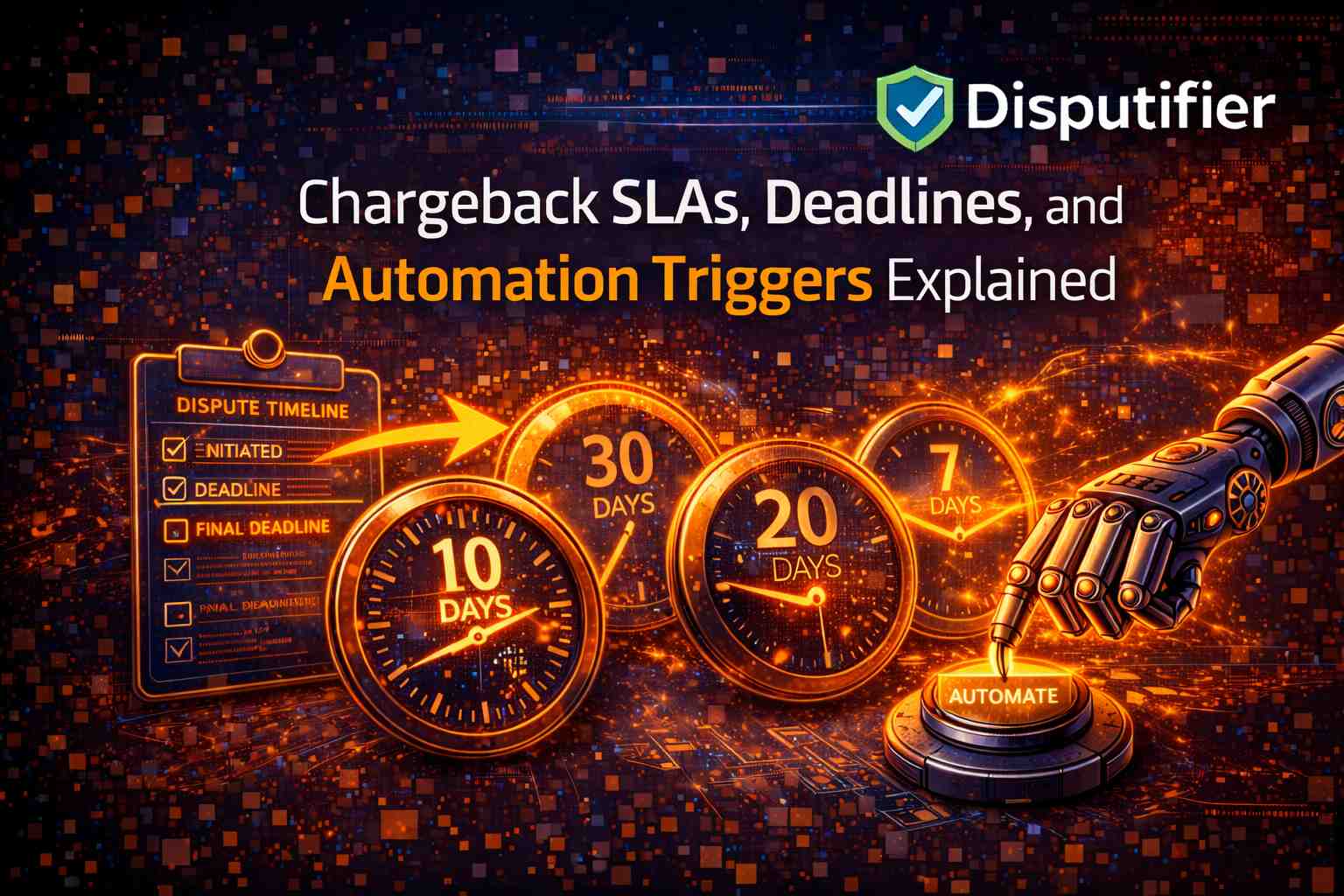
When a chargeback is issued, merchants typically have 7-30 days to respond depending on the network and processor.
If no response is submitted, the chargeback is lost automatically. No appeal. No recovery.
This is one of the most common failure points discussed in
What happens if a merchant doesn’t respond to a chargeback.
Pre-arbitration deadlines
If the issuer rejects your evidence, you enter pre-arbitration. Deadlines here are often shorter and stricter.
Missing pre-arbitration deadlines escalates disputes and increases processor scrutiny.
For a clear breakdown, see
Pre-arbitration deadlines vs chargeback time limits.
Network-specific timeframes
Visa, Mastercard, and other networks each define dispute windows differently. Some allow up to 540 days from transaction date under specific conditions.
That long tail matters for subscriptions, digital goods, and delayed services, explained in
Visa chargeback time limits vs timeframes.
Why Manual Deadline Tracking Fails at Scale
Manual workflows fail for three reasons.
Volume increases faster than human capacity. Deadlines overlap across networks. And evidence collection depends on multiple teams.
This breakdown is detailed in
When manual chargeback handling breaks down for ecommerce brands.
Once a merchant starts missing deadlines, processors interpret it as operational risk, which often leads to fund holds or rolling reserves as explained in
How chargebacks trigger rolling reserves and how to stop them.
Automation Triggers That Actually Protect Revenue
Automation is not about removing humans. It is about ensuring deadlines are never missed.
Effective chargeback automation relies on triggers.
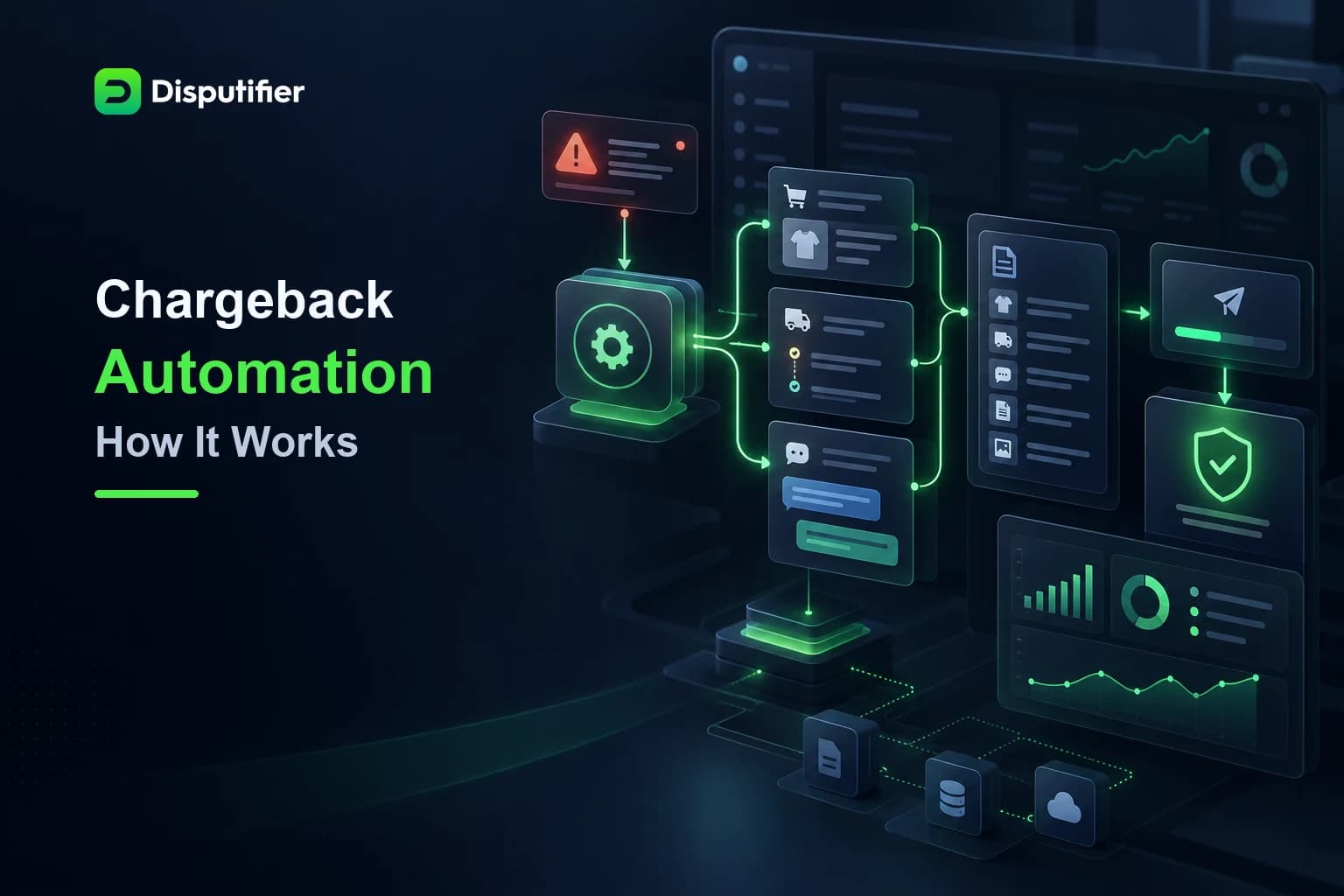
Dispute detection triggers
The moment a dispute appears, automation should:
- log the case
- assign it to the correct workflow
- start the SLA countdown
This prevents disputes from sitting unnoticed in processor dashboards.
Evidence assembly triggers
Automation should pull order data, shipping proof, customer communication, and transaction details immediately.
Strong evidence frameworks are outlined in
What counts as compelling evidence by reason code.
Submission and escalation triggers
As deadlines approach, automation should:
- alert teams
- escalate priority
- submit evidence before cutoffs
This is especially important for high-volume merchants, as explained in
Chargeback automation for high-volume ecommerce stores.
Why Deadlines Affect More Than Individual Disputes
Missing a single dispute loses money. Repeatedly missing deadlines damages trust.
Processors monitor response consistency. Poor SLA performance increases the likelihood of:
- rolling reserves
- payout delays
- account monitoring
- merchant account termination
If you want the long-term view, read
How chargeback software protects merchant accounts long-term.
How Disputifier Automates Chargeback SLAs End to End
Disputifier is built to eliminate deadline risk entirely.
It does not just track disputes. It enforces time-based workflows that processors trust.
Centralized deadline tracking
Disputifier consolidates all disputes across processors, networks, and payment methods into a single timeline.
You never rely on inboxes or dashboards again.
This aligns with the need to move beyond fragmented tools described in
Dispute management software vs manual workflows.
Automated evidence workflows
Disputifier automatically builds evidence packages based on dispute type, reason code, and historical outcomes.
This improves win rates while reducing manual effort, supporting strategies outlined in
AI chargeback management: how machine learning increases win rates.
SLA-based automation triggers
Disputifier uses time-based triggers to:
- prioritize disputes nearing deadlines
- escalate unresolved cases
- submit evidence automatically when configured
This prevents silent losses and improves processor confidence.
Using BIN Intelligence to Prioritize Deadlines
Not all disputes deserve equal effort.
Issuer behavior and BIN patterns influence outcomes, explained in
Why issuer behavior matters more than reason codes.
Disputifier uses BIN intelligence to:
- identify disputes with high win probability
- deprioritize low-value or low-success cases
- allocate resources intelligently
You can explore BIN behavior directly using the
free BIN checker.
How Automation Reduces Chargeback Ratios and Holds
Consistent SLA compliance improves win rates, but more importantly, it stabilizes trends.
Stable dispute handling reduces:
- chargeback ratio volatility
- processor risk scoring
- likelihood of reserves
If your goal is ratio reduction, this pairs well with
How to lower your chargeback ratio below 1%.
Practical SLA Automation Checklist
A scalable chargeback workflow should include:
- real-time dispute detection
- automated SLA countdowns
- evidence templates by reason code
- escalation triggers
- BIN-based prioritization
- analytics for missed deadlines
This operational maturity is what processors reward.
FAQ
What are chargeback deadlines?
Chargeback deadlines are strict time limits for responding to disputes at each stage of the chargeback lifecycle.
Why are SLAs important for dispute management?
SLAs ensure disputes are handled on time. Missed SLAs result in automatic losses and increased processor risk scoring.
Can automation really prevent missed deadlines?
Yes. Automation removes human error, centralizes timelines, and triggers actions before deadlines expire.
How does Disputifier help with chargeback deadlines automation?
Disputifier tracks all deadlines, automates evidence workflows, and uses triggers to ensure timely submissions across networks.
Do deadlines affect merchant accounts?
Yes. Poor SLA performance contributes to rolling reserves, fund holds, and account monitoring.
Stop Losing Disputes to the Clock
Chargebacks are time-bound by design. Manual workflows cannot keep up.
Disputifier gives ecommerce brands deadline control, automated workflows, and processor-level confidence that protects revenue and merchant accounts.
If you want to identify issuer and BIN patterns before disputes escalate, start with the
free BIN checker.