 All Posts


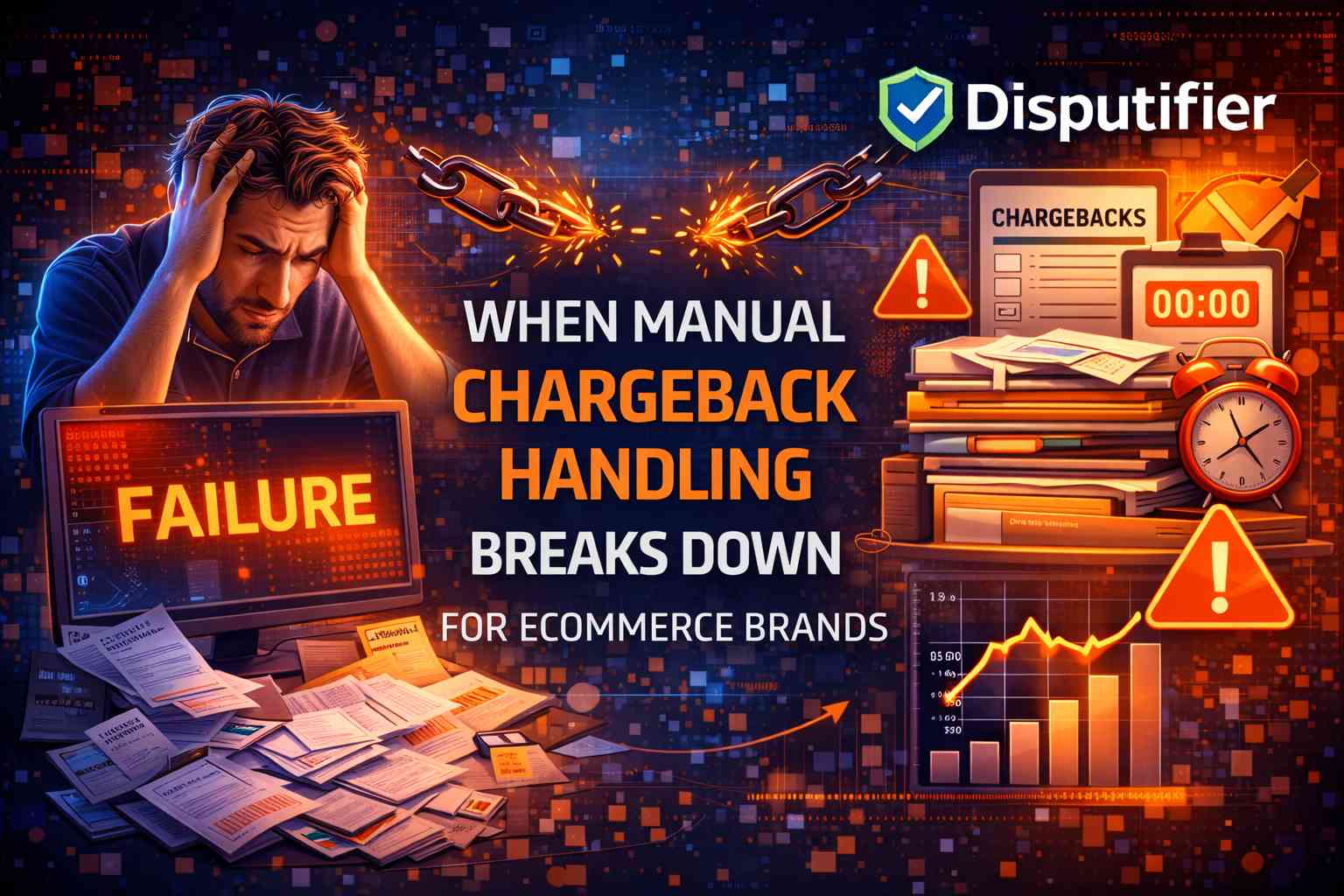
Manual chargeback handling works - until it doesn’t.
Most ecommerce brands start with manual workflows because chargeback volume feels manageable. A few disputes per month. A shared inbox. A spreadsheet. Maybe a basic SOP.
Then volume grows.
Orders increase. Payment methods expand. International customers come in. Friendly fraud rises. And suddenly manual chargeback handling becomes one of the biggest operational bottlenecks in the business.
This article explains where manual chargeback handling breaks down, why ecommerce workflows fail at scale, and how brands transition without losing revenue or control.
What Manual Chargeback Handling Looks Like in Practice
Manual chargeback handling usually involves:
• Monitoring emails or payment dashboards
• Tracking deadlines manually
• Pulling evidence from multiple systems
• Uploading documents by hand
• Guessing which disputes to fight
• Updating spreadsheets after the fact
At low volume, this feels workable. At higher volume, it becomes fragile.
Missed deadlines, inconsistent evidence, and reactive decision-making start to pile up.
The First Breaking Point: Volume and Velocity
Chargebacks don’t grow linearly.
A small increase in order volume can create a disproportionate increase in disputes, especially for subscription products, digital goods, or international orders.
Manual chargeback handling cannot keep up with:
• Multiple disputes landing at once
• Different deadlines by network
• Varying evidence requirements
This often leads to missed responses, which result in automatic losses. The consequences are outlined clearly in What Happens If a Merchant Doesn’t Respond to a Chargeback.
The Second Breaking Point: Inconsistent Decision-Making
Manual workflows rely on human judgment.
Different team members make different calls about:
• Whether to fight or refund
• Which evidence to include
• How much time to spend per dispute
This inconsistency hurts win rates over time.
Winning chargebacks requires pattern recognition, not one-off decisions. That’s why brands that rely on gut feel plateau quickly, as explained in What Ecommerce Data Actually Improves Chargeback Win Rates.
The Third Breaking Point: Friendly Fraud at Scale
Friendly fraud rarely looks urgent.
Customers forget purchases. They dispute subscriptions. They skip support and go straight to their bank. Individually, these disputes seem harmless.
At scale, friendly fraud becomes the dominant chargeback driver.
Manual chargeback handling struggles to detect patterns across customers, issuers, and transaction timing. This allows repeat friendly fraud to continue unchecked.
Machine learning-based approaches solve this, as detailed in How Machine Learning Reduces Friendly Fraud at Scale.
The Fourth Breaking Point: Issuer Behavior Blindness
Issuing banks influence outcomes more than most merchants realize.
Some issuers approve disputes aggressively. Others require extensive documentation. Manual workflows rarely account for this nuance.
Without issuer-level intelligence, teams waste time fighting disputes they are unlikely to win.
Understanding issuer behavior is critical, as outlined in BIN Numbers Explained.
Disputifier makes this insight accessible through its free BIN checker, which helps merchants identify higher-risk transactions before disputes escalate.
The Fifth Breaking Point: Lack of Prevention
Manual chargeback handling is reactive by nature.
Teams respond after a dispute files. By then, the chargeback already counts against the merchant’s ratio.
Modern chargeback strategy focuses on prevention through alerts and early refunds, as described in Prevent Chargebacks With Real-Time Alerts.
Manual systems lack the speed and integration required to act before disputes hit official counts.
How Manual Workflows Impact Merchant Accounts
Chargebacks don’t exist in isolation.
High chargeback ratios trigger:
• Monitoring programs
• Fund holds and rolling reserves
• Increased processing scrutiny
• Account termination risk
Manual handling increases this risk because it allows preventable disputes to slip through.
This connection is explained further in How to Lower Your Chargeback Ratio Below 1% and Why Stripe and Shopify Hold Funds.
Why Ecommerce Chargeback Workflows Fail at Scale
Manual chargeback workflow ecommerce setups fail because they rely on:
• Human memory
• Static processes
• After-the-fact reporting
• Disconnected tools
As complexity increases, errors compound.
This is why many brands reach a breaking point and reassess their approach, as described in Dispute Management Software vs Manual Workflows.
When Brands Start Looking for a Better System
Most brands don’t switch because they want better dashboards.
They switch because:
• Chargebacks consume too much time
• Win rates stagnate
• Friendly fraud keeps repeating
• Payouts feel unstable
• Teams burn out
At this stage, automation alone isn’t enough. Intelligence matters.
How Disputifier Replaces Manual Chargeback Handling
Disputifier is designed to eliminate the weaknesses of manual chargeback handling.
Instead of spreadsheets and inboxes, Disputifier provides:
• Centralized dispute visibility
• Predictive dispute prioritization
• Automated evidence generation
• BIN-level issuer intelligence
• Friendly fraud pattern detection
• Real-time alerts and prevention
This transforms chargeback handling from reactive work into a strategic system.
Disputifier’s AI-driven approach builds on the foundation outlined in AI Chargeback Management and AI vs Rules-Based Chargeback Automation.
Transitioning Away From Manual Handling
Moving away from manual chargeback handling doesn’t require ripping everything out overnight.
High-performing brands start by:
• Identifying repeat dispute patterns
• Automating evidence collection
• Using alerts to prevent disputes
• Applying analytics to decision-making
Disputifier supports this transition without disrupting operations, allowing brands to scale safely.
To better understand which transactions are most likely to become disputes, merchants can start by reviewing issuing bank behavior using the free BIN checker.
The Cost of Waiting Too Long
Manual chargeback handling rarely fails all at once.
It fails slowly. Quietly. Through missed deadlines, repeated friendly fraud, and creeping ratio increases.
By the time merchant accounts are at risk, recovery becomes harder and more expensive.
Disputifier gives ecommerce brands the infrastructure to stay ahead of disputes instead of reacting to them.
FAQ: Manual Chargeback Handling
What is manual chargeback handling?
Manual chargeback handling involves responding to disputes by hand using emails, spreadsheets, and manual evidence submission.
Why does manual chargeback handling fail at scale?
As volume increases, manual workflows cannot keep up with deadlines, issuer behavior, and dispute complexity.
What is a chargeback workflow in ecommerce?
A chargeback workflow ecommerce setup includes detection, evidence collection, response, prevention, and analytics.
When should a brand stop handling chargebacks manually?
Brands should transition once chargebacks consume excessive time, win rates stagnate, or ratios begin to rise.
How does Disputifier help replace manual workflows?
Disputifier automates dispute handling using AI, analytics, and issuer intelligence to reduce workload and improve outcomes.