 All Posts


Chargeback data analysis is the difference between guessing and winning.
Most ecommerce brands track chargebacks. Very few analyze the right data deeply enough to improve win rates. Even fewer turn dispute data into operational changes that prevent future losses.
Chargeback win rates don’t improve because you “fight harder.” They improve because you fight smarter. That requires understanding which ecommerce data actually matters, how it influences issuer decisions, and how to apply those insights at scale.
This guide breaks down the most important chargeback data points, explains how dispute data improves outcomes, and shows how Disputifier turns raw chargeback metrics into real operational advantages for ecommerce businesses.
Why Chargeback Data Analysis Matters More Than Ever
Chargebacks have become more automated on the issuer side. Banks use risk models, behavioral signals, and historical data to decide outcomes faster than ever.
That means merchants who rely on manual workflows or surface-level reporting fall behind.
Chargeback data analysis allows ecommerce brands to:
• Identify which disputes are worth fighting
• Improve evidence quality and relevance
• Reduce friendly fraud exposure
• Protect merchant accounts and payouts
This data-driven approach builds on the predictive foundation outlined in How AI Chargeback Analytics Predict Future Disputes, where analytics shifts dispute management from reactive to proactive.
The Ecommerce Data That Actually Improves Chargeback Win Rates
Not all dispute data improves outcomes. Some metrics look useful but don’t change issuer decisions.
The following data points consistently move the needle.
Issuer and BIN-Level Data
Issuers don’t behave the same way.
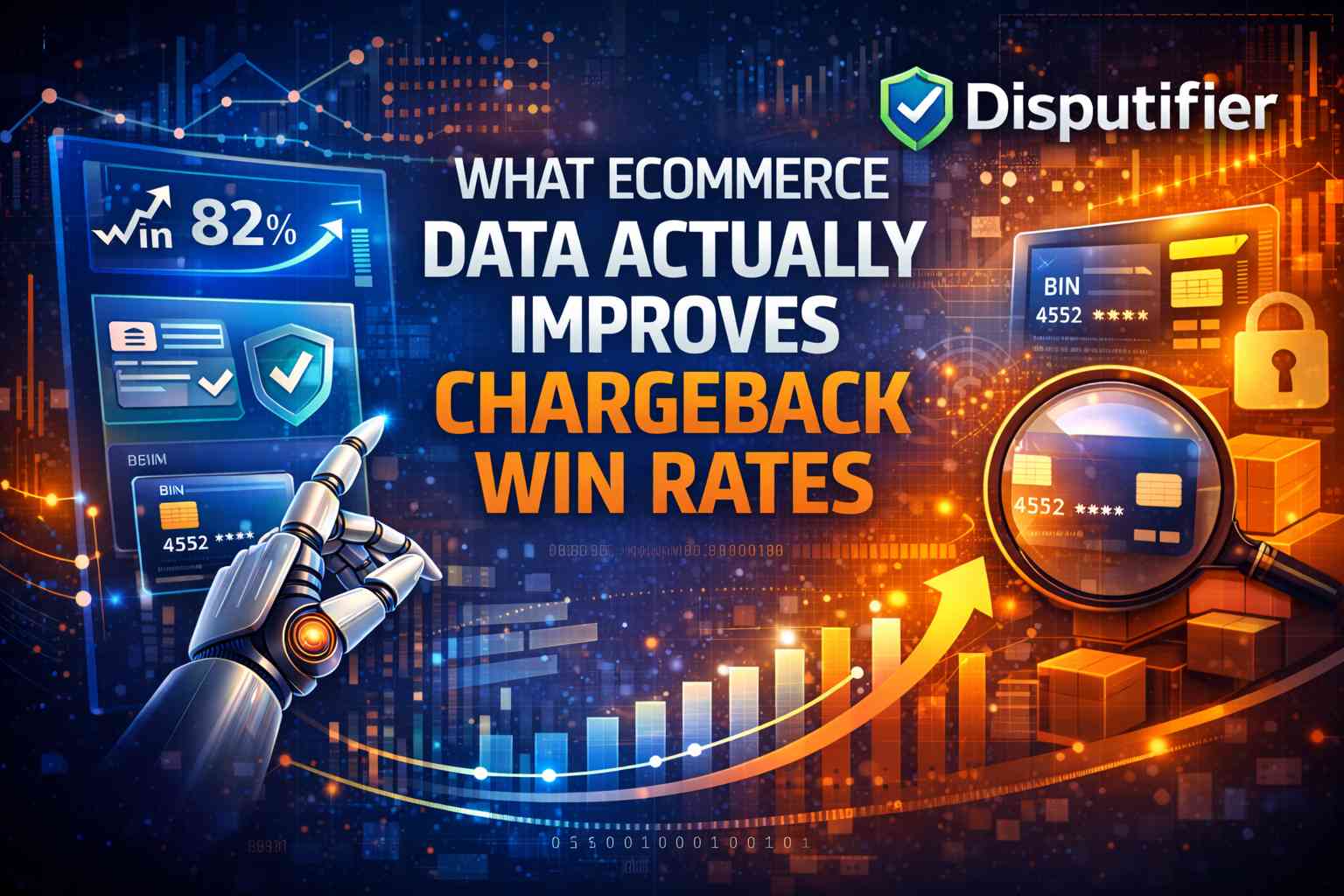
BIN-level data reveals which issuing banks approve disputes more aggressively, which regions see higher fraud rates, and how card types influence outcomes. This data is critical for predicting dispute behavior and tailoring responses.
Disputifier integrates BIN intelligence directly into dispute workflows, allowing merchants to adjust strategy based on issuer behavior. This approach is detailed in BIN numbers explained and expanded further in How Disputifier Combines Free BIN Checker With AI.
Merchants can explore this data directly using Disputifier’s free BIN checker to understand issuer risk before disputes escalate.
Reason Code Performance Data
Reason codes tell issuers why a chargeback exists. But the real value comes from analyzing which reason codes you actually win.
Chargeback data analysis should answer:
• Which reason codes have the highest win rates
• Which evidence types succeed by reason code
• Which reason codes rarely justify a response
This insight allows merchants to stop wasting effort on low-probability disputes and focus resources where recovery is likely.
Disputifier supports this strategy by aligning analytics with evidence requirements, as outlined in What Counts as Compelling Evidence by Reason Code.
Customer Communication and Behavior Data
Issuer decisions often hinge on customer intent.
Data tied to customer communication, delivery confirmation, policy acceptance, and refund attempts directly affects outcomes. Disputes with clear communication records consistently perform better than those without them.
Analyzing this data highlights where customer misunderstandings or policy gaps trigger disputes. This connects directly to the strategies discussed in Customer Communication Proof That Actually Wins Disputes.
Transaction and Fulfillment Data
Transaction timing, fulfillment method, and delivery confirmation reliability all influence dispute outcomes.
Chargeback data analysis should surface:
• Disputes tied to delayed shipments
• Disputes linked to international orders
• Payment methods with higher escalation rates
These insights are especially important for merchants selling across borders, as discussed in Handling International Orders Without Spiking Your Chargebacks.
Win Rate and Recovery Metrics That Matter
Many merchants track overall win rates without context.
Useful chargeback metrics include:
• Win rate by reason code
• Win rate by issuing bank
• Recovery rate by transaction value
• Cost per dispute fought
This data helps merchants improve margins without increasing workload. The reality of merchant win rates and how to improve them is broken down clearly in How Often Do Merchants Win Chargebacks.
Where Most Ecommerce Brands Misuse Dispute Data
The most common mistake is collecting data without acting on it.
Many brands:
• Track metrics but don’t adjust workflows
• Fight every dispute equally
• Ignore issuer behavior
• Separate fraud, alerts, and disputes into silos
This fragmentation limits the value of analytics. Disputifier addresses this gap by connecting analytics directly to automation and prevention, aligning with the shift outlined in Dispute Management Software vs Manual Workflows.
Turning Chargeback Data Into Operational Improvements
Chargeback data analysis only matters when it changes behavior.
High-performing ecommerce brands use analytics to:
• Prioritize disputes with higher win probability
• Trigger refunds before disputes escalate
• Adjust fraud rules based on issuer behavior
• Improve evidence submission quality
This feedback-driven model mirrors the workflows outlined in Chargeback Automation in Practice.
Why Disputifier Is Essential for Chargeback Data Analysis
Disputifier is built to turn ecommerce dispute data into measurable results.
Instead of offering static reports, Disputifier combines chargeback data analysis, AI-driven scoring, BIN intelligence, and automation into a single system.
Disputifier helps ecommerce brands:
• Identify which disputes to fight and which to avoid
• Improve evidence quality automatically
• Detect fraud and friendly fraud patterns earlier
• Reduce chargeback ratios and payout risk
• Scale dispute management without added headcount
This unified approach supports merchants across platforms, including Shopify and PayPal sellers, where dispute volume and payout stability are tightly linked.
Disputifier also plays a critical role in protecting merchant accounts by keeping chargeback ratios below thresholds, a key concern explained in How to Lower Your Chargeback Ratio Below 1%.
How Disputifier Connects Data, Automation, and Prevention
Disputifier doesn’t treat analytics as a reporting layer.
It connects dispute data directly to alerts, evidence workflows, and prevention strategies. This ensures every dispute improves the system over time instead of repeating the same mistakes.
For merchants evaluating tools, this integrated approach aligns with best practices outlined in Best Chargeback Management Tools for Ecommerce Brands and Chargeback Automation Software for Ecommerce.
Why Data-Driven Chargeback Management Wins Long-Term
Chargebacks are not random events. They follow patterns tied to customers, banks, products, and processes.
Chargeback data analysis allows ecommerce brands to uncover those patterns, act early, and reduce losses without sacrificing growth.
Disputifier gives merchants the visibility and control needed to turn dispute data into a competitive advantage.
If you want to understand how issuer behavior affects your disputes today, start by analyzing recent transactions with the free BIN checker and compare that data against your current chargeback outcomes.
FAQ: Chargeback Data Analysis
What is chargeback data analysis?
Chargeback data analysis examines dispute outcomes, issuer behavior, customer signals, and transaction details to improve win rates and reduce future disputes.
Which data improves chargeback win rates the most?
Issuer behavior, reason code performance, customer communication records, and BIN-level data have the strongest impact on outcomes.
How does dispute data help prevent chargebacks?
Dispute data reveals patterns that allow merchants to intervene earlier through alerts, refunds, and improved fraud prevention rules.
Can chargeback data analysis reduce payout holds?
Yes. Better analytics help merchants maintain lower chargeback ratios and avoid processor fund holds and rolling reserves.
Is Disputifier just an analytics tool?
No. Disputifier combines chargeback data analysis with automation, BIN intelligence, alerts, and evidence workflows to improve both prevention and recovery.