 All Posts


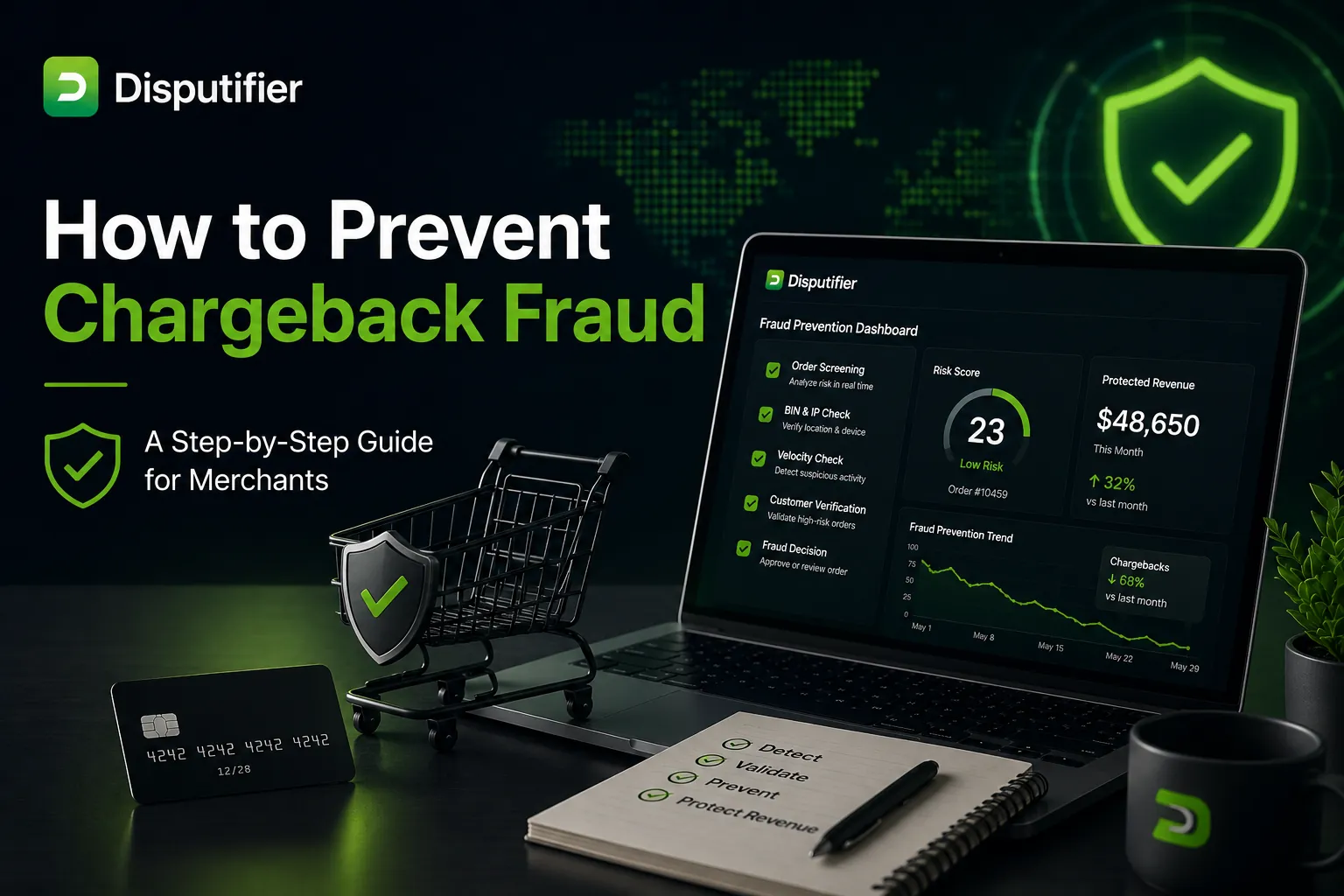
Chargeback fraud is costing ecommerce merchants billions every year. Some of it comes from stolen cards. Most of it comes from real customers deliberately abusing the dispute system. All of it hits your bottom line the same way - lost revenue, lost product, dispute fees, and ratio damage that compounds quietly until your merchant account is at risk.
The good news: most chargeback fraud is preventable. Not with a single tool or a single policy, but with a layered system that addresses fraud at every stage - before the transaction, before the dispute, and when a chargeback does land.
Here's the step-by-step guide to preventing chargeback fraud for ecommerce merchants.
Step 1: Understand the Two Types of Chargeback Fraud You're Fighting
Prevention starts with knowing what you're preventing. Chargeback fraud comes in two distinct forms - and defending against one doesn't automatically defend against the other.
True fraud involves stolen card data. A fraudster uses someone else's card details to place an order. The real cardholder disputes the charge when they notice it. You lose the product, the revenue, and the dispute fee - even though you did nothing wrong.
Friendly fraud involves the real cardholder. They made a legitimate purchase, received the product or service, and then disputed the charge anyway - claiming non-delivery, unauthorized transaction, or product not as described. What is friendly fraud and how it leads to chargebacks covers this pattern in full. It accounts for the majority of chargeback fraud volume for most ecommerce merchants.
Both types require different prevention approaches. A complete chargeback fraud prevention system addresses both simultaneously.
Step 2: Screen Every Order for Fraud Signals Before Fulfillment
The single most effective prevention move is catching fraudulent orders before they ship.
A fraudulent order that never fulfills never generates a chargeback. Every fraudulent order that ships is a guaranteed loss - the only question is when the dispute arrives.
Validate BIN data on flagged orders. The Bank Identification Number on every card identifies the issuing bank, card type, and country of origin. When that data conflicts with the billing address, IP location, or shipping destination, it signals fraud risk you can act on before fulfillment. Disputifier's free BIN checker validates card data instantly. How BIN data helps detect fraud before it happens explains why this signal catches fraud that everything else misses.
Check AVS and CVV results in context. Address Verification Service and CVV checks aren't binary blocks - they're signals to combine with others. A billing address mismatch alone is low risk. The same mismatch combined with a high-risk BIN, a new account, and expedited shipping is a different picture entirely. AVS and CVV mismatches covers how to read these accurately.
Monitor velocity. Multiple orders from the same IP, device, or email domain in quick succession - especially with different card numbers - signal card testing or BIN testing attacks. What is card testing and how to stop it covers the full attack pattern. Velocity monitoring is what catches it early.
Apply risk scoring to every order. Combine fraud signals into a per-order risk score that routes transactions automatically - approving clean orders, flagging risky ones, and sending borderline cases to review with full context. Ecommerce risk scoring covers how to build this framework for your store.
Step 3: Eliminate the Operational Gaps That Enable Friendly Fraud
Friendly fraud thrives where merchant operations create friction for legitimate customers. Fix the friction and you remove most of the motivation to dispute.
Fix your merchant descriptor. If a customer doesn't recognize the charge on their bank statement, they'll dispute it rather than investigate. Your descriptor should clearly and immediately identify your brand. Merchant descriptor best practices is one of the highest-impact, lowest-effort chargeback fraud prevention changes available.
Make refunds easier than chargebacks. When customers can't find your return policy, can't get a quick response from support, or find the process confusing, they default to their bank. If filing a chargeback is easier than getting a refund from you, customers will file chargebacks. A visible policy, fast support responses, and a frictionless return process remove this driver entirely.
Send pre-billing notifications. For any subscription or recurring billing, notify customers before each charge - especially for annual plans or post-trial billing. A simple heads-up email three to five days before billing eliminates the majority of "I didn't know I was being charged" disputes. Subscription chargebacks are one of the highest-volume friendly fraud categories - pre-billing notifications are the cheapest fix.
Document authorization at checkout. For subscriptions and high-value orders, capture explicit authorization with a timestamp. Store it. That record is your first line of defense if a customer later claims they never authorized the charge.
Step 4: Collect Evidence Before Disputes Are Filed
The merchants who win chargeback fraud disputes are the ones who documented the transaction before the dispute was ever filed - not after.
Build documentation practices into your fulfillment workflow rather than scrambling when a chargeback arrives. The evidence that wins disputes includes delivery confirmation with tracking, customer communication records, proof of digital access or product download after the claimed non-delivery date, IP address and device data from checkout, and signed authorization records for subscription billing.
What counts as compelling evidence by reason code covers what's specifically needed for each dispute type. Different reason codes require different evidence - knowing in advance means collecting it proactively rather than realizing too late that you're missing the one thing that would have won.
Step 5: Use Chargeback Alerts to Stop Disputes Before They're Filed
This is the prevention layer most merchants don't know about - and the one with the most direct ratio impact.
Alert networks like Ethoca and Verifi notify merchants when a customer has flagged a transaction with their bank, before a formal chargeback is filed. If you resolve the alert with a refund before the formal filing, the transaction never becomes a chargeback. It never hits your ratio. It never triggers a dispute fee.
Setting up chargeback alerts covers the implementation process. At any real transaction volume, automated alert management is what makes this sustainable - manual monitoring misses windows and creates dangerous inconsistency.
Step 6: Respond to Every Chargeback That Gets Through
Even with all the right prevention systems in place, some chargeback fraud will get through. When it does, your response process determines whether you recover the funds or absorb the full loss.
Respond to every dispute - not just the ones that look winnable. Missing a response deadline is an automatic loss regardless of evidence strength. Consistent response also demonstrates to your processor that you manage disputes actively, which protects your account health independent of individual dispute outcomes.
Speed matters. Response windows are short and non-negotiable. A dispute notification that sits unaddressed for even a few days can close your window on a winnable case.
How to win a chargeback step-by-step covers the response process in full. How to prevent chargeback fraud in ecommerce goes deeper on the specific fraud patterns and how to counter each one with the right evidence.
Step 7: Monitor Your Ratio and Fix Root Causes
Prevention isn't a one-time setup. Chargeback fraud patterns evolve - and your prevention system needs to evolve with them.
Monitor your chargeback ratio monthly. Calculate it the way card networks do: disputes filed divided by total transactions in the same calendar month. Understand your threshold - Visa's standard monitoring program triggers at 0.9% with 100 or more chargebacks, Mastercard's at 1%. Know your number before your processor does.
Use chargeback analytics to understand where fraud is coming from. Which product categories generate the most disputes? Which customer segments? Which reason codes appear most often? That data tells you where to focus prevention effort - and where operational changes will have the biggest impact.
Chargeback monitoring programs covers what happens when prevention fails and your ratio crosses threshold. Understanding the consequences is what makes the prevention work feel worth doing.
How Disputifier Automates Chargeback Fraud Prevention End to End
Disputifier is ecommerce fraud prevention and chargeback management software built specifically for online merchants. It covers every step of the prevention framework above - automatically, in a single platform.
BIN intelligence at every transaction. Disputifier validates card BIN data in real time on every order - flagging issuer country conflicts, prepaid card activity, and card type mismatches before fulfillment decisions are made. The free BIN checker gives merchants access instantly, and Disputifier applies it automatically across full order volume.
Automated chargeback alert resolution. Disputifier integrates with Ethoca and Verifi networks automatically. When a pre-dispute alert comes in, Disputifier processes it - resolving it before it becomes a formal chargeback wherever possible. Every alert resolved this way is a dispute that never touches your ratio.
Real-time chargeback detection and automated evidence response. The moment a dispute is filed, Disputifier detects it and builds a complete evidence package immediately - pulling order records, delivery confirmation, and customer communication from your store automatically. No manual gathering. No missed deadlines. Every dispute gets a complete, timely response.
Machine learning that improves over time. Disputifier's fraud models learn from your specific dispute outcomes - identifying the patterns, card types, and customer behaviors that generate chargeback fraud on your store specifically. Chargeback fraud prevention: how AI and automation are changing the game covers why this adaptive intelligence compounds in your favor over time.
Root cause analytics. Disputifier surfaces your chargeback fraud patterns by reason code, product category, and customer segment - giving you the visibility to fix what's driving disputes, not just respond to individual ones.
Full Shopify integration. Disputifier connects directly to your Shopify store, pulling order data, fulfillment records, and customer communication automatically so every prevention layer operates without manual overhead.
Stop absorbing chargeback fraud losses you could be preventing. Get started with Disputifier today.
Frequently Asked Questions
What is chargeback fraud?
Chargeback fraud occurs when a fraudulent or illegitimate chargeback is filed against a merchant - either through stolen card usage (true fraud) or when a legitimate customer deliberately disputes a valid transaction to obtain a refund while keeping the product (friendly fraud).
What's the most effective way to prevent chargeback fraud?
A layered approach works best: BIN validation and risk scoring before fulfillment, operational fixes that reduce friendly fraud triggers, chargeback alert management that intercepts disputes before they're filed, thorough transaction documentation, and automated dispute response for everything that gets through.
How does BIN intelligence prevent chargeback fraud?
BIN data identifies the issuing bank, card type, and country of origin of every card used in your store. When that data conflicts with customer-provided information, it signals fraud risk before the order ships - giving you the chance to stop the transaction before it generates a chargeback.
What is friendly fraud and how do I prevent it?
Friendly fraud is when a real cardholder disputes a legitimate purchase. Prevention focuses on removing the triggers that push customers toward chargebacks instead of refunds: clear merchant descriptors, easy return processes, pre-billing notifications for subscriptions, and explicit authorization documentation at checkout.
Do chargeback alerts actually prevent fraud?
Yes - chargeback alerts from Ethoca and Verifi notify merchants of potential disputes before formal filing. Resolving an alert with a refund means the transaction never becomes a chargeback and never counts against your ratio.
How does Disputifier prevent chargeback fraud specifically?
Disputifier combines real-time BIN validation, automated Ethoca and Verifi alert resolution, machine learning fraud detection, and automated dispute response into a single platform - covering every stage of chargeback fraud prevention from pre-transaction to post-dispute.
What happens if I don't respond to a chargeback fraud dispute?
You lose automatically, and the loss counts against your chargeback ratio regardless of how strong your position was. Repeated non-responses signal to your processor that disputes aren't being managed - which accelerates account risk.
Can I recover funds lost to chargeback fraud?
Yes - through dispute representment with strong evidence. The success rate depends on the reason code, the quality of your evidence, and whether you respond before the deadline. Disputifier automates this process to maximize recovery rates.
Prevent Chargeback Fraud Before It Damages Your Business
Chargeback fraud isn't random bad luck - it's a predictable problem with predictable solutions. Fraud screening before fulfillment, operational discipline that eliminates friendly fraud triggers, alert management that catches disputes before they're filed, and automated response that handles everything else.
Disputifier gives ecommerce merchants every layer of that system in one platform. Stop absorbing fraud losses that prevention could have stopped. Get started with Disputifier today.