 All Posts


Understanding bin fraud detection is one of the most overlooked advantages in ecommerce risk management. Most merchants focus on chargebacks after they happen. The smarter approach is to stop fraud before the transaction is ever approved.
That is exactly where BIN data becomes powerful.
BIN intelligence allows ecommerce brands to identify high-risk transactions in real time, reduce fraud exposure, and prevent disputes before they impact revenue.
If you are not using BIN data as part of your fraud strategy, you are leaving a major gap in your defense.
To understand the foundation of BIN intelligence, read Free BIN Checker: How to Use BIN Lookup to Prevent Fraud.
What Is BIN Fraud Detection?
BIN fraud detection uses the first 6 to 8 digits of a card to analyze risk before approving a transaction.
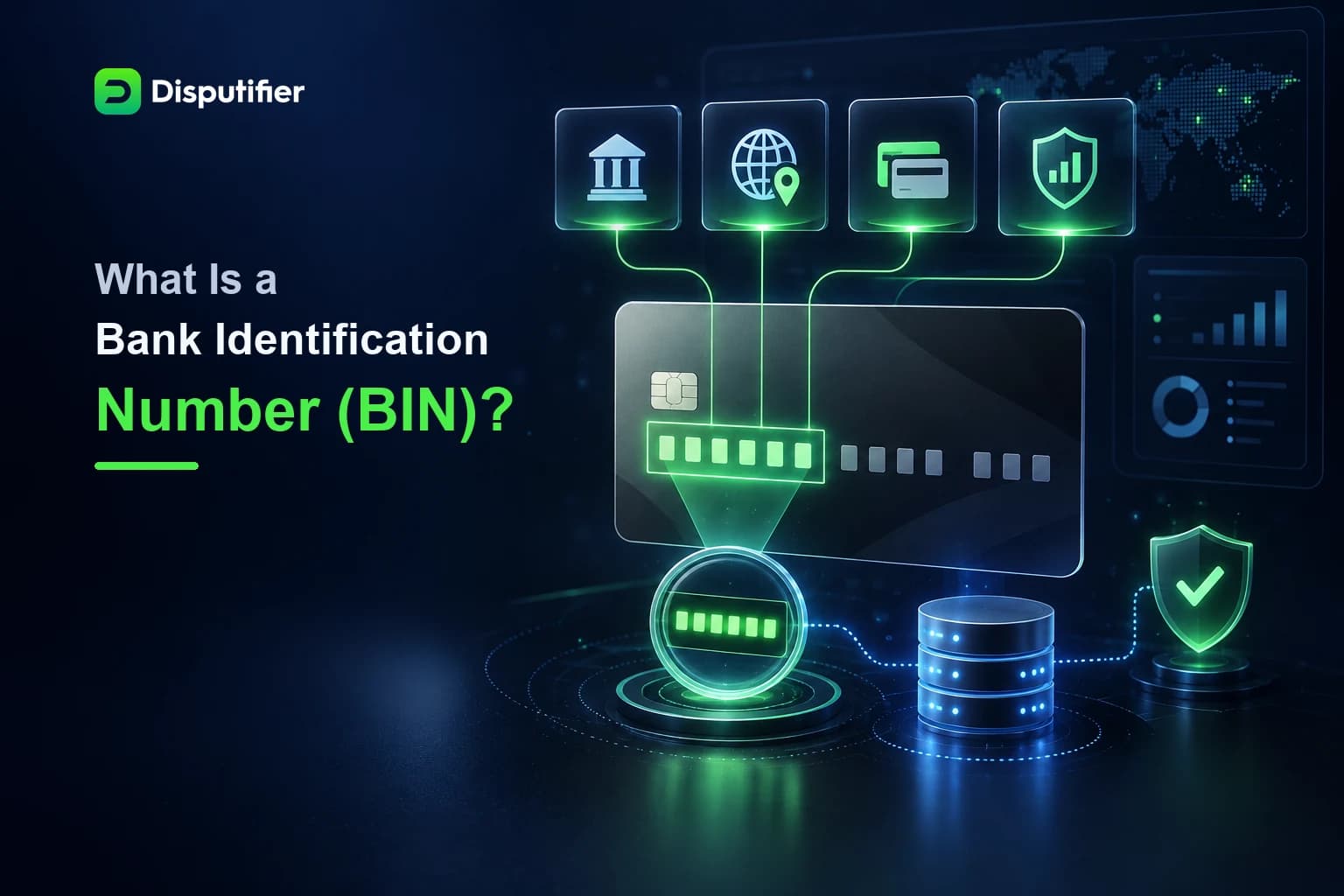
A BIN reveals:
• issuing bank
• card type
• country of origin
• network (Visa, Mastercard, etc.)
This information allows merchants to quickly assess whether a transaction aligns with expected customer behavior.
For a deeper breakdown of how BIN data works, see BIN Numbers Explained: How Banks, Regions, and Risk Scores Affect Your Payouts.
Why BIN Data Is Critical for Fraud Detection
Most fraud detection systems rely on surface-level signals.
These include:
• CVV checks
• AVS matching
• IP location
These signals help, but they are not enough.
BIN data adds a deeper layer of intelligence.
It allows merchants to detect inconsistencies that basic filters miss.
For example:
A customer claims to be in the US, but the BIN shows the card was issued in a high-risk region.
That mismatch is a strong fraud signal.
This is how bin fraud detection works in practice. It identifies risk before the transaction becomes a problem.
Real-Time Fraud Detection Using BIN Data
BIN data is analyzed instantly during payment processing.
Within milliseconds, merchants can:
• verify the issuing bank
• confirm geographic alignment
• identify prepaid or high-risk cards
• flag unusual transaction patterns
This allows businesses to block or review suspicious transactions before fulfillment.
When combined with automation and AI, this process becomes even more powerful.
You can see how this fits into a broader system in Ecommerce Fraud Prevention Strategy: How AI, BIN Data, and Alerts Work Together.
Common Fraud Signals Detected by BIN Data
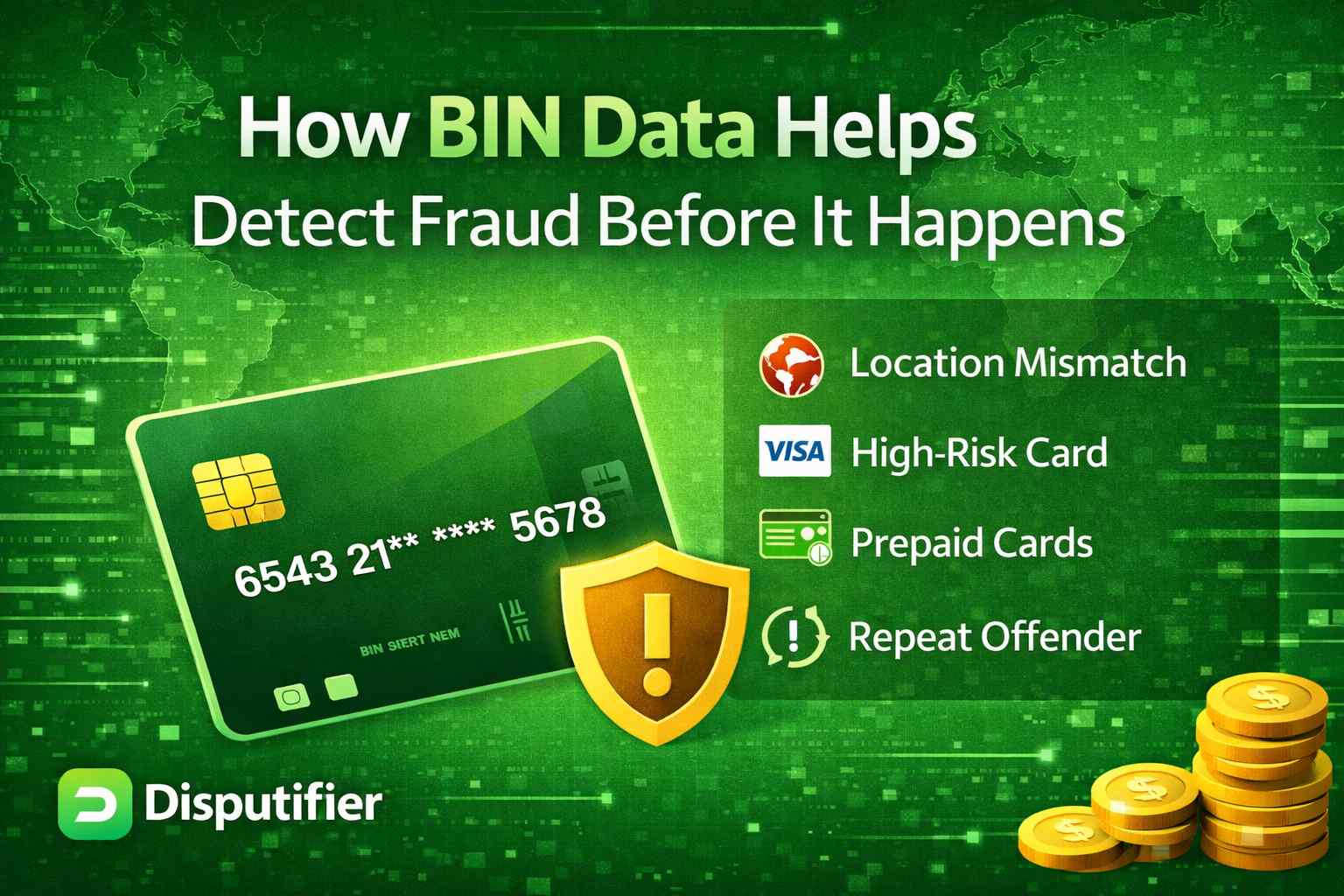
BIN intelligence helps detect several types of fraud signals.
Geographic Mismatch
If the shipping address, IP location, and BIN country do not align, the transaction is higher risk.
High-Risk Issuing Banks
Some issuing banks are associated with higher dispute rates.
BIN data helps identify these patterns early.
Understanding issuer behavior is critical, as explained in Why Issuer Behavior Matters More Than Reason Codes.
Prepaid and Anonymous Cards
Fraudsters often use prepaid cards because they are harder to trace.
BIN data can identify these card types instantly.
Repeat Fraud Patterns
BIN data can be used alongside historical transaction data to identify repeat fraud attempts.
This is especially effective when combined with machine learning.
Learn more in How Machine Learning Reduces Friendly Fraud at Scale.
BIN Data vs Traditional Fraud Filters
Traditional fraud tools rely on fixed rules.
For example:
• block transactions over a certain amount
• flag orders from specific countries
• require manual review for certain conditions
These systems are limited.
They do not adapt to new fraud patterns.
BIN fraud detection provides context.
It allows merchants to make smarter decisions instead of relying on rigid rules.
This is the same shift happening across chargeback automation, as explained in AI vs Rules-Based Chargeback Automation: What Actually Scales.
How BIN Data Prevents Chargebacks
Fraud and chargebacks are directly connected.
Most chargebacks start with transactions that should have been flagged earlier.
BIN data helps stop these transactions before they are approved.
For example:
• high-risk regions often correlate with higher dispute rates
• certain card types are more likely to result in fraud
• mismatched transaction data signals potential abuse
By identifying these risks early, merchants reduce:
• fraud losses
• dispute volume
• chargeback ratios
This directly protects merchant accounts and revenue.
Why Disputifier Is Essential for BIN Fraud Detection
Disputifier goes beyond basic BIN lookup.
It combines BIN intelligence with AI-driven fraud detection and chargeback prevention.
This creates a system that actively learns and improves over time.
With Disputifier, ecommerce brands can:
• detect fraud before transactions are approved
• reduce friendly fraud at scale
• improve dispute win rates
• protect merchant accounts from penalties
Instead of reacting to disputes, Disputifier focuses on prevention.
This is the key difference between basic tools and advanced fraud systems.
Real-Time BIN Analysis
Disputifier analyzes BIN data instantly during transactions.
This allows merchants to identify risk before fulfillment.
AI-Powered Risk Scoring
The platform combines BIN data with behavioral signals to create a complete risk profile.
This improves accuracy and reduces false positives.
Automated Fraud Prevention
Disputifier automates decision-making, allowing merchants to scale without relying on manual review.
If you want to understand how data improves outcomes, read What Ecommerce Data Actually Improves Chargeback Win Rates.
Free BIN Checker Tool
Disputifier offers a free tool that allows merchants to instantly analyze BIN data.
With the tool, you can:
• identify issuing banks
• verify card origin
• assess transaction risk
• detect inconsistencies
You can start using the free BIN checker to analyze transactions immediately.
For many ecommerce brands, this is the first step toward building a stronger fraud prevention system.
Scaling Fraud Detection With BIN Intelligence
As ecommerce stores grow, fraud becomes more complex.
Manual review does not scale.
Basic filters fail.
BIN intelligence becomes essential.
It allows merchants to:
• automate fraud detection
• improve approval rates
• reduce operational workload
• prevent disputes before they happen
This is especially important for high-volume stores.
If you are scaling, you need systems that evolve with your business.
Build a Proactive Fraud Strategy
Most ecommerce brands operate reactively.
They deal with fraud after it happens.
The smarter approach is prevention.
BIN fraud detection allows merchants to identify risk before it becomes a problem.
Disputifier provides the tools to make this possible.
By combining BIN intelligence, AI analytics, and automation, ecommerce brands can take control of fraud and chargebacks.
Start by using the free BIN checker and begin building a smarter fraud prevention system today.
Frequently Asked Questions
What is BIN fraud detection?
BIN fraud detection uses the first digits of a card to identify risk factors such as issuing bank, region, and card type before approving a transaction.
How does BIN data help prevent fraud?
BIN data reveals key details about a card that can indicate risk, such as geographic mismatches, prepaid card usage, and high-risk issuing banks.
Is BIN data enough to stop fraud?
BIN data is powerful, but it works best when combined with AI and behavioral analysis.
How can I check a BIN number?
You can use tools like Disputifier’s free BIN checker to instantly analyze card data and assess risk.
Why is BIN data important for ecommerce?
BIN data helps merchants detect fraud early, reduce chargebacks, and improve transaction approval accuracy.