 All Posts


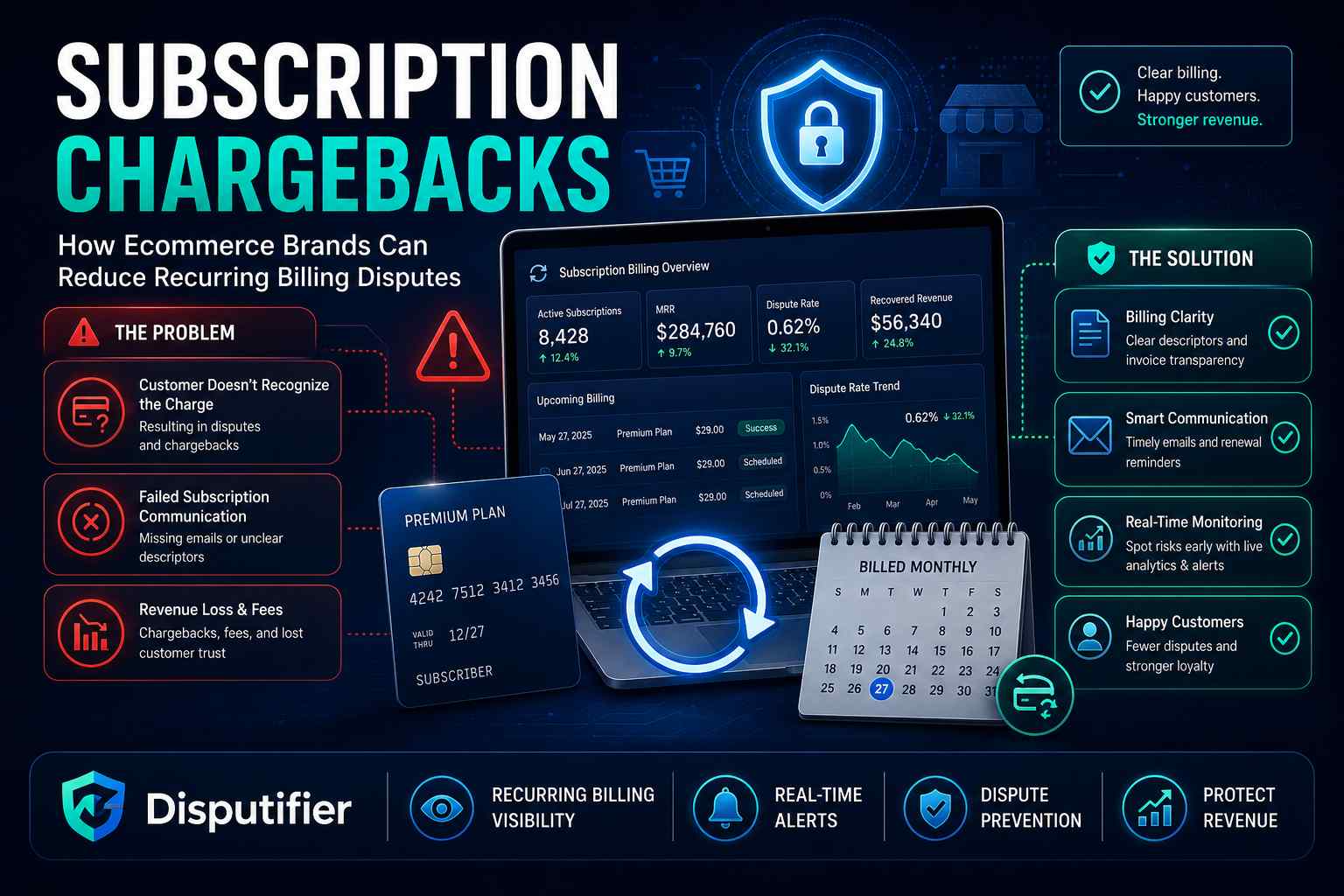
Recurring billing is one of the most powerful revenue models in ecommerce. It's also one of the most reliable sources of chargebacks.
Subscription chargebacks happen when customers dispute a recurring charge - often claiming they didn't authorize it, forgot they were enrolled, or couldn't figure out how to cancel. The result is the same regardless of the reason: you lose the revenue, pay the dispute fees, and take a hit to your chargeback ratio.
For brands running memberships, replenishment programs, or any form of recurring billing, reducing subscription chargebacks isn't optional. It's a core part of protecting your merchant account and keeping your business running.
Why Subscription Chargebacks Happen
Understanding the root cause is the first step to fixing the problem. Subscription chargebacks generally fall into a few categories.
The most common is friendly fraud - a customer who received value from the subscription disputes the charge anyway, often because it's easier than going through your cancellation process. How to prevent chargeback fraud in ecommerce covers this pattern in depth, but in the subscription context, it's especially prevalent because customers tend to forget recurring charges and react by disputing rather than reaching out.
The second major cause is genuine confusion. If your merchant descriptor - the name that appears on a customer's bank statement - doesn't clearly match your brand, customers won't recognize the charge and will dispute it. Merchant descriptor best practices are one of the simplest, highest-impact fixes available to subscription merchants.
The third is a poor cancellation experience. If customers struggle to cancel, they turn to their bank instead. That creates a dispute, a chargeback fee, and a black mark on your ratio - all of which you could have avoided with a cleaner offboarding flow.
The Real Cost of Subscription Chargebacks
A single subscription chargeback costs more than the transaction value. You lose the subscription revenue, pay a dispute fee that typically runs between $15 and $100 depending on your processor, and lose any fulfilled product or service.
More importantly, subscription chargebacks accumulate. Because the same billing issue tends to affect multiple customers simultaneously, a problem with your billing communication or descriptor can trigger a wave of disputes in a short window. That's how subscription brands end up in processor monitoring programs.
What is a chargeback? covers the full cost structure - but for subscription merchants, the compounding effect is the real danger. One bad billing cycle can push your ratio above threshold before you realize what's happening.
How to Reduce Subscription Chargebacks Before They're Filed
Prevention is always cheaper than response. Here's where subscription merchants should focus their efforts.
Send Pre-Billing Notifications
Notify subscribers before every recurring charge - especially for annual plans or after a free trial ends. A simple email three to five days before billing reminds customers the charge is coming and gives them a chance to cancel if they no longer want the service.
This one step eliminates a significant portion of "I didn't know I was being charged" disputes before they're ever filed.
Make Cancellation Easy and Visible
Your cancellation process should be findable in under 30 seconds. If customers have to search for a cancel button, email your support team, or wait on hold, they'll go to their bank instead.
Make cancellation available in the customer portal, confirm it immediately via email, and send a follow-up confirming no future charges. That paper trail matters if a dispute is filed anyway.
Fix Your Merchant Descriptor
Your descriptor is what appears on a customer's statement. If it reads as a generic payment processor name or an abbreviated version of your brand that customers won't recognize, disputes follow.
Use a descriptor that clearly identifies your business. Include a customer service phone number in your descriptor if your processor allows it - that gives confused customers an alternative to disputing.
Collect Clear Authorization at Sign-Up
Every subscription sign-up should include explicit, unambiguous authorization language. Show customers exactly what they're agreeing to: the billing amount, the billing frequency, and how to cancel.
Store that authorization with a timestamp. If a dispute is filed later claiming unauthorized billing, that record is your most important piece of evidence. What counts as compelling evidence by reason code matters here - for subscription disputes, authorization documentation is central to a winning response.
Respond to Cancellation Requests Immediately
Delayed cancellation processing is a significant source of subscription chargebacks. If a customer cancels and then sees another charge before the cancellation is processed, they'll dispute it - and they'll be right to.
Automate cancellation confirmation so it triggers the moment a request is submitted. No delays, no manual processing windows, no room for error.
How Subscription Chargeback Disputes Work
When a subscription chargeback is filed, how a dispute works from the merchant side follows the same general process as any other chargeback - but the evidence requirements are specific to recurring billing.
The most common reason codes for subscription chargebacks involve "credit not processed," "transaction not recognized," and "services not rendered." Chargeback reason codes explained covers the full breakdown - but for subscription disputes, your response needs to include authorization records, billing notifications sent, and evidence that cancellation was or wasn't requested before the disputed charge.
Response deadlines are short. Missing a deadline means an automatic loss regardless of how strong your evidence is. That's why automated dispute management is critical for subscription brands - you can't afford to rely on manual processes when disputes can arrive in volume and on short timelines.
What Happens When Subscription Chargebacks Stack Up
A rising chargeback ratio doesn't just cost you money - it puts your merchant account at risk. Chargeback protection for merchants covers what's at stake when ratios climb, but for subscription brands, the risk is especially acute because disputes can spike suddenly after a billing cycle problem.
Processors monitor merchant chargeback ratios continuously. When a merchant crosses threshold - typically 1% of transactions - they enter monitoring programs that come with fees, additional scrutiny, and the threat of account termination. For subscription businesses, losing your merchant account means your entire recurring revenue model shuts down.
Prevention and fast dispute response aren't just good practice - they're what keeps your business operating.
How Disputifier Protects Subscription Merchants
Disputifier is chargeback prevention and dispute management software built specifically for ecommerce merchants, including brands with recurring billing models. It automates the detection, evidence building, and response process so subscription chargebacks never fall through the cracks.
When a dispute is filed against a recurring charge, Disputifier detects it in real time and immediately pulls the relevant evidence - authorization records, billing notifications, cancellation logs, and customer communication - and packages it into a response aligned with the specific reason code. No manual work. No missed deadlines.
Disputifier integrates with chargeback alert networks, giving subscription merchants the window to process a refund before a dispute formally becomes a chargeback. For subscription brands where the same billing issue can trigger multiple disputes simultaneously, that early intervention is what prevents a single problem from becoming a ratio crisis.
Its machine learning models learn from your specific dispute patterns over time - improving evidence packages and response accuracy the longer you use the platform. For subscription merchants dealing with recurring dispute patterns, that adaptive intelligence is a significant advantage over static, rules-based tools.
Disputifier also surfaces chargeback analytics that help subscription brands identify root causes - whether that's a descriptor problem, a billing notification gap, or a cancellation flow issue - so you can fix the source, not just respond to the symptoms.
If you're running any form of recurring billing and managing disputes manually, Disputifier is the system you need. Start protecting your subscription revenue with Disputifier today.
Frequently Asked Questions
**What are subscription chargebacks?**Subscription chargebacks occur when a customer disputes a recurring billing charge with their bank rather than requesting a refund or cancellation through the merchant. They're one of the most common chargeback types for ecommerce brands with membership or replenishment models.
**What's the most common reason for subscription chargebacks?**The most common causes are unrecognized charges - often due to an unclear merchant descriptor - forgotten subscriptions, difficulty canceling, and friendly fraud where a customer disputes a charge they did authorize.
**How do I prove authorization in a subscription chargeback dispute?**Your strongest evidence includes a timestamped record of the customer's sign-up, the authorization language they agreed to, any billing notifications sent before the disputed charge, and confirmation that cancellation was not requested before billing occurred.
**Can I prevent subscription chargebacks entirely?**You can't eliminate them entirely, but you can reduce them significantly. Pre-billing notifications, clear descriptors, easy cancellation, and explicit authorization language at sign-up address the majority of root causes.
**How does Disputifier help with subscription chargebacks specifically?**Disputifier detects subscription disputes in real time, builds evidence packages automatically using your billing and authorization records, and submits responses before deadlines close. Its alert integrations also give you the chance to resolve recurring billing disputes before they become formal chargebacks.
**What happens if my subscription chargeback ratio gets too high?**Your processor may place you in a chargeback monitoring program, which comes with additional fees and restrictions. If the ratio continues to climb, you risk losing your merchant account entirely - which shuts down your ability to process recurring payments.
**Do I need different evidence for subscription chargebacks vs. standard disputes?**Yes. Subscription disputes typically require proof of authorization, billing notification records, and cancellation history. The specific evidence required varies by reason code - chargeback reason codes explained breaks down what's needed for each.
Reduce Subscription Chargebacks Before They Damage Your Merchant Account
Subscription chargebacks are predictable, preventable, and manageable - if you have the right systems in place. Pre-billing notifications, clear descriptors, airtight authorization records, and fast dispute response cover most of the exposure.
Disputifier automates the response side completely and gives subscription merchants the real-time detection, alert integrations, and analytics they need to keep their chargeback ratio in check. Stop losing recurring revenue to disputes you could have prevented or won. Get started with Disputifier today.