 All Posts


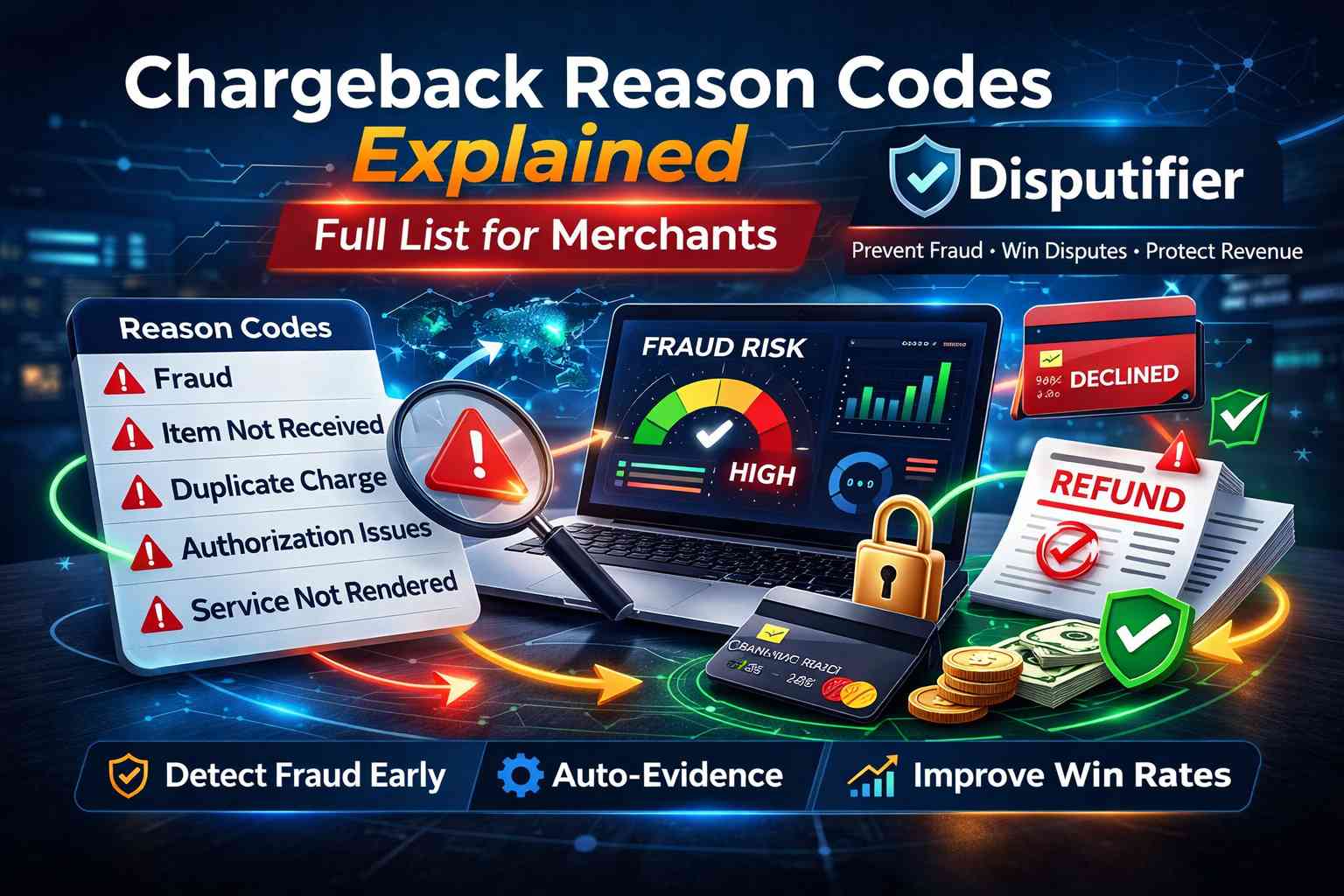
Understanding chargeback reason codes is essential for any ecommerce business that wants to reduce losses, respond correctly to disputes, and protect its merchant account.
Too many merchants treat chargebacks as one broad problem. That is a mistake.
A fraud dispute is not the same as a product-not-received claim. A duplicate billing complaint is not the same as a subscription cancellation issue. Each dispute type has its own evidence standards, deadlines, and likely outcome.
That is why chargeback reason codes matter so much.
They tell you why the issuer or cardholder filed the dispute. They shape the evidence you need. They also help you identify the root cause behind chargeback trends.
If you want to build a stronger foundation first, read Chargeback vs Dispute: Understanding the Difference to Protect Your Store.
What Are Chargeback Reason Codes?
Chargeback reason codes are standardized labels used by card networks and issuers to explain why a transaction was disputed.
When a chargeback is filed, the bank assigns a code that points to the dispute category. That code helps merchants understand what happened and how to respond.
Reason codes usually fall into a few broad groups:
- fraud
- authorization errors
- processing errors
- customer disputes
- merchandise or service issues
Each card network has its own structure and naming conventions. Visa, Mastercard, American Express, and Discover do not all classify disputes in exactly the same way.
That creates confusion for merchants, especially when they try to scale dispute handling across multiple payment channels.
Why Chargeback Reason Codes Matter
Chargeback reason codes are not just administrative labels. They directly affect how merchants should respond.
A reason code helps determine:
- what evidence is considered compelling
- whether the dispute is worth fighting
- how quickly you need to respond
- what part of your business process failed
- how to prevent similar disputes in the future
If you ignore reason codes and submit the same evidence package every time, your win rates will suffer. That is one reason generic dispute handling breaks down as volume increases.
To see how evidence should match the actual dispute type, read What Counts as Compelling Evidence by Reason Code: A Merchant’s Template Library.
The Main Categories of Chargeback Reason Codes
While the exact code numbers vary by network, most chargeback reason codes fit into the following buckets.
Fraud-Related Reason Codes
These codes usually mean the cardholder claims they did not authorize the transaction.
Common examples include:
- card not present fraud
- counterfeit card fraud
- stolen card use
- no cardholder authorization
This is one of the most expensive categories because fraud chargebacks hurt both revenue and merchant account health.
Fraud-related reason codes often point to problems in checkout controls, account takeover protection, card testing defense, or transaction screening.
This is where tools like Disputifier become critical. Disputifier helps ecommerce merchants detect risky patterns before transactions turn into fraud disputes. It combines transaction data, AI-driven analytics, and fraud indicators to help merchants stop bad orders earlier.
BIN intelligence also matters here. Risky card origin, prepaid cards, and geographic mismatches can all signal higher fraud exposure. Merchants can use Disputifier’s free BIN checker to analyze card-level risk factors and support smarter fraud decisions.
For more on how fraud signals connect to dispute prevention, read How BIN Data Helps Detect Fraud Before It Happens.
Authorization Reason Codes
Authorization disputes happen when a merchant failed to get proper approval or did not follow network authorization rules.
Common examples include:
- missing authorization
- expired authorization
- declined authorization
- amount exceeds approved authorization
These cases are often operational failures rather than customer complaints.
If your team captures payments incorrectly, ships after authorization windows expire, or mishandles recurring billing approvals, these reason codes can start piling up.
They are especially dangerous because they often reflect internal process weaknesses that can scale into larger risk issues.
Processing Error Reason Codes
Processing errors happen when the transaction itself was handled incorrectly.
Examples include:
- duplicate transaction
- incorrect amount processed
- paid by other means
- credit not processed
- transaction not recognized due to processing issue
These disputes usually point to billing, refund, or system errors.
Some merchants underestimate these because they do not sound as serious as fraud. That is shortsighted. Repeated processing mistakes damage customer trust and create avoidable chargeback volume.
Merchandise or Service Reason Codes
These are common in ecommerce and usually involve customer dissatisfaction or delivery problems.
Examples include:
- merchandise not received
- defective or not as described
- canceled recurring transaction
- services not provided
- returned merchandise not credited
These reason codes often come down to fulfillment, product expectations, refund handling, or weak communication.
For many merchants, this category reveals operational issues outside the payment stack. Delayed shipping, vague policies, poor product descriptions, and unresponsive support teams all contribute.
Customer communication records matter a lot here. Order confirmations, delivery updates, refund acknowledgments, and support messages can all influence whether you win or lose.
A Practical Full List of Chargeback Reason Code Types for Merchants
Merchants do not always need to memorize every network-specific number. What matters more is understanding the functional type of dispute and what it means.
Here is the practical full list merchants should know.
1. Unauthorized Transaction
The cardholder says they did not make or approve the purchase.
This is often tied to:
- stolen card data
- account takeover
- friendly fraud
- card-not-present abuse
2. Duplicate Processing
The customer claims they were charged more than once for the same order.
This usually points to a payment system or checkout issue.
3. Incorrect Transaction Amount
The processed amount does not match what the customer expected or approved.
This often happens through billing errors or pricing confusion.
4. Merchandise Not Received
The customer claims the product never arrived.
Shipping records, carrier scans, and delivery confirmation are central here.
5. Product Not as Described or Defective
The customer claims the item was damaged, poor quality, or significantly different from what was advertised.
Clear product pages and strong evidence matter.
6. Canceled Recurring Billing
The customer says they canceled but were charged again.
This is common with subscription businesses.
7. Credit Not Processed
The customer says they returned the product or were promised a refund that never arrived.
Refund processing logs are critical.
8. Services Not Rendered
The cardholder claims the promised service was never delivered.
This shows up often in digital goods, consulting, travel, and event businesses.
9. Authorization Problems
The transaction was processed without proper approval or outside allowed rules.
10. General Processing Errors
This includes technical or administrative mistakes in payment handling.
Why Merchants Lose Chargebacks Even When They Are Right
A lot of merchants lose valid cases because they respond to the reason code incorrectly.
Common mistakes include:
- sending irrelevant evidence
- missing response deadlines
- misunderstanding the dispute category
- failing to provide timeline proof
- treating all reason codes the same
This is where manual workflows start hurting growth. As disputes rise, your team cannot afford to guess what each code means or scramble for evidence every time.
That is why automation matters.
How Disputifier Helps Merchants Handle Chargeback Reason Codes
Disputifier is built for ecommerce merchants that need smarter dispute prevention and recovery. It is not just a chargeback dashboard. It is a system designed to help merchants identify root causes, improve responses, and reduce dispute volume over time.
When it comes to chargeback reason codes, Disputifier helps merchants in a few critical ways.
It organizes disputes by actual risk and root cause
Instead of treating all chargebacks the same, Disputifier helps merchants analyze patterns by dispute type, transaction behavior, and fraud signals.
That gives merchants better visibility into which reason codes are driving the most damage.
It improves evidence strategy
Different reason codes require different evidence. Disputifier helps merchants build stronger response workflows by connecting transaction data, customer communication, and order records to the right dispute category.
It supports prevention, not just recovery
The best chargeback strategy is not winning more disputes after the fact. It is reducing the number that happen in the first place.
Disputifier helps merchants detect fraud earlier, flag risky orders, and use data more intelligently across the dispute lifecycle.
It helps protect merchant accounts
Too many chargebacks can trigger processor scrutiny, rolling reserves, and payout problems. Disputifier helps merchants reduce risk before those problems escalate.
To see why long-term protection matters, read How Chargeback Software Protects Merchant Accounts Long-Term.
How to Use Reason Codes to Reduce Future Chargebacks
Chargeback reason codes are not only useful for responding to disputes. They are also one of the best tools for prevention.
Merchants should review reason code trends regularly and ask:
- Are fraud codes increasing from specific regions or card types?
- Are product-related disputes tied to one SKU or supplier?
- Are duplicate charges linked to checkout bugs?
- Are recurring billing disputes coming from cancellation friction?
- Are credit-not-processed disputes tied to refund delays?
This turns chargebacks from random pain into actionable data.
That is exactly how strong ecommerce brands operate. They use dispute data to improve policies, checkout flows, fraud controls, and customer experience.
For a broader view of how dispute data can guide prevention, read Chargeback Analytics: Find Root Causes and Reduce Fund Holds.
Why Chargeback Reason Codes Matter More as You Scale
At low volume, merchants can survive with sloppy dispute handling.
At scale, that falls apart.
As order counts grow, each category of chargeback reason code affects a different part of your business:
- fraud controls
- customer service
- billing systems
- fulfillment
- refund operations
- subscription management
That means reason code analysis is not just a payments issue. It becomes an operations issue and a revenue protection issue.
If your team is still handling disputes manually, you are already behind.
This is why more ecommerce brands are moving toward automated, AI-supported workflows that adapt to dispute patterns instead of reacting case by case.
Build a Smarter Chargeback Response Strategy
If you want to reduce losses, you need to understand chargeback reason codes at a deeper level.
The goal is not just to decode the bank’s label. The goal is to connect that label to the right evidence, the right prevention strategy, and the right operational fix.
Disputifier helps ecommerce merchants do exactly that.
It gives merchants the tools to spot fraud earlier, organize disputes better, improve evidence quality, and protect merchant accounts from long-term damage.
If you want a stronger system for fraud and dispute prevention, start with Disputifier’s free BIN checker and build toward a more intelligent chargeback workflow.
Frequently Asked Questions
What are chargeback reason codes?
Chargeback reason codes are labels assigned by issuers or card networks to explain why a transaction was disputed. They help merchants understand the claim and determine how to respond.
Are chargeback reason codes the same across Visa and Mastercard?
No. Each card network has its own code structure and wording, although the core dispute categories are often similar.
What are the most common chargeback reason codes for ecommerce merchants?
The most common categories include unauthorized transactions, merchandise not received, canceled recurring billing, credit not processed, duplicate processing, and product-not-as-described claims.
Why do chargeback reason codes matter?
They determine what evidence you need, how fast you must respond, and what part of your business process may be causing the dispute.
How can merchants reduce chargebacks by reason code?
Merchants can reduce chargebacks by analyzing patterns in dispute categories, fixing root operational issues, improving fraud controls, and using tools like Disputifier to automate prevention and response workflows.