 All Posts


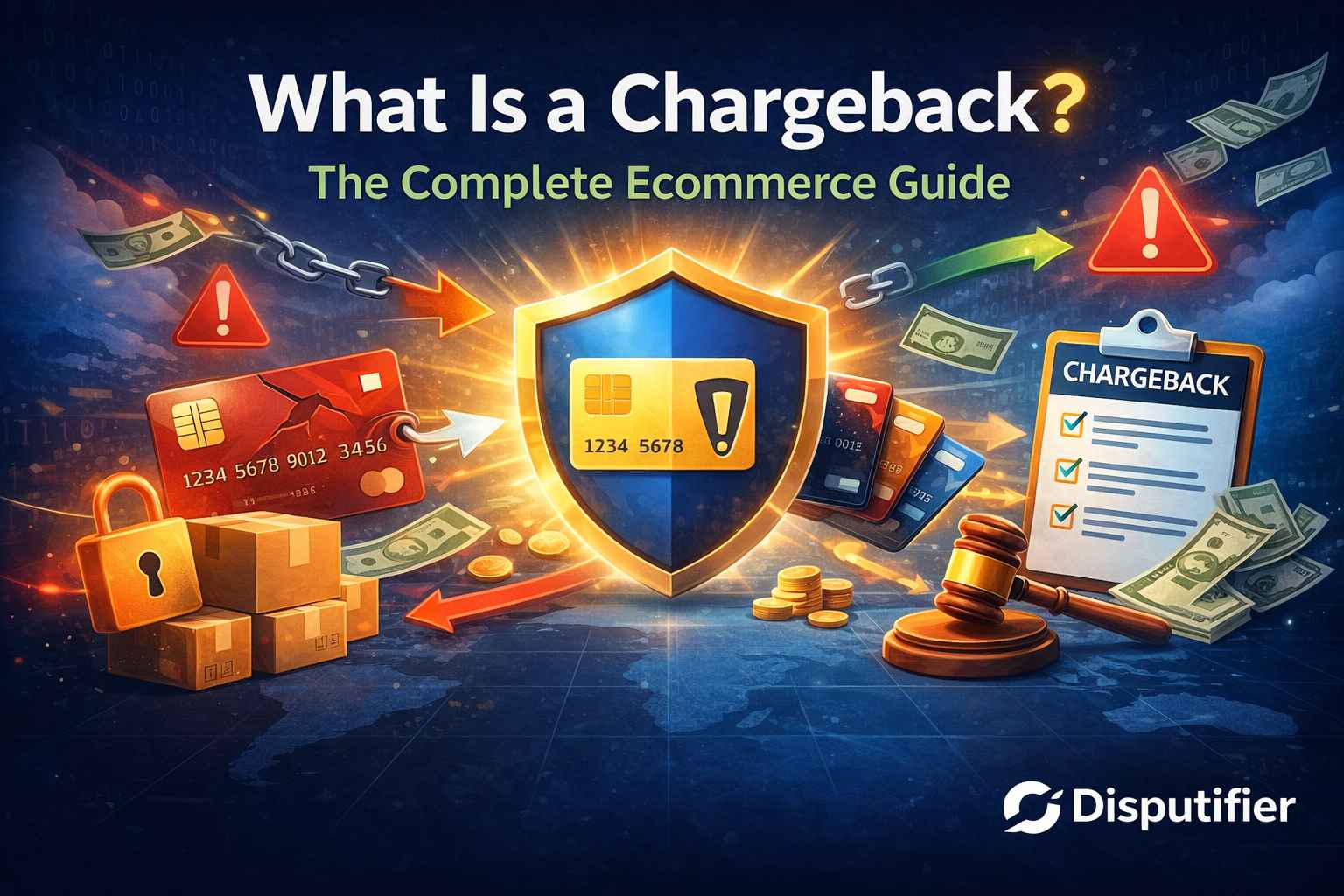
If you run an online store, you need to understand what a chargeback is.
A chargeback is not just a refund with extra steps. It is a forced payment reversal initiated through the customer’s bank or card issuer. When that happens, the merchant can lose the sale, the product, shipping costs, chargeback fees, and time spent responding.
For ecommerce brands, chargebacks matter because they affect far more than one transaction. If they rise too high, they can damage your chargeback ratio, trigger processor scrutiny, and put your merchant account at risk.
That is why this guide matters.
This page is your foundation for understanding how chargebacks work, why they happen, how they affect ecommerce businesses, and what merchants can do to prevent and fight them.
If you also want the broader fraud context, read Ecommerce Fraud Prevention: Complete Guide for Online Stores.
What is a chargeback?
A chargeback is a payment reversal that happens when a cardholder disputes a transaction through their bank instead of resolving the issue directly with the merchant.
The bank temporarily or permanently pulls the funds from the merchant and reviews the case based on the reason for the dispute.
Chargebacks were originally designed as consumer protection. They help cardholders recover funds in cases of fraud, billing errors, or legitimate merchant failure.
But in ecommerce, chargebacks are often more complicated.
Some are valid. Some come from criminal fraud. Some come from friendly fraud. Some happen because the customer did not recognize the charge, the package arrived late, or the refund process was unclear.
That is why ecommerce merchants need a real system for prevention and response.
How does a chargeback work?
The chargeback process usually follows these steps:
- The customer disputes a transaction with their bank
- The bank assigns a reason code and opens the case
- The transaction amount is reversed from the merchant
- The merchant gets a chance to respond with evidence
- The issuer reviews the evidence and makes a decision
If the merchant proves the transaction was valid, the funds may be returned.
If not, the merchant loses the dispute.
That is the simple version. In reality, timelines, reason codes, evidence requirements, and escalation stages vary by card network and dispute type.
Why do chargebacks happen?
Chargebacks usually happen for one of a few reasons:
- the cardholder claims the purchase was unauthorized
- the item was not received
- the product was not as described
- the customer says they were billed incorrectly
- the customer says they canceled but were still charged
- the merchant never processed an expected refund
- the customer skips support and goes straight to the bank
That last one is more common than many merchants think.
A lot of ecommerce chargebacks are not caused by sophisticated fraud. They are caused by confusion, communication gaps, weak internal processes, or friendly fraud.
To understand the full range of dispute categories, read Chargeback Reason Codes Explained: Full List for Merchants.
Chargeback vs dispute
Many merchants use these terms interchangeably, but they are not always the same.
A dispute is the broader term. It refers to a customer challenging a transaction.
A chargeback is one specific type of dispute where the bank formally reverses the transaction.
That difference matters because not every dispute reaches the chargeback stage. Some are resolved earlier through alerts, customer service, refunds, or pre-chargeback intervention.
If you want the full breakdown, read Chargeback vs Dispute: Understanding the Difference to Protect Your Store.
Chargeback vs refund
A refund is initiated by the merchant. A chargeback is initiated by the bank.
That difference is huge.
With a refund, the merchant stays in control and resolves the issue directly with the customer.
With a chargeback, the bank steps in, takes the money back, and may also impose fees or risk consequences on the merchant.
That is why merchants should make refunds and support easy. If customers feel ignored, they are much more likely to go straight to the bank.
For a full explanation, read Chargeback vs Refund: What Merchants Need to Know.
Why chargebacks are so expensive for ecommerce merchants
A chargeback costs more than the original sale.
When you lose one, you may lose:
- the transaction revenue
- the shipped product
- the shipping cost
- payment processing time
- support time
- evidence preparation time
- the chargeback fee
- the customer acquisition cost behind the order
And if chargebacks keep stacking up, the larger cost begins.
Processors can see your business as high risk. That may lead to fund holds, rolling reserves, stricter underwriting, or even account termination.
That is why smart merchants do not treat chargebacks as isolated events. They treat them as a revenue protection issue.
What are the most common chargeback types in ecommerce?
Most ecommerce chargebacks fall into a few buckets.
Fraud chargebacks
The customer claims they did not authorize the transaction.
These can come from stolen card use, account takeover, or friendly fraud.
Merchandise not received
The customer says the order never arrived.
These cases often come down to weak tracking, poor delivery communication, or fulfillment problems.
Product not as described
The customer says the item was defective, misleading, or significantly different from the product page.
Credit not processed
The customer expected a refund, but says they never received it.
Duplicate or processing errors
The customer claims they were charged twice or billed incorrectly.
Each of these categories needs different evidence and a different prevention strategy.
What happens if a merchant does not respond to a chargeback?
If a merchant does not respond, they usually lose automatically.
That means the funds stay reversed and the chargeback counts against the business.
This is one of the fastest ways ecommerce merchants damage their own chargeback performance. They miss deadlines, fail to organize evidence, or assume the case is not worth the effort.
Sometimes not fighting is the right call. But failing to respond because your process is disorganized is different. That is operational failure.
How do merchants fight chargebacks?
Merchants fight chargebacks by submitting evidence that proves the transaction was valid.
That may include:
- order confirmation
- AVS and CVV match results
- billing and shipping details
- IP address data
- device information
- tracking and delivery confirmation
- customer communication
- usage logs for digital goods
- refund or cancellation records
- policy acceptance records
The exact evidence depends on the chargeback reason.
A fraud case needs different proof than a shipping case. That is why merchants need to understand the dispute type before they respond.
If you want the full response process, read How to Win a Chargeback: Step-by-Step for Ecommerce.
Why chargebacks happen more often in ecommerce
Ecommerce has structural risk.
Unlike in-person retail, online stores deal with card-not-present transactions. That means merchants cannot physically verify the cardholder, and buyers can move from purchase to dispute without ever speaking to the store.
On top of that, ecommerce adds extra complexity:
- shipping delays
- cross-border orders
- subscription confusion
- product expectation mismatch
- unclear billing descriptors
- support bottlenecks
- fraud and friendly fraud overlap
That is why chargeback prevention in ecommerce has to be broader than simple card checks.
How to reduce chargebacks before they happen
The best chargeback strategy is prevention.
Merchants can reduce chargebacks by improving several parts of the customer journey.
Tighten fraud screening
Use transaction screening, BIN intelligence, device consistency checks, and behavior analysis to catch risky orders before fulfillment.
You can also use Disputifier’s free BIN checker to better understand card-level risk and issuing bank context.
Improve product clarity
Use accurate product descriptions, realistic shipping timelines, and transparent policies so customers are less likely to claim they were misled.
Improve customer communication
Send order confirmations, shipping updates, delivery notifications, refund confirmations, and subscription reminders.
Keep strong records
The easier it is to retrieve transaction, delivery, and support records, the easier it is to prevent and fight disputes.
Use alerts and automation
Alerts can intercept some disputes before they escalate. Automation can help merchants classify cases faster and respond with better evidence.
Why Disputifier matters for ecommerce merchants
Disputifier is built for ecommerce merchants that need more than scattered tools and reactive chargeback cleanup.
That matters because chargebacks do not live in one part of the business. They connect fraud, payments, customer support, fulfillment, and account health.
Disputifier helps merchants manage that whole picture.
Disputifier helps prevent chargebacks earlier
Disputifier combines fraud intelligence, card data, analytics, and workflow visibility to help merchants stop risky transactions before they turn into disputes.
That is critical for ecommerce, where many problems begin before the chargeback ever appears.
Disputifier helps merchants respond better
When a chargeback happens, merchants need fast, relevant evidence.
Disputifier helps centralize the data that matters most, including transaction context, risk signals, and customer records. That makes the response process faster and stronger.
Disputifier helps merchants find root causes
One of the most valuable things a merchant can do is identify why chargebacks are happening in the first place.
Disputifier helps merchants spot patterns across fraud, friendly fraud, fulfillment problems, and dispute categories so they can reduce future losses instead of repeating the same mistakes.
Disputifier helps protect merchant accounts
This is the bigger game.
The goal is not just to win individual disputes. The goal is to keep your chargeback rate under control, protect cash flow, and keep your business in good standing with processors.
That is exactly where a stronger dispute and fraud prevention system matters.
Why this pillar matters in your chargeback strategy
This page is the anchor for the chargeback cluster because “what is a chargeback” is not just a beginner query. It is the entry point into the whole subject.
From here, merchants need to move into deeper topics like:
- definitions and differences
- reason codes
- evidence standards
- win strategies
- timelines
- prevention systems
- automation and software
That is how topical authority gets built.
It also matches the real merchant journey. People do not jump straight from not knowing what a chargeback is to buying software. They learn the category first, then they look for ways to solve the problem more efficiently.
Build a smarter chargeback system
If you run an online store, understanding what a chargeback is is only the beginning.
The real work is building a system that helps you reduce disputes, respond better, and protect your business as you grow.
That means better fraud prevention, better communication, better evidence, and better workflows.
Disputifier helps ecommerce merchants do exactly that.
It supports stronger fraud screening, better dispute management, better transaction analysis, and better long-term protection for merchant accounts.
Start by strengthening the foundation, using smarter transaction insight, and exploring tools like Disputifier’s free BIN checker to improve payment risk visibility.
The merchants who manage chargebacks best are not the ones who get lucky. They are the ones who build systems.
Frequently Asked Questions
What is a chargeback in ecommerce?
A chargeback in ecommerce is a forced payment reversal initiated by the customer’s bank after the customer disputes a transaction.
Is a chargeback the same as a refund?
No. A refund is initiated by the merchant. A chargeback is initiated by the bank or card issuer.
Why do customers file chargebacks?
Customers file chargebacks for reasons including fraud claims, delivery issues, billing errors, product dissatisfaction, refund problems, or friendly fraud.
Can merchants fight chargebacks?
Yes. Merchants can fight chargebacks by submitting evidence that proves the transaction was valid.
Why are chargebacks dangerous for online stores?
Chargebacks are dangerous because they create direct losses and can also damage chargeback ratios, processor trust, cash flow, and merchant account stability.