 All Posts


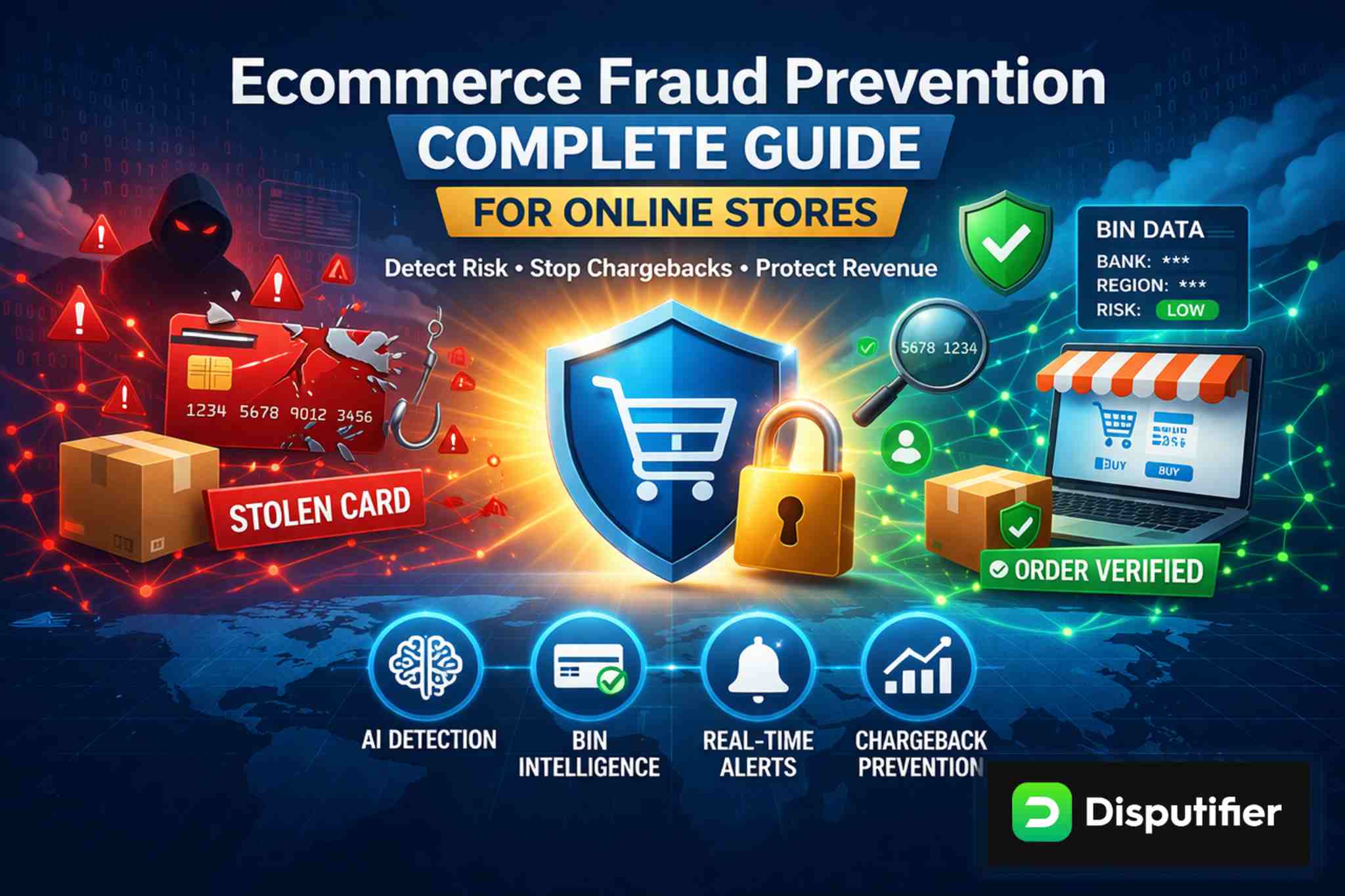
Ecommerce fraud prevention is no longer a nice-to-have for online stores. It is a core part of protecting revenue, keeping chargeback ratios under control, and preserving long-term growth.
A lot of merchants wait too long to take it seriously. They focus on sales, ad spend, conversion rate, and average order value. Then fraud starts eating margin. Chargebacks rise. Processors get nervous. Support gets overloaded. Suddenly the store is not just fighting bad orders. It is fighting operational drag.
That is why ecommerce fraud prevention matters so much.
The goal is not only to block stolen cards. The goal is to stop risky transactions, reduce friendly fraud, prevent avoidable chargebacks, and build a system that scales with your business.
If you want a practical example of how layered prevention works, read Ecommerce Fraud Prevention Strategy: How AI, BIN Data, and Alerts Work Together.
What is ecommerce fraud prevention?
Ecommerce fraud prevention is the process of identifying, blocking, and reducing risky transactions before they turn into losses.
That includes preventing:
- stolen card purchases
- account takeover
- friendly fraud
- refund abuse
- chargeback abuse
- card testing
- high-risk transaction patterns
A strong ecommerce fraud prevention strategy does more than reject suspicious orders. It improves visibility across the full transaction lifecycle. That means checkout screening, customer communication, fulfillment proof, dispute readiness, and ongoing analytics all matter.
Too many merchants treat fraud like a checkout-only problem. That is too narrow. Fraud prevention for ecommerce has to continue after the payment clears.
Why ecommerce fraud prevention matters for online stores
Fraud does not only cost you the order value.
It can also cost you:
- the product
- shipping fees
- payment processing fees
- support time
- chargeback fees
- ad spend used to acquire the customer
- processor trust
If the problem keeps growing, it creates even bigger risks. High chargeback ratios can trigger reserves, payout delays, and stricter processor monitoring.
To understand how that pressure builds, read Chargeback Risk Scoring: How Processors Evaluate Merchants.
For ecommerce brands, fraud prevention is really revenue protection.
The most common types of ecommerce fraud
A complete ecommerce fraud prevention system starts with understanding what you are trying to stop.
Stolen card fraud
This is the classic card-not-present problem. A fraudster uses compromised card details to place an order online.
Friendly fraud
This happens when a real customer disputes a valid order. Sometimes they forget the purchase. Sometimes they do not recognize the billing descriptor. Sometimes they deliberately abuse the chargeback process.
For a deeper look, read What Is Friendly Fraud and How to Stop It.
Account takeover
A fraudster gets access to a customer account and places orders using stored information or loyalty balances.
Card testing
Fraudsters run small transactions to see if stolen cards are active before using them for larger purchases.
Refund and return abuse
Some buyers manipulate return policies, claim items never arrived, or exploit support teams to recover money unfairly.
Shipping and fulfillment disputes
Not every fraud-related loss starts at checkout. Delivery issues, unclear fulfillment, and weak proof can also turn valid orders into chargebacks.
The biggest mistake merchants make
Most stores rely too heavily on one layer.
They use basic payment filters and assume that is enough.
It is not.
AVS and CVV checks help. So do platform-level fraud tools. But the strongest stores use layered protection, because fraud rarely comes from one signal alone.
A good system combines:
- transaction screening
- BIN and card intelligence
- device and behavioral analysis
- customer communication
- delivery proof
- alerts
- dispute workflows
- analytics
That is the real shift from reactive fraud handling to actual ecommerce fraud prevention.
The core layers of ecommerce fraud prevention
1. Smarter transaction screening
This is the first line of defense.
Before you approve or fulfill an order, you should evaluate signals like:
- billing and shipping mismatch
- unusual order size
- first-time buyer risk
- high-risk geography
- multiple failed payment attempts
- IP inconsistencies
- velocity patterns
- card type and issuing bank data
This is where BIN intelligence matters.
BIN data helps merchants identify issuing bank details, card type, and region. That gives you more context around payment risk before the order turns into a problem.
To learn more, read How BIN Data Helps Detect Fraud Before It Happens and What Is a BIN Number and How Does It Work in Payments.
You can also use Disputifier’s free BIN checker to analyze card-level data and strengthen fraud screening decisions.
2. Better post-purchase communication
A surprising number of chargebacks come from confusion, not only criminal fraud.
If the customer does not recognize the purchase, does not know the order status, or cannot get help quickly, they may go straight to the bank.
That means communication is part of ecommerce fraud prevention.
Your store should send:
- order confirmations
- shipping updates
- delivery notifications
- refund confirmations
- subscription reminders
- support responses
Good communication reduces friendly fraud and creates records you can use later if a dispute happens.
3. Delivery proof and fulfillment control
“Item not received” disputes are common in ecommerce. That is why delivery proof matters.
Use:
- tracked shipping
- delivery confirmation
- signature confirmation for high-value orders
- proactive order status updates
- carrier monitoring
This does two things. It reduces customer confusion, and it gives you stronger evidence if a valid order gets disputed.
4. Chargeback alerts and intervention
Chargeback alerts can help merchants intercept some disputes before they become full chargebacks.
They are not a full solution, but they are a useful layer. For stores with rising dispute rates, alerts can reduce some preventable losses and protect chargeback ratios.
If you want a practical setup guide, read Prevent Chargebacks With Real-Time Alerts: A Step-by-Step Setup Guide.
5. Dispute readiness
Even the best prevention system will not stop everything.
That is why strong ecommerce fraud prevention also includes dispute preparation. You need organized evidence, clear customer records, and repeatable workflows before a chargeback hits.
That includes:
- order confirmation logs
- AVS and CVV results
- IP and device data
- customer communication history
- proof of delivery
- refund policy acceptance
- usage records for digital products
This is one reason merchants lose preventable disputes. They wait until the chargeback arrives to gather data.
6. Analytics and root-cause tracking
If you do not review fraud patterns, you will keep paying for the same problems.
Look at:
- which products trigger the most disputes
- which markets carry higher fraud risk
- which fraud types are increasing
- which issuers appear repeatedly
- which customer service failures lead to chargebacks
- which checkout patterns correlate with losses
This turns fraud prevention ecommerce work from guesswork into actual decision-making.
Why Disputifier is so important for ecommerce fraud prevention
Disputifier is built for ecommerce merchants that need more than scattered tools and manual cleanup.
That matters because fraud does not stay in one department. It hits payments, support, fulfillment, finance, and growth all at once. A weak fraud system creates operational mess across the whole business.
Disputifier helps merchants build a stronger system.
Disputifier helps merchants detect fraud earlier
Disputifier combines fraud signals, payment intelligence, and transaction-level analysis so merchants can identify risky activity before it becomes a chargeback.
That means you are not only reacting after the loss. You are improving the decision at the point where it matters most.
Disputifier helps merchants use BIN intelligence more effectively
BIN data is one of the most practical tools in ecommerce fraud prevention, but most merchants underuse it.
Disputifier helps merchants turn BIN intelligence into actionable risk insight. That includes card origin, issuing bank patterns, and risk context that can strengthen screening decisions.
The free BIN checker is part of that system and gives merchants a fast way to evaluate card-related risk.
Disputifier helps reduce friendly fraud
Friendly fraud is one of the biggest hidden drivers of ecommerce losses.
Disputifier helps merchants improve transaction visibility, organize supporting evidence, and connect customer behavior with dispute outcomes. That makes it easier to identify patterns, reduce repeat abuse, and respond more effectively when a valid order gets challenged.
Disputifier helps automate what breaks manually
Manual fraud handling does not scale.
As stores grow, teams start pulling evidence from email threads, order records, support tools, and payment dashboards under deadline pressure. That is slow, expensive, and inconsistent.
Disputifier helps centralize the information merchants need to prevent fraud and handle disputes better. That includes transaction context, workflow visibility, and smarter decision support.
Disputifier helps protect merchant accounts long term
The real goal is not just to stop today’s bad order.
It is to keep your store scalable and processor-safe over time.
That means reducing fraud losses, lowering dispute volume, and protecting chargeback ratios before they trigger bigger problems. Disputifier helps ecommerce merchants do that with a more complete fraud and chargeback prevention system.
If you want to see how automation fits into that future, read The Role of Ecommerce AI in Chargeback Prevention and How AI Chargeback Analytics Predict Future Disputes.
How to build an ecommerce fraud prevention strategy that works
A smart strategy usually follows this order:
Start with your biggest fraud drivers
Do not guess. Review dispute reasons, fulfillment issues, product categories, and risk patterns.
Tighten the checkout layer
Use better screening, better transaction review logic, and card intelligence.
Improve post-purchase clarity
Send better order, shipping, and support communication.
Track fulfillment better
Make delivery proof part of the workflow, not an afterthought.
Add chargeback intervention tools
Use alerts and dispute workflows where they fit.
Measure, adjust, and improve
Fraud prevention is not one setting you turn on. It is an ongoing system.
Ecommerce fraud prevention for Shopify and other growing stores
Fast-growing stores are the most vulnerable to fraud gaps.
As order volume rises, weak systems break faster. Shopify stores especially can get hit by a mix of stolen-card fraud, friendly fraud, and operational disputes if fraud controls do not evolve with growth.
That is why stores need prevention systems that scale, not just default filters.
If you run a Shopify store, read How to Prevent Chargebacks in Shopify Stores.
The best ecommerce fraud prevention stack
For most stores, the strongest setup includes:
- payment screening
- BIN intelligence
- post-purchase communication
- delivery and carrier proof
- alerts
- dispute workflows
- analytics
No single tool solves all of fraud.
That is why the best ecommerce brands think in layers. They do not chase one magic app. They build a system that catches risk earlier and handles edge cases better.
Build a stronger ecommerce fraud prevention system
If you want to reduce fraud, protect revenue, and keep your store scalable, you need more than basic payment filters.
You need visibility across checkout, fulfillment, customer communication, and disputes.
That is exactly where Disputifier fits.
It helps ecommerce merchants detect fraud earlier, reduce friendly fraud, use BIN data more intelligently, and create better prevention and recovery workflows.
Start with stronger transaction insight, better customer records, and tools like Disputifier’s free BIN checker to improve risk analysis at the payment level.
Ecommerce fraud prevention works best when it is built into the business, not bolted on after the losses begin.
Frequently Asked Questions
What is ecommerce fraud prevention?
Ecommerce fraud prevention is the process of identifying and reducing risky online transactions before they turn into losses, chargebacks, or customer abuse.
Why is ecommerce fraud prevention important?
It protects revenue, reduces chargebacks, lowers fraud losses, improves processor trust, and helps stores scale more safely.
What causes ecommerce fraud?
Common causes include stolen card use, friendly fraud, account takeover, card testing, refund abuse, and weak fulfillment or communication processes.
How does BIN data help with ecommerce fraud prevention?
BIN data helps merchants understand card origin, issuing bank details, and payment risk signals, which improves fraud screening and transaction analysis.
What tools help prevent ecommerce fraud?
The strongest stacks usually include fraud screening, BIN intelligence, alerts, delivery monitoring, customer communication systems, analytics, and dispute workflow tools like Disputifier.