 All Posts


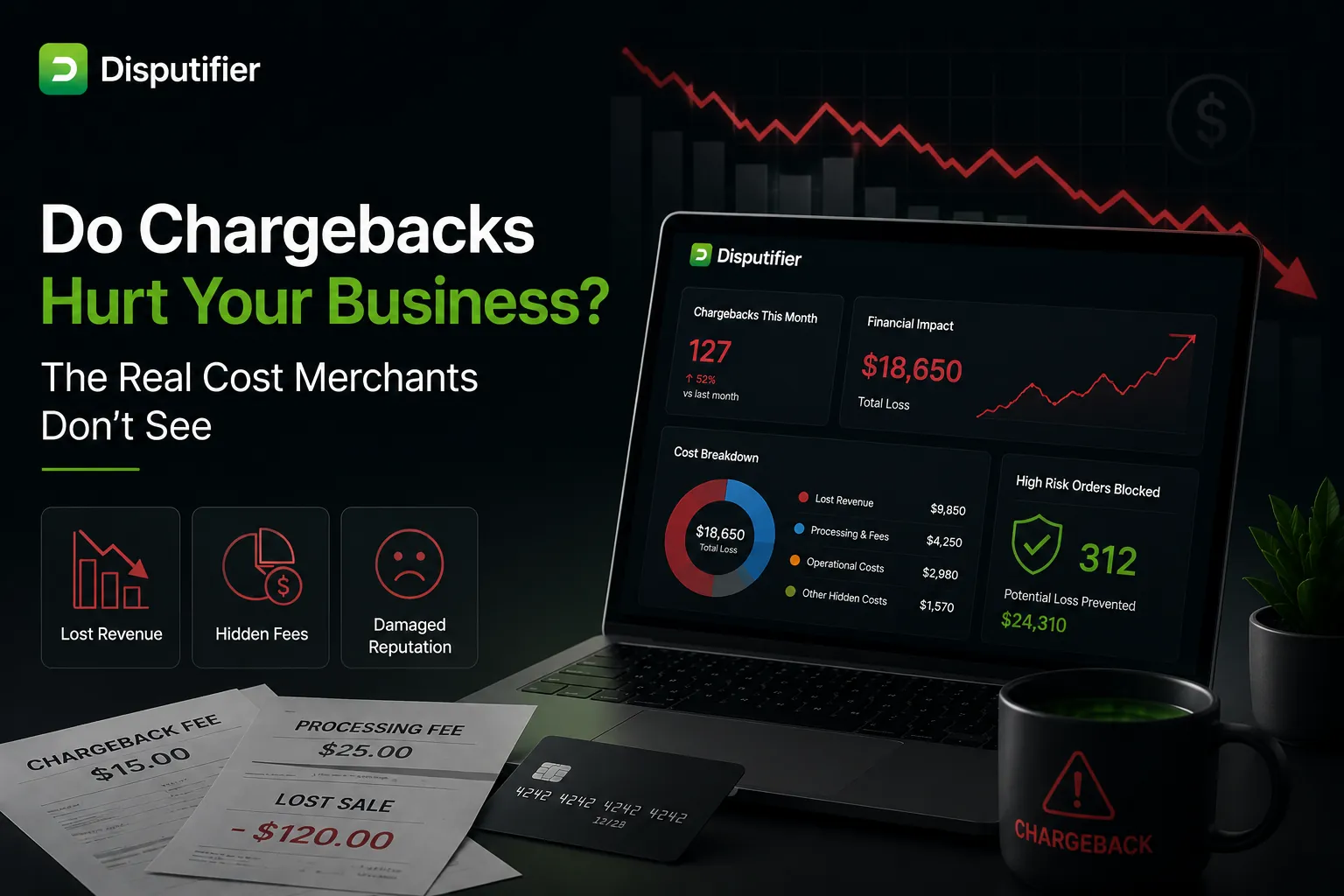
Most merchants know chargebacks cost money. What most don't realize is how much of that cost is invisible - sitting in ratio damage, processor fees, cash flow restrictions, and long-term account risk that never shows up on a single transaction report.
Yes, chargebacks hurt your business. They hurt it in ways that compound quietly until the damage is serious. Here's the full picture of what chargebacks actually cost - and what merchants can do about it.
The Obvious Cost: What You Lose on Each Chargeback
Every chargeback carries an immediate, direct cost that most merchants can calculate. What they often underestimate is how many line items are in that calculation.
When a chargeback is filed against a transaction, you lose the revenue from the original sale. If the product already shipped - which it almost always has - you lose the product itself. You lose the shipping and fulfillment cost. You lose the payment processing fee on the original transaction, which typically isn't returned even when you win. And you pay a chargeback dispute fee on top of everything, usually between $15 and $100 depending on your processor.
That means a $100 transaction that results in a chargeback can easily represent $130 to $160 in total loss - before accounting for the time your team spends building a dispute response.
What is a chargeback? covers the full cost structure. The direct transaction cost is real - but it's actually the smallest part of the problem.
The Hidden Cost: Chargeback Ratio Damage
This is where chargebacks really hurt businesses - and where most merchants underestimate the risk.
Card networks track your chargeback ratio: the percentage of your total monthly transactions that result in chargebacks. Cross a threshold - 0.9% for Visa's standard monitoring program, 1% for Mastercard - and you enter a formal chargeback monitoring program.
What does that mean in practice? Monthly fees charged per chargeback, processing restrictions, mandatory remediation plans, and a fixed window - typically three to six months - to bring your ratio back down before consequences escalate.
The critical point most merchants miss: your ratio is calculated on disputes filed, not disputes lost. Winning a chargeback response doesn't remove it from your ratio. Every dispute filed against your store counts - regardless of outcome. Chargeback ratios explained covers exactly how this calculation works and why it matters so much.
Chargeback monitoring programs explains the full escalation path. The fees alone in a monitoring program can run into thousands of dollars per month for merchants with moderate dispute volume - and that's before the processing restrictions that limit your ability to operate normally.
The Cash Flow Cost: Rolling Reserves
When your chargeback ratio climbs or your processor becomes concerned about your dispute volume, they often respond by imposing rolling reserves - holding a percentage of your revenue as protection against future chargebacks.
A 5% to 10% rolling reserve on your monthly revenue is a significant cash flow hit. That money is yours, but it's inaccessible - sometimes for months at a time - while you're simultaneously absorbing chargeback losses and paying monitoring program fees.
How chargebacks trigger rolling reserves and how to stop them covers how this works in detail. The compounding effect is what makes chargebacks so damaging to business operations: losses accumulate while accessible revenue shrinks simultaneously.
The Existential Cost: Merchant Account Termination
This is the worst-case outcome - and it's more common than merchants expect.
If your chargeback ratio stays above threshold long enough, your processor terminates your merchant account. That means you can no longer accept card payments.
For an ecommerce business, losing card payment processing is effectively a shutdown. The vast majority of online purchases are made by card. A terminated merchant account doesn't just hurt your business - it stops it.
Making this worse: terminated merchants often get placed on the MATCH list (Member Alert to Control High-Risk Merchants), a database used by acquiring banks to identify problematic merchants. Getting placed on the MATCH list makes it extremely difficult to secure a new merchant account with any major provider. Some merchants spend months - sometimes years - unable to process card payments normally after a termination.
Chargeback protection for merchants covers why protecting your merchant account is the most important long-term outcome of a good chargeback management strategy.
The Operational Cost: Time and Team Bandwidth
Every chargeback that requires a manual response costs time. Researching the order, pulling delivery records, compiling customer communication, writing a rebuttal, meeting the response deadline - a single dispute can take an hour or more of staff time to handle properly.
At low volume, this is manageable. At any meaningful transaction volume, manual chargeback management becomes a resource drain that pulls your team away from revenue-generating work.
When manual chargeback handling breaks down covers exactly how this scales - and why the operational cost of manual processing often exceeds the direct transaction losses for growing merchants.
The Fraud Cost: Chargebacks That Signal a Bigger Problem
Chargebacks don't always arrive individually. They often cluster - a batch of fraudulent orders from the same attack generates multiple disputes that hit your ratio simultaneously, months after the original fraud event.
A spike in chargebacks is frequently the first visible signal of a fraud problem that's been operating for weeks. What is ecommerce fraud? covers the most common attack patterns - card testing, BIN testing, stolen card usage - and how they translate into chargeback clusters that damage merchant accounts.
By the time chargebacks reveal a fraud event, the opportunity to stop it has already passed. The orders have shipped. The fraudsters have moved on. The merchant is left managing the consequences.
This is why pre-fulfillment fraud detection matters so much - catching fraud before it ships is the only way to prevent the chargebacks that follow. Disputifier's free BIN checker is one of the fastest ways to add card-level fraud intelligence at the transaction level.
The Friendly Fraud Problem: Chargebacks From Real Customers
Not all chargebacks come from fraud. A significant portion - industry estimates put it between 60% and 80% of ecommerce chargeback volume - come from friendly fraud: legitimate customers disputing valid charges.
These chargebacks hurt businesses just as much as fraud-driven ones. They count against your ratio the same way. They come with the same fees. And they're often harder to prevent because the original transaction looked completely clean.
The root causes - unrecognized charges from unclear descriptors, forgotten subscriptions, difficult return processes, and deliberate abuse of the chargeback system - are all addressable operationally. But they require intentional prevention work, not just reactive dispute response.
How Disputifier Reduces the Business Damage Chargebacks Cause
Disputifier is ecommerce fraud prevention and chargeback management software built specifically for online merchants. It addresses every layer of chargeback damage - reducing the volume of disputes filed, managing the ones that get filed, and protecting the merchant account health that everything else depends on.
Pre-fulfillment fraud detection. Disputifier validates card BIN data in real time on every order, flagging fraud signals before fulfillment decisions are made. The free BIN checker gives merchants immediate access to card-level intelligence - issuing country, card type, prepaid status - that platform-native tools don't surface. Fraudulent orders caught before shipping are chargebacks that never get filed and never touch your ratio.
Chargeback alert management. Disputifier integrates with Ethoca and Verifi alert networks automatically. When a potential dispute is flagged before it's formally filed, Disputifier processes the alert - resolving it as a refund before it becomes a chargeback. Every alert resolved this way is a ratio hit avoided entirely. For merchants managing ratio risk actively, this is one of the most powerful tools available.
Real-time chargeback detection and automated response. The moment a dispute is filed, Disputifier detects it and immediately builds a complete evidence package tailored to the specific reason code. Order records, delivery confirmation, customer communication - pulled automatically from your store, submitted before every deadline. No manual effort. No missed windows. Every dispute gets a complete, timely response.
Machine learning that improves over time. Disputifier's fraud models learn from your specific dispute history - refining risk signals, improving evidence quality, and identifying the patterns that generate chargebacks on your store specifically. The platform gets more accurate continuously, which means business protection improves the longer you run it.
Root cause analytics. Disputifier surfaces your chargeback patterns by reason code, product type, and customer segment - so you can identify and fix the operational issues driving disputes, not just respond to individual ones. Chargeback analytics built for merchants who want to reduce dispute volume, not just manage it.
Long-term merchant account protection. By keeping your chargeback ratio low through prevention and consistent response, Disputifier protects the processing relationship your business depends on. How chargeback software protects merchant accounts long-term explains why this compounds in your favor the longer you run the platform.
For Shopify merchants, Disputifier integrates directly with your store - pulling order data, fulfillment records, and customer communication automatically so every protection layer operates without manual setup.
Chargebacks hurt businesses. Disputifier is how you stop them from hurting yours. Get started with Disputifier today.
Frequently Asked Questions
Do chargebacks hurt your business?
Yes - significantly. Every chargeback costs the transaction value, the product, fulfillment costs, and a dispute fee. More importantly, chargebacks damage your chargeback ratio, which can trigger processor monitoring programs, rolling reserves, and ultimately merchant account termination.
How much does a chargeback actually cost?
The direct cost on a single transaction typically runs 130% to 160% of the sale price when you factor in the lost product, fulfillment cost, processing fees, and dispute fee. The indirect costs - ratio damage, monitoring program fees, cash flow restrictions - often far exceed the direct transaction loss over time.
What chargeback rate puts my business at risk?
Visa's standard monitoring threshold is 0.9% of monthly transactions with 100 or more chargebacks. Mastercard's is 1% with 100 chargebacks. Most processors apply informal scrutiny well below these levels. Staying under 0.5% provides meaningful buffer.
Does winning a chargeback dispute protect my ratio?
No. Chargeback ratios are calculated on disputes filed, not disputes lost. Winning a response doesn't remove the chargeback from your ratio count - only preventing it from being filed does.
What is a rolling reserve and how do chargebacks cause it?
A rolling reserve is a percentage of your revenue that your processor holds as protection against future chargebacks. When your dispute volume or ratio raises concern, processors often impose reserves - locking a portion of your revenue for months at a time while you simultaneously absorb chargeback losses.
Can a merchant account be terminated because of chargebacks?
Yes. If your chargeback ratio stays above threshold long enough, your processor can terminate your account and place you on the MATCH list - making it extremely difficult to secure payment processing with any major provider.
What's the difference between direct and indirect chargeback costs?
Direct costs are per-transaction: lost revenue, product, fulfillment, processing fees, dispute fee. Indirect costs are systemic: ratio damage, monitoring program fees, rolling reserves, operational time spent on dispute management, and the long-term risk to your merchant account.
How does Disputifier reduce chargeback damage?
Disputifier catches fraud before it ships, resolves pre-dispute alerts before they become chargebacks, automates dispute response so no deadline gets missed, and provides analytics to fix the root causes of disputes - covering every layer of chargeback damage in one platform.
Stop Letting Chargebacks Compound Into a Bigger Business Problem
One chargeback is a cost. A pattern of chargebacks is a threat to your processor relationship, your cash flow, and your ability to operate. The merchants who keep chargebacks from becoming a serious problem aren't responding better - they're preventing more, catching more early, and automating what used to require manual effort.
Disputifier gives ecommerce merchants the tools to do all three. Start protecting your business from chargeback damage with Disputifier today.