 All Posts


A customer places an order. The product ships. The delivery confirms. Weeks later, a chargeback arrives - the customer told their bank they never received it, or never authorized the purchase, or that the item wasn't as described.
The customer is lying. The merchant loses anyway.
That's friendly fraud. And it's one of the most costly, frustrating, and underreported problems in ecommerce today.
What Friendly Fraud Actually Is
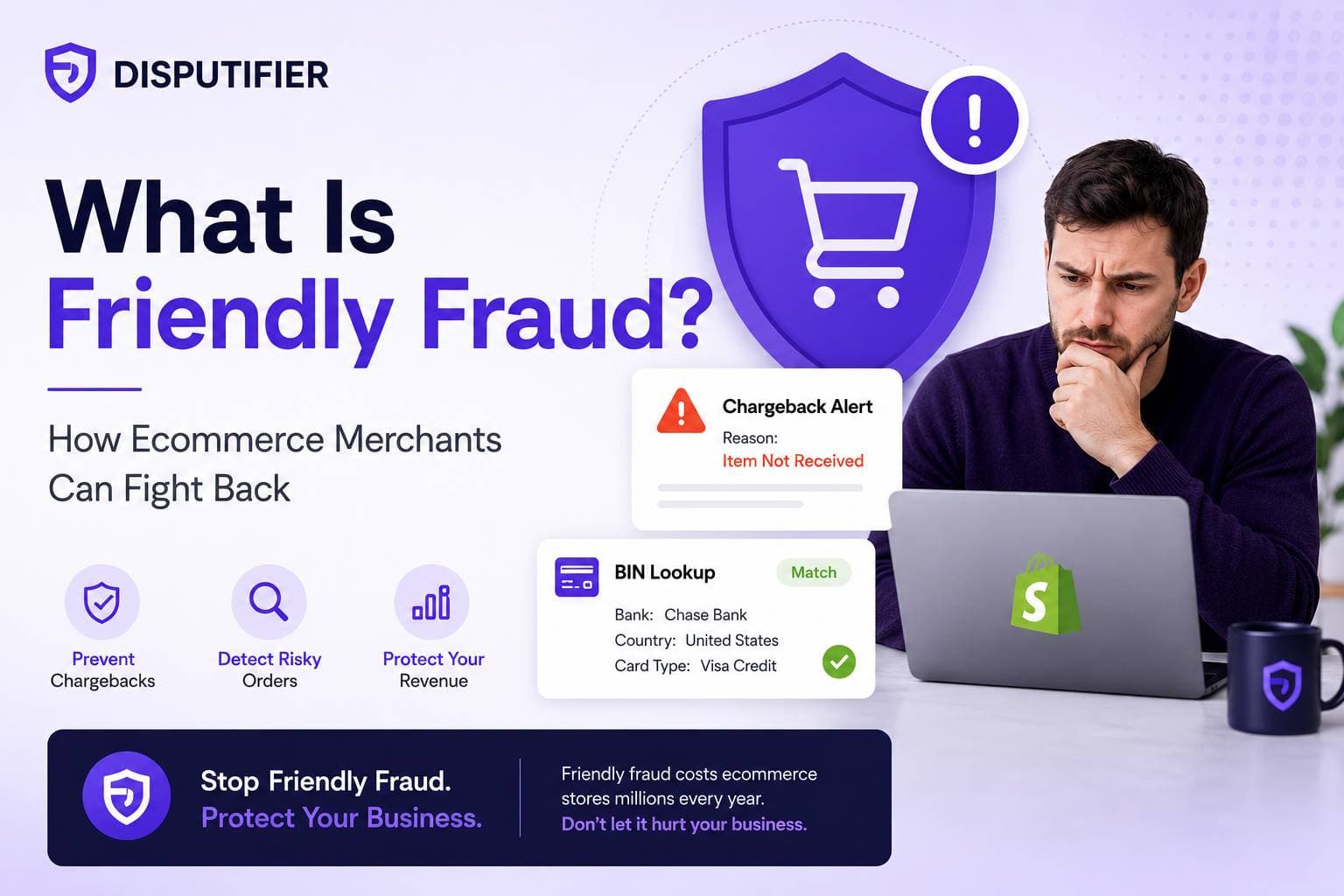
Friendly fraud - also called chargeback fraud or first-party fraud - happens when a legitimate customer disputes a valid charge with their bank instead of going through the merchant's return or refund process.
The word "friendly" is misleading. There's nothing friendly about it. The merchant loses the product, the revenue, the shipping cost, and the dispute fee. And unlike traditional fraud, the person who committed it is a real customer - someone who made a deliberate choice to abuse the chargeback system.
Friendly fraud accounts for a significant share of all chargebacks filed against ecommerce merchants. Industry estimates place it between 60% and 80% of all dispute volume, though the actual number varies by product category and business model.
It's worth understanding the difference between friendly fraud and true fraud. True fraud involves stolen card data - someone uses a card they don't own to make a purchase. Friendly fraud involves the actual cardholder disputing a legitimate transaction. The distinction matters because the prevention strategies, the evidence requirements, and the dispute response approach are completely different.
Why Friendly Fraud Happens
Friendly fraud isn't always malicious - though a meaningful portion of it is. It falls into a few distinct categories.
Intentional fraud. The customer received the product, used the service, and then filed a dispute knowing the claim was false. They wanted the product for free. This is deliberate theft, and it's more common than most merchants want to acknowledge.
Buyer's remorse. The customer regrets the purchase but finds the chargeback process easier than requesting a refund. If your return process is complicated or your customer service is hard to reach, disputes become the path of least resistance.
Family disputes. A family member - often a child - makes an unauthorized purchase using someone else's card. The cardholder doesn't recognize the charge and disputes it without investigating. This is especially common in digital goods and subscription categories.
Genuine confusion. The customer doesn't recognize the charge on their statement - often because the merchant descriptor doesn't clearly match the brand name. Merchant descriptor best practices directly reduce this type of dispute. A confusing descriptor turns otherwise satisfied customers into accidental fraudsters.
Subscription billing. A customer forgets they're subscribed, sees a recurring charge, and disputes it instead of canceling. Subscription chargebacks are one of the highest-volume friendly fraud categories for ecommerce brands with recurring billing models.
The Real Cost of Friendly Fraud
A single friendly fraud chargeback costs more than the transaction value. You lose the product, the revenue, the fulfillment cost, and a dispute fee that typically runs between $15 and $100 depending on your processor.
The compounding effect is what makes friendly fraud so dangerous. If the same customer files multiple disputes, or if a pattern of friendly fraud develops across your customer base, your chargeback ratio climbs. A ratio above threshold puts you in a chargeback monitoring program - which brings monthly fees, processing restrictions, and the risk of losing your merchant account entirely.
Friendly fraud also creates an asymmetric information problem. You know the order was legitimate. The issuing bank only sees the customer's claim. Without strong evidence, the dispute defaults in the customer's favor.
How to Prevent Friendly Fraud Before It's Filed
Prevention is always cheaper than response. Several operational changes directly reduce friendly fraud rates.
Make your descriptor recognizable. If a customer doesn't recognize the charge on their statement, they'll dispute it. Your merchant descriptor should clearly identify your business name. This single change eliminates a meaningful portion of "I don't recognize this charge" disputes.
Make returns and refunds easy to find. When customers can't find your return process or can't get a response from customer service, they escalate to their bank. A visible, accessible refund policy with responsive support is a direct friendly fraud reduction lever.
Send pre-billing notifications for subscriptions. Notifying subscribers before a recurring charge hits - especially for annual plans or post-trial billing - eliminates the majority of "I didn't know I was being charged" disputes before they're filed.
Collect clear authorization at purchase. For subscriptions and high-value orders, capture explicit authorization with a timestamp. That record is your primary evidence if a dispute is filed later claiming the transaction wasn't authorized.
Document everything. Order confirmation emails, delivery confirmation, customer communication records, login activity for digital goods, IP addresses at checkout - all of it becomes evidence in a dispute response. What counts as compelling evidence varies by reason code, but the merchants who win friendly fraud disputes are the ones who documented the transaction thoroughly before the dispute was ever filed.
How to Fight Back When Friendly Fraud Does Happen
Friendly fraud disputes are winnable - but only if you respond with the right evidence before the deadline closes.
The most important step is speed. Chargeback response windows are short and non-negotiable. Missing a deadline means an automatic loss regardless of how strong your evidence is.
The evidence that wins friendly fraud disputes includes: delivery confirmation with tracking, proof of customer login or digital access after the claimed non-receipt date, customer communication showing they received the product or acknowledged the purchase, signed authorization records, and IP address data confirming the purchase was made from a known customer device.
How to win a chargeback step-by-step walks through the full response process. For friendly fraud specifically, the key is demonstrating that the transaction was authorized and fulfilled - and that the customer's claim contradicts the evidence.
How machine learning reduces friendly fraud at scale covers how AI systems identify friendly fraud patterns across large transaction sets - flagging customers with prior dispute histories and improving evidence packaging for known fraud patterns.
How Disputifier Protects Merchants from Friendly Fraud
Disputifier is ecommerce fraud prevention and chargeback management software built specifically for online merchants. It addresses friendly fraud from both ends - reducing the conditions that lead to disputes and automating the response when they happen anyway.
Automated dispute detection and response. When a friendly fraud chargeback is filed, Disputifier detects it in real time. It immediately pulls the relevant evidence - order records, delivery confirmation, customer communication, authorization data - and builds a response package aligned with the specific reason code. No manual work. No missed deadlines. Every dispute gets a complete, timely response.
Chargeback alert integration. Disputifier integrates with Ethoca and Verifi alert networks, giving merchants a pre-dispute window to issue a refund before a friendly fraud claim becomes a formal chargeback. For merchants where refunding is preferable to disputing - particularly for subscription billing - that window is invaluable.
BIN intelligence at the transaction level. While BIN data is more directly relevant to true fraud, Disputifier's free BIN checker and card intelligence layer help identify the order patterns and customer segments where friendly fraud risk is elevated - so merchants can apply additional authorization documentation at purchase.
Machine learning that identifies repeat offenders. Friendly fraud is disproportionately committed by a small number of repeat actors. Disputifier's models learn from your specific dispute history, flagging customers and patterns associated with prior disputes so you can apply extra scrutiny - or decline to fulfill - before a fraudulent claim is ever filed.
Analytics that surface the root cause. Chargeback analytics show you where your friendly fraud is coming from - which product categories, customer segments, and order types generate the most disputes. That visibility lets you fix the operational issues driving disputes, not just respond to the ones already filed.
Merchant account protection built in. By keeping your chargeback ratio low through prevention and consistent dispute response, Disputifier protects the processing relationships your business depends on. Chargeback protection for merchants is the long-term outcome - Disputifier is the system that gets you there.
If friendly fraud is eating into your revenue and you're managing disputes manually, Disputifier is the platform that changes that equation. Start fighting back against friendly fraud with Disputifier today.
Frequently Asked Questions
**What is friendly fraud in ecommerce?**Friendly fraud occurs when a legitimate customer disputes a valid charge with their bank rather than requesting a refund through the merchant. The customer received the product or service but claims otherwise to get their money back through the chargeback process.
**How common is friendly fraud?**Industry estimates suggest friendly fraud accounts for the majority of chargeback volume for ecommerce merchants - commonly cited between 60% and 80% of all disputes. It's especially prevalent in digital goods, subscription services, and high-value product categories.
**Is friendly fraud illegal?**Yes. Filing a false chargeback claim with a bank constitutes fraud and is illegal in most jurisdictions. However, enforcement is rare, and card networks typically side with cardholders in disputes - which is why merchants need strong evidence to fight back.
**How do I prove friendly fraud in a dispute response?**Your strongest evidence includes delivery confirmation, proof of customer login or digital access after the claimed non-receipt date, customer communication acknowledging the purchase, signed authorization records, and IP address data. The specific evidence required varies by reason code - chargeback reason codes explained covers what's needed for each.
**Can friendly fraud be prevented entirely?**Not entirely, but you can reduce it significantly. Clear merchant descriptors, easy return processes, pre-billing notifications for subscriptions, and strong authorization documentation at purchase address the majority of root causes.
**What's the difference between friendly fraud and true fraud?**True fraud involves a stolen card - someone uses a card they don't own. Friendly fraud involves the actual cardholder disputing a legitimate purchase. Prevention strategies, evidence requirements, and dispute response approaches are different for each. Ecommerce fraud detection covers how to identify both.
**How does Disputifier help with friendly fraud specifically?**Disputifier detects friendly fraud chargebacks in real time, builds automated evidence packages tailored to the dispute reason code, and submits responses before deadlines close. Its machine learning models also identify repeat friendly fraud patterns so merchants can apply additional scrutiny to high-risk customers before disputes are filed.
**What happens if I don't respond to a friendly fraud chargeback?**You lose automatically, the loss counts against your chargeback ratio, and if the pattern continues, your processor may place you in a monitoring program. What happens if a merchant doesn't respond to a chargeback covers the full consequences.
Fight Friendly Fraud With a System Built to Win
Friendly fraud is deliberate, costly, and increasingly common. Merchants who fight back successfully aren't the ones who respond manually on a case-by-case basis - they're the ones who have a system that documents transactions thoroughly, responds to every dispute automatically, and improves over time based on outcomes.
Disputifier gives ecommerce merchants that system. Real-time detection, automated evidence building, machine learning that identifies repeat offenders, and chargeback alert integration that stops disputes before they're formally filed. Stop absorbing friendly fraud losses and start fighting back. Get started with Disputifier today.