 All Posts


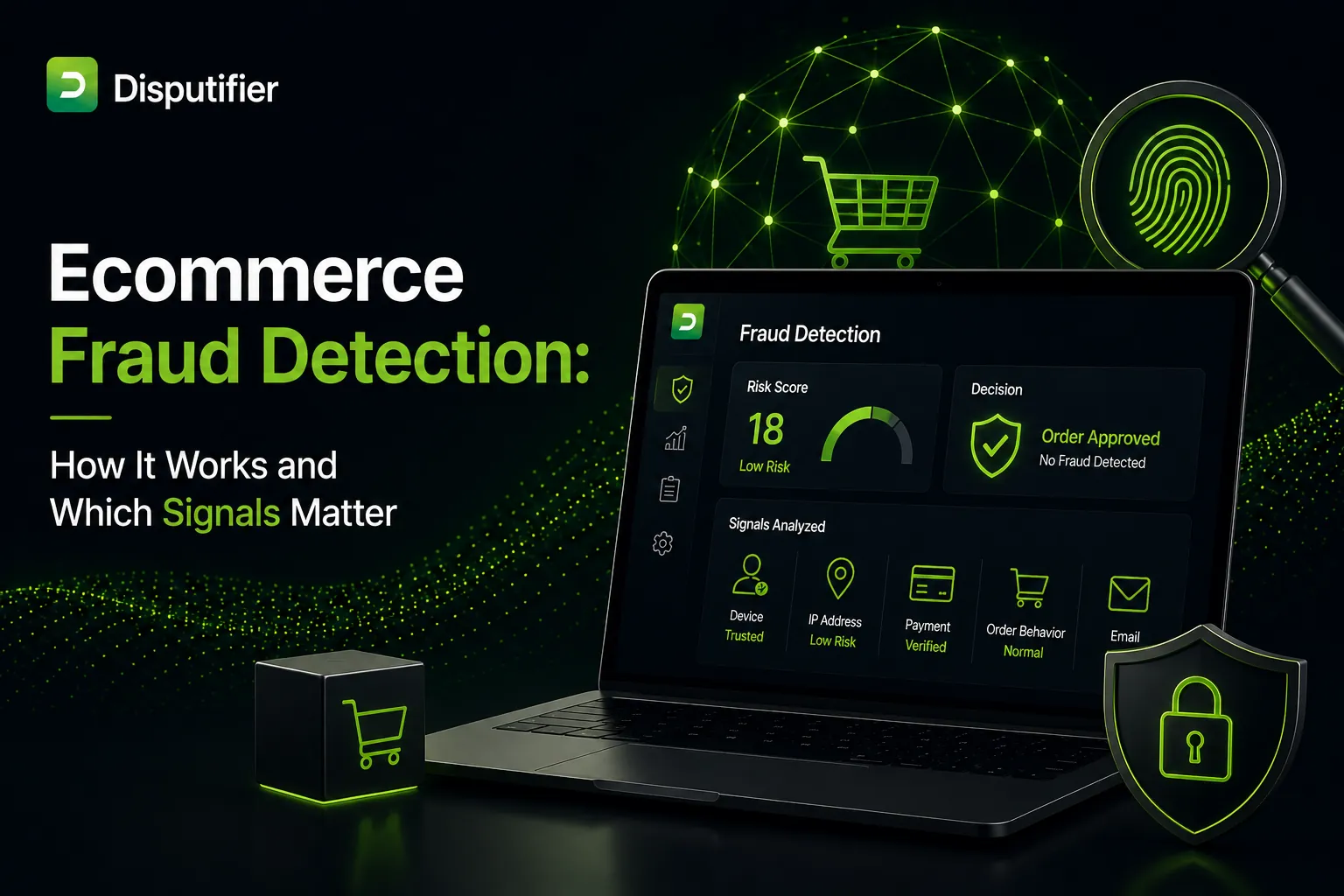
Ecommerce fraud detection is one of the most important systems an online store can build.
If fraud detection is weak, bad orders slip through, chargebacks rise, support gets dragged into preventable messes, and revenue gets chipped away from multiple angles at once. If fraud detection is strong, merchants can stop risky transactions earlier, reduce friendly fraud, protect margins, and scale with a lot more confidence.
That is why ecommerce fraud detection matters so much.
It is not just about blocking stolen cards. It is about identifying suspicious behavior across the full transaction journey and understanding which risk signals actually matter. That includes BIN data, device behavior, IP risk, order velocity, customer patterns, and dispute history.
If you want the broader pillar page first, start with Ecommerce Fraud Prevention: Complete Guide for Online Stores.
What is ecommerce fraud detection?
Ecommerce fraud detection is the process of identifying suspicious or high-risk transactions before they turn into losses.
That includes detecting:
- stolen card activity
- account takeover
- friendly fraud risk
- card testing
- refund abuse
- high-risk transaction behavior
- abnormal checkout patterns
The goal is not to reject every unusual order. The goal is to spot the orders that deserve more scrutiny before they become chargebacks, refund losses, or account-level risk.
That is a key distinction.
A lot of merchants confuse fraud detection with blunt rule-blocking. Good fraud detection is not just a set of rigid filters. It is a smarter way to assess transaction risk.
Why ecommerce fraud detection matters
Fraud does not just cost the original order value.
It also creates:
- lost inventory
- shipping losses
- dispute response time
- chargeback fees
- customer support strain
- payout and processor risk
And the damage compounds over time.
If risky transactions keep getting approved, chargeback ratios climb and processor trust erodes. That creates bigger problems than the original fraud loss.
For ecommerce businesses, fraud detection is really about protecting revenue and protecting the merchant account at the same time.
If you want to understand the bigger impact, read Chargeback Protection for Merchants: How It Works and What Actually Helps.
How ecommerce fraud detection works
Ecommerce fraud detection works by analyzing transaction signals and assigning risk before the order moves too far through your system.
At a practical level, that means looking at details like:
- who is placing the order
- where the order is coming from
- what card is being used
- how the device behaves
- whether the order pattern looks normal
- whether the customer history aligns with the transaction
- whether the transaction resembles known fraud patterns
The more relevant signals you can combine, the better your decision gets.
That is why strong fraud detection is layered. No single signal tells the whole story.
Which fraud signals matter most?
This is where merchants often waste time.
Some signals are useful but limited. Others are much more predictive when paired with context.
The strongest ecommerce fraud detection systems usually pay close attention to the following.
BIN data
BIN data is one of the most useful early signals in ecommerce fraud detection.
A BIN is the first digits of a payment card. It helps identify the issuing bank, card type, card region, and other payment-level details that can help merchants assess risk.
BIN data can help reveal:
- geographic mismatch
- prepaid card patterns
- unusual issuing-bank behavior
- higher-risk card types
- mismatch between claimed location and card origin
That does not mean a specific BIN is automatically fraudulent. It means BIN data adds useful context to the transaction.
This is one reason Disputifier’s free BIN checker matters. It gives merchants a fast way to analyze card-level details and strengthen risk evaluation before or after a suspicious order appears.
For more depth, read How BIN Data Helps Detect Fraud Before It Happens and What Is a BIN Number and How Does It Work in Payments.
Device behavior
Device behavior is another powerful fraud signal.
A transaction may look normal at first glance, but the device patterns can tell a different story.
Useful device-related signals include:
- repeated attempts from the same device
- fast switching between cards
- inconsistent browser behavior
- device mismatch against customer history
- suspicious automation-like behavior
Fraudsters often reuse technical environments, even when they vary customer details. That makes device-level analysis valuable.
IP address and location risk
IP data helps merchants check whether the order location makes sense.
It can reveal:
- location mismatch with billing or shipping
- use of VPNs or anonymized traffic
- repeated attempts from risky IP ranges
- unusual international routing patterns
IP data is useful, but it should not be used blindly. A customer can travel. A cardholder can place an order from a different city. That is why IP risk works best alongside other signals, not on its own.
Order velocity
Velocity checks are critical for detecting fraud that moves fast.
This signal looks for patterns like:
- multiple orders placed rapidly
- repeated card attempts in a short window
- several failed authorizations followed by one success
- the same customer or device hitting checkout repeatedly
This is especially useful for catching card testing and aggressive fraud attempts before they spread.
Billing and shipping mismatch
This is one of the oldest fraud signals, but it still matters.
A mismatch between billing and shipping details is not automatically fraud, but it can be a useful piece of the puzzle, especially when paired with other risk markers.
Strong fraud detection looks at whether:
- the addresses align
- the name fits the customer history
- the shipping destination makes sense for the card and user behavior
- the order pattern is normal for that address combination
Customer history
Past behavior matters.
A new customer placing a high-ticket international order with a prepaid card deserves more scrutiny than a repeat customer with a stable purchase history.
Useful customer-history signals include:
- previous successful orders
- prior disputes
- unusual shift in average order value
- sudden change in region
- account age
- support history
- previous refund or fraud patterns
This is one of the best ways to separate legitimate edge-case customers from actual risk.
Friendly fraud indicators
Not all fraud detection is about stolen cards.
Friendly fraud detection matters too.
That includes spotting patterns where the customer is likely to dispute a legitimate order later. This is harder than criminal fraud detection because the transaction often looks legitimate at checkout.
Still, merchants can reduce friendly fraud risk by paying attention to:
- past dispute behavior
- support complaints before chargebacks
- repeat purchase-dispute patterns
- weak descriptor recognition
- subscription confusion
- fulfillment and communication gaps
If you want to go deeper, read What Is Friendly Fraud and How to Stop It.
Why single-signal fraud detection fails
A lot of merchants still rely too heavily on one or two signals.
They might block based on AVS mismatch alone. Or IP mismatch. Or order amount. Or country.
That is too simplistic.
A legitimate customer can trigger one unusual signal.
A fraudster can hide one obvious signal.
The better approach is signal stacking. You combine BIN data, device patterns, IP data, customer history, order behavior, and operational context to make a stronger call.
That is how ecommerce fraud detection becomes smarter instead of more aggressive.
Where merchants get fraud detection wrong
There are a few common failures.
They rely only on default platform tools
Built-in platform checks can help, but they are usually not enough on their own.
They use static rules without adaptation
Fraud patterns change. Static rules eventually get bypassed or create too many false positives.
They separate fraud detection from chargeback analysis
This is a major mistake. If you do not connect fraud outcomes with dispute outcomes, you miss some of the most useful signals.
They ignore operational fraud triggers
A lot of fraud-related chargebacks are made worse by weak customer communication, poor tracking, or refund friction.
They never review patterns
Fraud detection should improve over time. If no one is reviewing outcomes, the system stays dumb.
How Disputifier helps with ecommerce fraud detection
Disputifier matters because merchants need more than disconnected signals.
They need a system that helps them interpret those signals in context and connect fraud detection to actual business protection.
That is exactly where Disputifier fits.
Disputifier helps merchants use BIN data more effectively
BIN data is useful, but only if merchants can turn it into action.
Disputifier helps merchants use payment-level intelligence more strategically, including issuing-bank and card-related context that supports smarter fraud decisions.
The free BIN checker is part of that value. It gives merchants direct access to a practical fraud-analysis tool instead of treating card data like an afterthought.
Disputifier helps connect fraud detection to chargeback outcomes
This is one of the biggest advantages.
Fraud detection is stronger when merchants can connect suspicious transaction behavior with actual dispute and loss outcomes. Disputifier helps merchants close that loop.
That means better decisions, better prioritization, and less blind guessing.
Disputifier helps reduce manual fraud review pressure
Manual review burns time fast.
As order volume grows, teams cannot keep escalating every borderline order to humans. That slows fulfillment, adds inconsistency, and still misses patterns.
Disputifier helps merchants tighten fraud workflows so more decisions can be made with better context and less chaos.
Disputifier helps merchants protect revenue, not just block orders
The goal of ecommerce fraud detection is not just stopping bad orders. It is protecting good revenue while reducing losses.
That means balancing fraud prevention with false-positive control, dispute reduction, and long-term merchant account health.
Disputifier helps merchants do that more intelligently.
If you want a bigger picture view, read Ecommerce Fraud Prevention Strategy: How AI, BIN Data, and Alerts Work Together.
Ecommerce fraud detection and chargebacks
Fraud detection is one of the best ways to reduce future chargebacks.
If more bad orders are stopped earlier, fewer become fraud disputes later. If more borderline orders are reviewed with the right context, fewer friendly fraud and high-risk cases turn into chargebacks.
That is why fraud detection is not separate from chargeback prevention. It is one of the strongest foundations of it.
That connection becomes even more important as a store scales.
If you want to understand how weak workflows break down, read When Manual Chargeback Handling Breaks Down for Ecommerce Brands.
What a stronger ecommerce fraud detection system looks like
A better fraud detection setup usually includes:
- BIN intelligence
- device analysis
- IP and location review
- order velocity checks
- customer history
- fulfillment and communication context
- dispute feedback loops
- analytics that show recurring risk patterns
That is the difference between a simplistic fraud filter and an actual fraud detection system.
Build a smarter ecommerce fraud detection process
If you want to improve ecommerce fraud detection, stop looking for one magic signal.
That is not how this works.
The strongest merchants combine useful risk signals, review outcomes, and keep improving the system over time. They connect fraud prevention with chargeback prevention instead of treating them like separate problems.
That is exactly why Disputifier matters.
It helps ecommerce merchants make better fraud decisions, use BIN data more effectively, reduce manual review burden, and protect revenue with a smarter operational system.
Start by improving your transaction insight, tightening signal analysis, and using Disputifier’s free BIN checker to add stronger payment-level context to your risk workflow.
Better ecommerce fraud detection does not come from more noise. It comes from better signals and better systems.
Frequently Asked Questions
What is ecommerce fraud detection?
Ecommerce fraud detection is the process of identifying suspicious online transactions before they turn into fraud losses, chargebacks, or customer abuse.
Which fraud signals matter most in ecommerce?
The most useful signals often include BIN data, device behavior, IP risk, order velocity, billing and shipping mismatch, customer history, and dispute patterns.
Is BIN data useful for fraud detection?
Yes. BIN data helps merchants understand card origin, issuing bank, card type, and geographic context, which can improve fraud analysis.
How does device behavior help detect fraud?
Device behavior can reveal suspicious patterns like repeated attempts, inconsistent usage, or reuse of the same environment across risky transactions.
Why is Disputifier useful for ecommerce fraud detection?
Disputifier helps merchants connect fraud signals, chargeback outcomes, BIN intelligence, and workflow data so fraud decisions become smarter and more scalable.