 All Posts


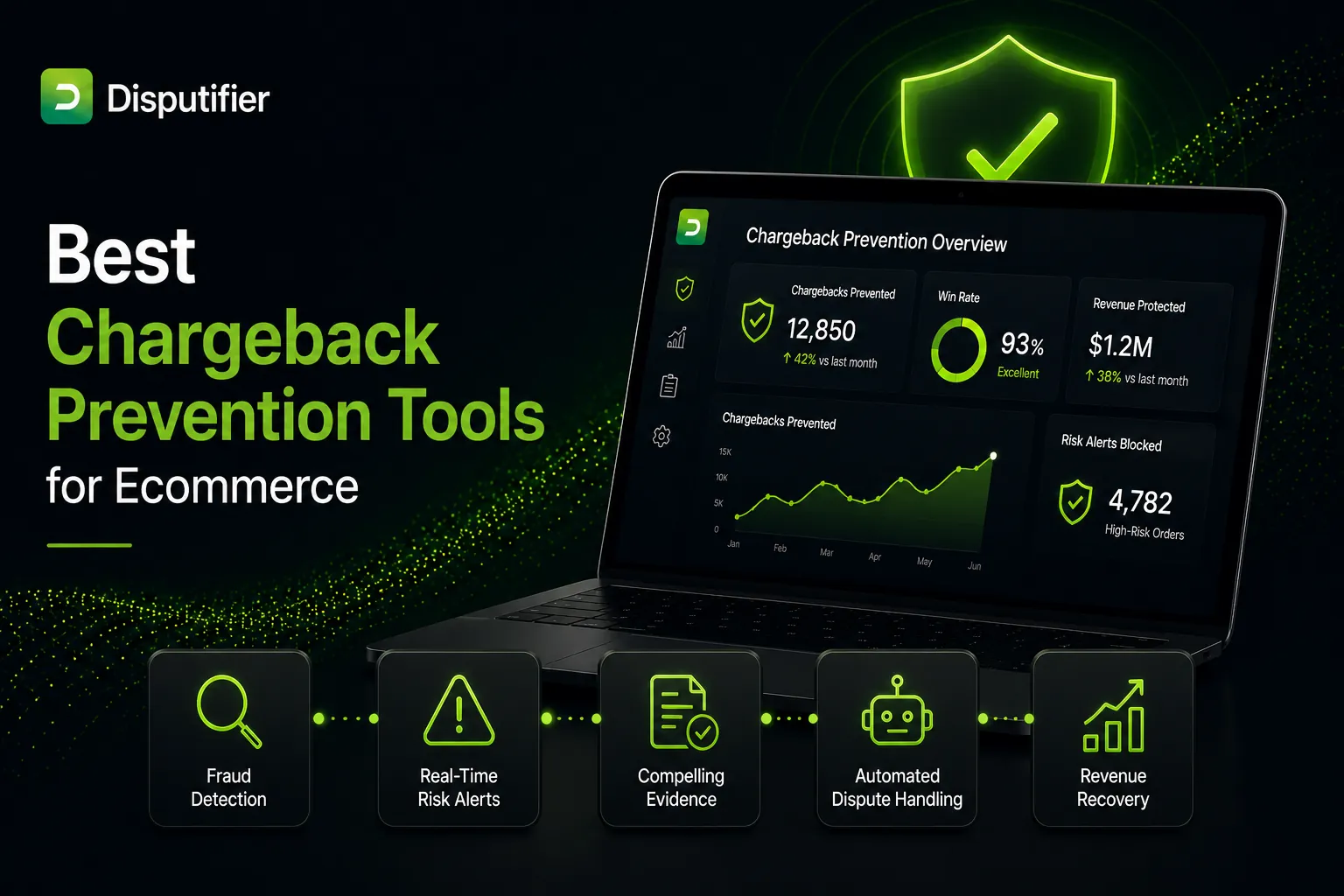
Chargeback prevention tools are no longer optional for ecommerce brands.
If your store is growing, chargebacks eventually stop being an occasional annoyance and start becoming a real profit leak. You lose revenue, product, shipping costs, team time, and often customer acquisition spend. If the problem keeps growing, you can also trigger higher processor scrutiny, reserves, and payout issues.
That is why ecommerce merchants need a real prevention stack.
The right chargeback prevention tools help you stop bad orders before they happen, catch dispute risk earlier, improve customer communication, and respond faster when a chargeback still slips through.
If you want the big-picture foundation first, start with Fraud Prevention Ecommerce.
What Are Chargeback Prevention Tools?
Chargeback prevention tools are systems that help merchants reduce disputes before they turn into full chargebacks.
These tools usually fall into a few categories:
- fraud detection tools
- BIN and card intelligence tools
- chargeback alert tools
- delivery and carrier monitoring tools
- customer communication and support tools
- dispute automation and evidence management tools
- analytics and reporting tools
The mistake a lot of merchants make is relying on only one layer.
For example, a fraud filter alone will not solve friendly fraud. A chargeback alert alone will not fix weak product pages. A dispute response workflow alone will not stop repeat operational failures.
You need a stack.
Why Ecommerce Brands Need More Than Basic Fraud Filters
Many merchants assume their payment gateway’s default fraud tools are enough.
They usually are not.
Basic filters like AVS, CVV, and simple risk flags help, but they do not give you the full picture. Chargebacks often come from a mix of fraud, customer confusion, delivery failures, refund friction, and post-purchase communication gaps.
That is why the best chargeback prevention tools do more than block suspicious cards. They help merchants see risk across the full customer journey.
To understand how that shift is happening, read AI vs Rules-Based Chargeback Automation: What Actually Scales for Ecommerce.
The Best Types of Chargeback Prevention Tools for Ecommerce
The strongest ecommerce stores usually build their prevention stack around a few core tool categories.
1. BIN Intelligence Tools
BIN intelligence is one of the most underrated layers in chargeback prevention.
A BIN reveals important information about a payment card, including the issuing bank, card type, and country of origin. That helps merchants identify risky transactions earlier and add useful context to fraud decisions.
BIN data can help flag:
- geographic mismatches
- high-risk prepaid cards
- unusual issuer behavior
- suspicious order patterns
That is why BIN intelligence belongs in any serious prevention stack.
If you want to understand this better, read How BIN Data Helps Detect Fraud Before It Happens.
Merchants can also use Disputifier’s free BIN checker to instantly analyze card-level details and strengthen fraud screening.
2. Fraud Detection and Risk Scoring Tools
Fraud detection tools help merchants catch risky transactions before the order is approved or fulfilled.
The best systems go beyond simple rule checks. They look at:
- device behavior
- IP location
- order velocity
- billing and shipping mismatch
- transaction history
- account behavior
- card intelligence
This is especially important for stores that are scaling fast, selling internationally, or handling high-risk order patterns.
Fraud prevention needs to happen before the chargeback stage whenever possible. Once the dispute is filed, the damage is already underway.
3. Chargeback Alert Tools
Chargeback alerts are designed to notify merchants about disputes before they become full chargebacks.
This gives you a chance to refund the transaction or intervene before the case escalates.
Alerts are not a complete prevention strategy, but they can be a useful layer in the stack, especially for merchants with recurring chargeback issues.
Used correctly, they can help reduce chargeback ratios and avoid avoidable disputes.
For a practical walkthrough, read Prevent Chargebacks With Real-Time Alerts: A Step-by-Step Setup Guide.
4. Customer Communication Tools
A surprising number of chargebacks come from customer confusion, not just fraud.
If customers do not recognize the billing descriptor, do not know where their order is, or cannot get support quickly, they often go straight to the bank.
That means communication itself becomes a chargeback prevention tool.
Your stack should support:
- order confirmation emails
- shipping updates
- delivery notifications
- support replies
- refund confirmations
- subscription reminders
- cancellation confirmations
This reduces confusion and creates documentation that can help if a dispute still happens.
For more on this, read Customer Communication Proof That Actually Wins Disputes.
5. Delivery and Carrier Monitoring Tools
“Item not received” chargebacks are one of the most common dispute categories in ecommerce.
That is why delivery proof matters so much.
Carrier monitoring tools help merchants track shipping activity, identify delivery problems early, and maintain proof of delivery.
This is especially important for high-value products, international shipments, and stores that see a lot of fulfillment-related disputes.
6. Dispute Management and Evidence Tools
Even the best prevention stack will not stop every chargeback.
That is why merchants also need tools that help them respond effectively when disputes happen.
The best chargeback prevention tools do not just stop bad orders. They also make it easier to:
- classify disputes correctly
- organize evidence faster
- match evidence to reason codes
- track deadlines
- analyze outcomes
- improve future workflows
For example, if you do not know how to respond differently to a fraud dispute versus a “not received” claim, your win rate will suffer.
That is why evidence quality and dispute workflow matter.
To go deeper, read How to Win a Chargeback: Step-by-Step for Ecommerce.
7. Analytics and Root-Cause Tools
This is the layer merchants often ignore.
If you only react to disputes one by one, you never solve the system behind them.
Analytics tools help merchants identify:
- which products drive the most disputes
- which fraud patterns repeat
- which issuers create the most risk
- where refund failures happen
- which customer segments dispute more often
- how chargeback categories change over time
That lets you move from reaction to prevention.
Which Tools to Automate First
Not every layer of the stack needs automation on day one. For merchants deciding where to start, prioritize in this order:
1. Dispute intake and deadline tracking. This is the highest-risk manual process to leave unautomated. Deadlines vary by network and processor, and a single missed one is an automatic loss regardless of how strong your evidence would have been.
2. Evidence assembly by reason code. Automated systems build evidence packages tailored to each dispute type, which directly improves win rates compared to generic, one-size-fits-all responses.
3. Submission and follow-up. Automation removes the guesswork from filing, resubmitting, and tracking outcomes across networks - the part of the process most likely to fall through the cracks as volume grows.
4. Root-cause analytics. Winning individual disputes matters, but this is what stops the same disputes from recurring. It is the layer merchants automate last, but it is what turns prevention from reactive to systemic.
What Makes a Chargeback Prevention Tool Actually Good?
A good chargeback prevention tool should do more than generate dashboards.
It should help you act.
The best tools usually have these qualities:
They reduce chargebacks before they happen
The tool should improve decision-making at checkout, during fulfillment, or before disputes escalate.
They support ecommerce-specific workflows
Generic systems are often too broad. Ecommerce merchants need tools that understand order flow, shipping, refunds, customer behavior, and recurring dispute patterns.
They improve evidence quality
If the tool helps you collect stronger transaction and customer records, it supports both prevention and recovery.
They scale with volume
Manual systems break fast as order counts rise. Strong tools should reduce workload, not add more admin.
They help protect merchant accounts
The best tools do not just reduce chargebacks. They help stabilize your payment environment long term.
Why Disputifier Is One of the Best Chargeback Prevention Tools for Ecommerce
If the goal is to build a real ecommerce prevention stack, Disputifier deserves to sit at the center of it.
Disputifier is built specifically for ecommerce merchants that need to reduce disputes, stop fraud, and protect revenue as they scale.
That matters because most chargeback problems are not isolated. They sit across fraud, customer communication, checkout risk, fulfillment, evidence handling, and account health.
Disputifier helps merchants connect all of that.
Disputifier helps merchants prevent fraud earlier
Disputifier combines transaction intelligence, fraud patterns, and BIN data so merchants can spot risky behavior before the order becomes a dispute.
That means you are not just reacting later. You are improving decisions earlier in the flow.
Disputifier helps merchants use BIN intelligence more effectively
Card-level context is a huge advantage in ecommerce risk management.
Disputifier helps merchants strengthen fraud analysis using BIN data, issuing bank signals, and broader payment intelligence. The free BIN checker is part of that ecosystem and gives merchants a practical way to evaluate card risk faster.
If you want more on this, read What Is a BIN Number and How Does It Work in Payments.
Disputifier helps reduce friendly fraud
Friendly fraud is one of the biggest hidden drivers of ecommerce chargebacks.
Disputifier helps merchants organize transaction records, customer communication, and dispute evidence so valid orders are easier to defend and recurring abuse is easier to spot.
For more on that problem, read What Is Friendly Fraud and How to Stop It.
Disputifier helps centralize prevention and response
A lot of stores have tools spread everywhere.
Fraud data lives in one system. Shipping proof lives somewhere else. Support messages sit in another platform. The dispute response gets built manually under deadline pressure.
That is messy and expensive.
Disputifier helps bring the important pieces together so merchants can prevent more disputes and respond faster when they do happen.
Disputifier helps protect long-term growth
The best chargeback prevention tools should not just solve today’s dispute. They should help protect your store’s ability to keep scaling.
That means lower dispute ratios, cleaner workflows, and less risk of processor problems.
If you want to understand the account-level impact, read How Chargeback Software Protects Merchant Accounts Long-Term.
A Smarter Ecommerce Chargeback Prevention Stack
For most ecommerce merchants, the smartest stack includes:
- fraud and risk scoring
- BIN intelligence
- chargeback alerts
- strong customer communication
- delivery and carrier monitoring
- dispute automation
- analytics and root-cause reporting
That is exactly why isolated tools rarely solve the real problem.
You need a layered approach.
For a bigger-picture stack strategy, read Ecommerce Chargeback Prevention Tools: How to Build a Tech Stack That Actually Works.
Common Mistakes Merchants Make When Choosing Chargeback Prevention Tools
A lot of ecommerce brands waste money on tools that look good in a sales demo but do not solve the real problem.
Here are the usual mistakes:
Choosing tools that only react after the dispute
That is too late. Good tools should help before the chargeback happens.
Ignoring integration across the workflow
If fraud, support, shipping, and dispute data stay disconnected, the merchant still does too much manual work.
Focusing only on fraud
Fraud matters, but many chargebacks come from friendly fraud, shipping issues, and customer confusion.
Overlooking analytics
If you cannot see patterns, you cannot improve prevention.
Using generic tools for ecommerce-specific problems
Ecommerce brands need systems built around transaction risk, fulfillment, customer records, and dispute behavior.
How to Choose the Right Chargeback Prevention Tools for Your Store
Start by asking a few direct questions:
- Are most of your disputes fraud-related, operational, or customer-driven?
- Are you selling domestically or internationally?
- Do you need better fraud screening or better dispute workflows?
- Are your teams still pulling evidence manually?
- Is your chargeback ratio already creating processor pressure?
- Do you need a tool that supports growth, not just cleanup?
If your store is growing fast, manual systems will eventually fail you.
That is when investing in better prevention tools starts paying for itself.
Build a Better Chargeback Prevention System
If you are serious about reducing losses, do not look for a single magic fix.
Look for the right stack.
The best chargeback prevention tools help merchants stop bad orders earlier, improve post-purchase visibility, reduce customer confusion, organize better evidence, and spot repeat issues before they grow.
Disputifier is built to help ecommerce merchants do exactly that.
It supports fraud prevention, BIN intelligence, smarter workflows, and long-term merchant account protection in one ecommerce-focused system.
Start by reviewing your current stack, identifying your biggest chargeback drivers, and using Disputifier’s free BIN checker to strengthen transaction-level insight.
Chargebacks get expensive fast. The best merchants do not just fight them. They build systems that prevent them.
Frequently Asked Questions
What are chargeback prevention tools?
Chargeback prevention tools are systems that help ecommerce merchants reduce disputes through fraud screening, alerts, customer communication, delivery proof, analytics, and dispute workflow support.
What is the best chargeback prevention tool for ecommerce?
The best tool depends on your store’s problem areas, but the strongest setups usually combine fraud prevention, BIN intelligence, alerts, and dispute management. Disputifier stands out because it supports multiple layers of the workflow in an ecommerce-focused way.
Do chargeback alerts prevent all chargebacks?
No. Alerts can help stop some disputes before they escalate, but they are only one layer of a broader prevention strategy.
How does BIN intelligence help prevent chargebacks?
BIN intelligence helps merchants identify issuing bank details, card type, and geographic risk signals, which can improve transaction screening and fraud analysis.
Why do ecommerce brands need more than one chargeback prevention tool?
Because chargebacks come from multiple causes, including fraud, friendly fraud, shipping issues, customer confusion, and refund failures. A layered stack works better than a single tool.