 All Posts



BIN testing is one of the fastest ways fraudsters probe an ecommerce store for weaknesses.
A lot of merchants do not notice it until the damage is already underway. Payment attempts spike. Fraud filters get hit repeatedly. Authorization patterns look strange. Then chargebacks, payment issues, or processor scrutiny follow.
That is why BIN testing matters.
It is not just a payments nuisance. It is a fraud signal, a chargeback risk, and a merchant-account risk all at once.
If you run an online store, understanding BIN testing helps you stop card testing behavior earlier, tighten payment risk controls, and reduce the chance that small fraud events turn into much bigger problems.
If you want the broader prevention foundation first, read Ecommerce Fraud Prevention: Complete Guide for Online Stores.
What is BIN testing?
BIN testing is a type of payment fraud where bad actors test stolen card details to see which cards are active and usable.
They usually run small or repeated authorization attempts across a store or payment flow. The goal is not always to buy products right away. The goal is often to verify whether card credentials work before using them for larger fraudulent transactions elsewhere.
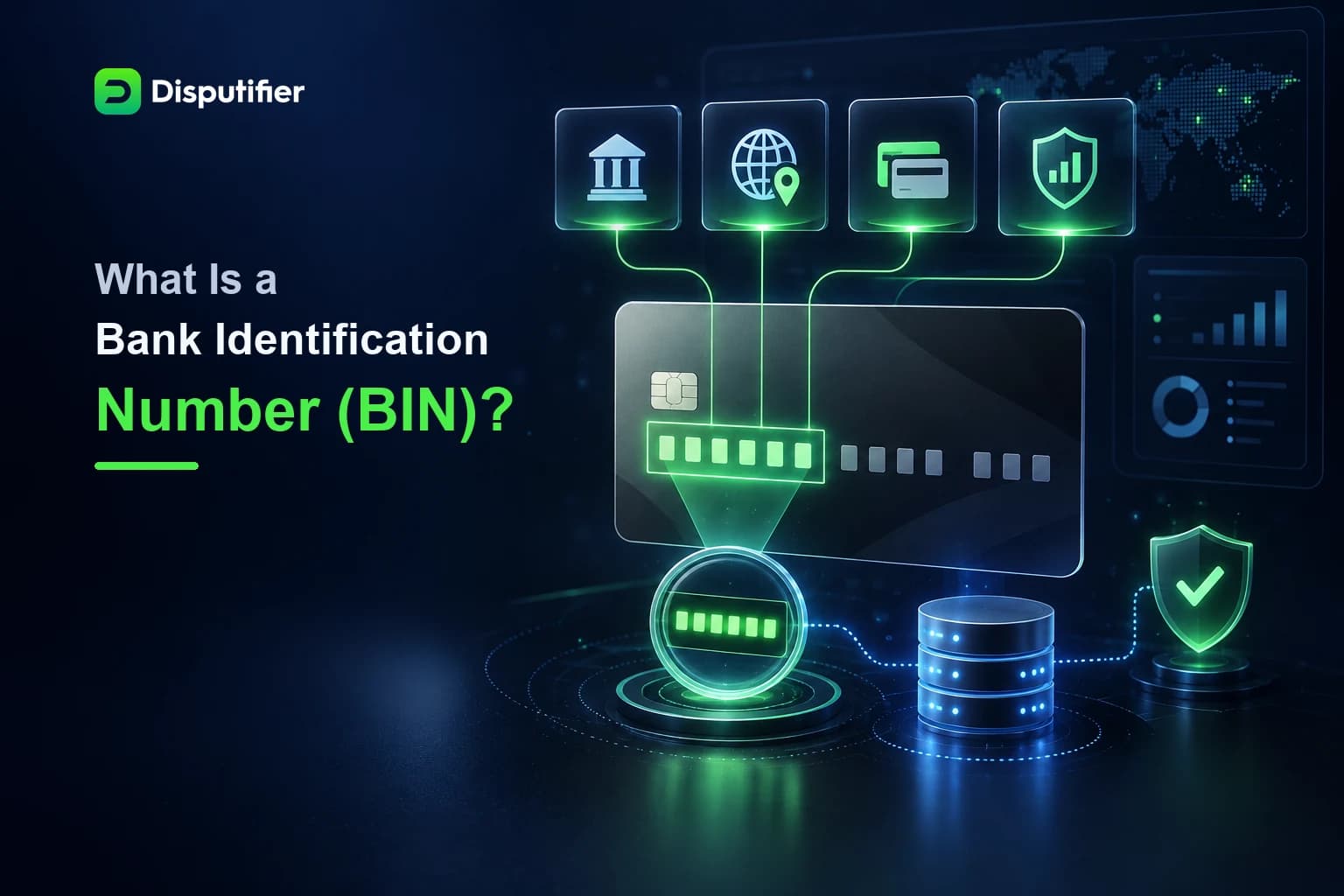
The “BIN” part matters because fraudsters often begin with known card ranges tied to real issuers. A BIN, or Bank Identification Number, helps identify the issuing bank and card type. Fraudsters use that structure to test cards more efficiently.
That is why BIN testing sits right at the intersection of card intelligence and fraud detection.
If you need a quick foundation on BINs first, read What Is a BIN Number and How Does It Work in Payments.
Why BIN testing is dangerous for ecommerce merchants
BIN testing can look small at first.
A few weird transactions.
A few low-value authorizations.
A burst of failed attempts.
But the risk is bigger than it seems.
BIN testing can lead to:
- higher fraud exposure
- increased payment declines
- processor warnings
- chargebacks from successfully tested cards
- checkout friction for real customers
- wasted support and ops time
- merchant account strain
It is especially dangerous because it often happens before merchants realize they are being targeted.
In other words, BIN testing is not just a fraud outcome. It is an early fraud stage.
How BIN testing works
Fraudsters usually start with stolen card data and attempt to validate which credentials still work.
That process may include:
- trying many card numbers rapidly
- testing small authorizations
- varying expiration dates or CVV values
- reusing the same device or IP patterns
- targeting merchants with weak checkout controls
- cycling through known BIN ranges tied to active issuers
Once they find valid cards, they may use them for larger fraudulent purchases on the same store or somewhere else.
That is why merchants should treat BIN testing as a serious warning sign, not just a burst of failed payments.
What are the signs of BIN testing?
BIN testing often leaves a pattern.
The strongest warning signs include:
Unusual spikes in authorization attempts
If payment attempts suddenly increase without a matching increase in real orders, that is a red flag.
Many low-value transactions
Fraudsters often use small authorizations to test card validity before moving to bigger transactions.
Repeated failed payments
Multiple rapid declines from similar card patterns, devices, or IP ranges can signal testing behavior.
Strange order velocity
A normal customer does not usually submit many payment attempts in a short window with slight variations.
Repeated use of similar BIN ranges
If you notice clusters of activity tied to similar issuing patterns, that is worth investigating.
Device or IP reuse
Even when fraudsters vary customer details, they often repeat technical signals like device behavior or IP infrastructure.
This is one reason better transaction analysis matters. The pattern is often more revealing than any single payment attempt.
BIN testing vs card testing
These terms are closely related, but not identical.
Card testing is the broader practice of testing stolen card credentials.
BIN testing is a more specific flavor of that behavior where fraudsters use BIN structure and issuer patterns to guide the testing process.
In practice, merchants usually care about both because the operational effect is the same: your store becomes a testing ground for stolen payment data.
Why BIN intelligence matters in stopping BIN testing
BIN intelligence helps merchants understand the context behind card activity.
That includes details like:
- issuing bank
- card region
- card type
- whether patterns across card ranges look suspicious
- whether the transaction makes sense given the order profile
This does not mean BIN data should be used blindly. A BIN does not prove fraud by itself.
What it does do is add valuable payment-level context.
That is why Disputifier’s free BIN checker is so useful. It helps merchants quickly review BIN-related information and strengthen fraud analysis before card testing turns into a bigger loss problem.
For a deeper look, read How BIN Data Helps Detect Fraud Before It Happens.
How to stop BIN testing on your ecommerce store
Stopping BIN testing takes more than one fix.
You need a layered approach.
Tighten checkout controls
Your checkout is the first place to harden.
At a minimum, merchants should review:
- AVS enforcement
- CVV enforcement
- rate limiting
- velocity rules
- suspicious retry patterns
- bot-resistant checkout controls
Weak checkout flows make BIN testing easier. Stronger controls make your store a harder target.
Monitor order and payment velocity
Velocity monitoring is one of the best ways to catch BIN testing early.
Watch for:
- rapid bursts of payment attempts
- multiple attempts from the same device
- repeated small authorizations
- authorization attempts from one IP across many cards
- several variations of similar card details
Velocity is often the tell.
Use BIN analysis in fraud review
If unusual activity is happening, BIN analysis helps merchants understand whether the payment pattern aligns with normal customer behavior or looks manufactured.
That is especially useful when paired with:
- IP location
- device behavior
- order value
- customer history
- shipping region
- payment success or failure pattern
This is where BIN intelligence becomes practical instead of theoretical.
Review device behavior
Fraudsters often vary names and payment details faster than they vary technical behavior.
Useful device signals include:
- repeated attempts from the same environment
- strange browser behavior
- automation-like activity
- multiple transactions from a device with no real purchase history
If device patterns repeat across suspicious payment attempts, take it seriously.
Review IP and location mismatch
IP analysis is not enough on its own, but it is still useful.
Look for:
- unusual international traffic patterns
- risky proxy or VPN-like behavior
- repeated attempts from the same IP range
- mismatch between IP geography and billing details
This becomes more powerful when paired with BIN and device signals.
Add better customer and order context
A legitimate repeat customer usually behaves differently from a fraudster testing cards.
That is why merchants should also look at:
- account age
- previous order history
- order size
- SKU selection
- shipping urgency
- support history
- descriptor recognition patterns
Good fraud review is contextual, not one-dimensional.
Why manual fraud handling often misses BIN testing
A lot of stores still handle suspicious payments in a fragmented way.
Finance sees one pattern.
Support sees another.
The payment processor flags something else.
Operations just sees failed orders.
No one sees the full picture quickly enough.
That is why BIN testing is easy to miss when fraud handling is manual. The pattern is distributed across systems, and by the time someone connects it, the fraudster has already moved on or escalated.
This is one of the reasons manual workflows break down so badly as stores grow.
How Disputifier helps merchants stop BIN testing
Disputifier matters because BIN testing is not just a card problem. It is a fraud-detection and workflow problem.
Merchants need a way to connect payment intelligence, fraud signals, and business outcomes fast enough to act.
That is exactly where Disputifier helps.
Disputifier helps merchants use BIN intelligence in a practical way
BIN data is only valuable if merchants can actually use it.
Disputifier helps merchants turn BIN information into useful fraud context instead of leaving it as disconnected payment trivia. That makes it easier to identify suspicious card patterns and spot behavior that looks more like testing than normal buying.
The free BIN checker is part of that value. It gives merchants a quick way to review BIN-level information and improve payment risk analysis.
Disputifier helps connect BIN testing to broader fraud detection
BIN testing is rarely an isolated event.
It usually overlaps with:
- device anomalies
- IP risk
- velocity issues
- disputed transactions
- future fraud attempts
Disputifier helps merchants connect those signals instead of evaluating them one by one in separate tools.
That leads to better fraud decisions.
Disputifier helps reduce fraud before it becomes chargeback pain
If BIN testing is not stopped early, it can turn into larger fraudulent purchases and later chargebacks.
That is why fraud detection and chargeback prevention are closely tied together.
Disputifier helps merchants strengthen both sides of the process by improving earlier detection and smarter response.
If you want the next layer, read Ecommerce Fraud Detection: How It Works and Which Signals Matter.
Disputifier helps merchants protect long-term payment health
Repeated BIN testing can damage more than short-term conversion metrics.
It can create processor concern, create noise in payment data, and increase downstream fraud risk.
Disputifier helps merchants build a stronger prevention system that protects both revenue and merchant account stability over time.
BIN testing and chargeback risk
BIN testing is not just a fraud signal. It is often an early warning for future chargeback trouble.
If fraudsters successfully validate cards through your checkout, the next step may be higher-value fraud transactions. Those transactions often become chargebacks later.
That is why stopping BIN testing early helps prevent future disputes too.
This is also why strong payment risk controls matter. Merchants that let card testing activity run unchecked are often the same merchants that later struggle with preventable fraud chargebacks.
If you want a more practical follow-up, read How to Prevent Chargeback Fraud in Ecommerce.
A practical BIN testing prevention checklist
If you want the short version, focus on these controls:
1. Tighten AVS and CVV enforcement
Do not make card testing easy.
2. Watch velocity closely
Multiple rapid attempts are a major warning sign.
3. Review BIN patterns
Use BIN intelligence to add payment context.
4. Check device behavior
Fraudsters often repeat technical patterns.
5. Review IP risk
Especially when it aligns with other suspicious signals.
6. Connect payment and fraud data
The pattern matters more than isolated events.
7. Use better tools
Manual review usually catches the pattern too late.
Build a smarter defense against BIN testing
BIN testing is one of those fraud issues merchants ignore at their own risk.
It starts small. It looks technical. It feels easy to dismiss.
But it is often the beginning of larger fraud exposure.
If you want to stop BIN testing effectively, you need better checkout controls, stronger payment analysis, smarter risk signals, and a system that connects fraud indicators before the damage spreads.
That is where Disputifier fits.
It helps ecommerce merchants use BIN intelligence more effectively, detect suspicious behavior earlier, and reduce the fraud and chargeback risk that often follows testing activity.
Start by reviewing your payment controls and using Disputifier’s free BIN checker to add more payment-level insight to your fraud workflow.
The merchants who stop BIN testing fastest are the merchants who take early signals seriously.
Frequently Asked Questions
What is BIN testing?
BIN testing is a type of fraud where bad actors test stolen card details, often using known BIN ranges, to see which cards are active and usable.
Is BIN testing the same as card testing?
BIN testing is a form of card testing. It uses BIN structure and issuer-related patterns to make testing more efficient.
Why is BIN testing dangerous for merchants?
It increases fraud exposure, can lead to future chargebacks, creates payment noise, and can damage merchant account health if left unchecked.
How can merchants stop BIN testing?
Merchants can stop BIN testing by tightening checkout controls, monitoring payment velocity, reviewing BIN patterns, analyzing device and IP signals, and using stronger fraud tools.
Why is Disputifier useful for BIN testing prevention?
Disputifier helps merchants use BIN intelligence more practically, connect payment signals with fraud patterns, and identify suspicious behavior before it leads to larger losses.