 All Posts


Most ecommerce brands don’t lose chargebacks because they lack data.
They lose because they lack a system.
When chargeback handling lives in inboxes, spreadsheets, or tribal knowledge, outcomes depend on who happens to be on shift that day. Deadlines get missed. Evidence gets rushed. Escalation decisions happen too late.
A chargeback playbook fixes that.
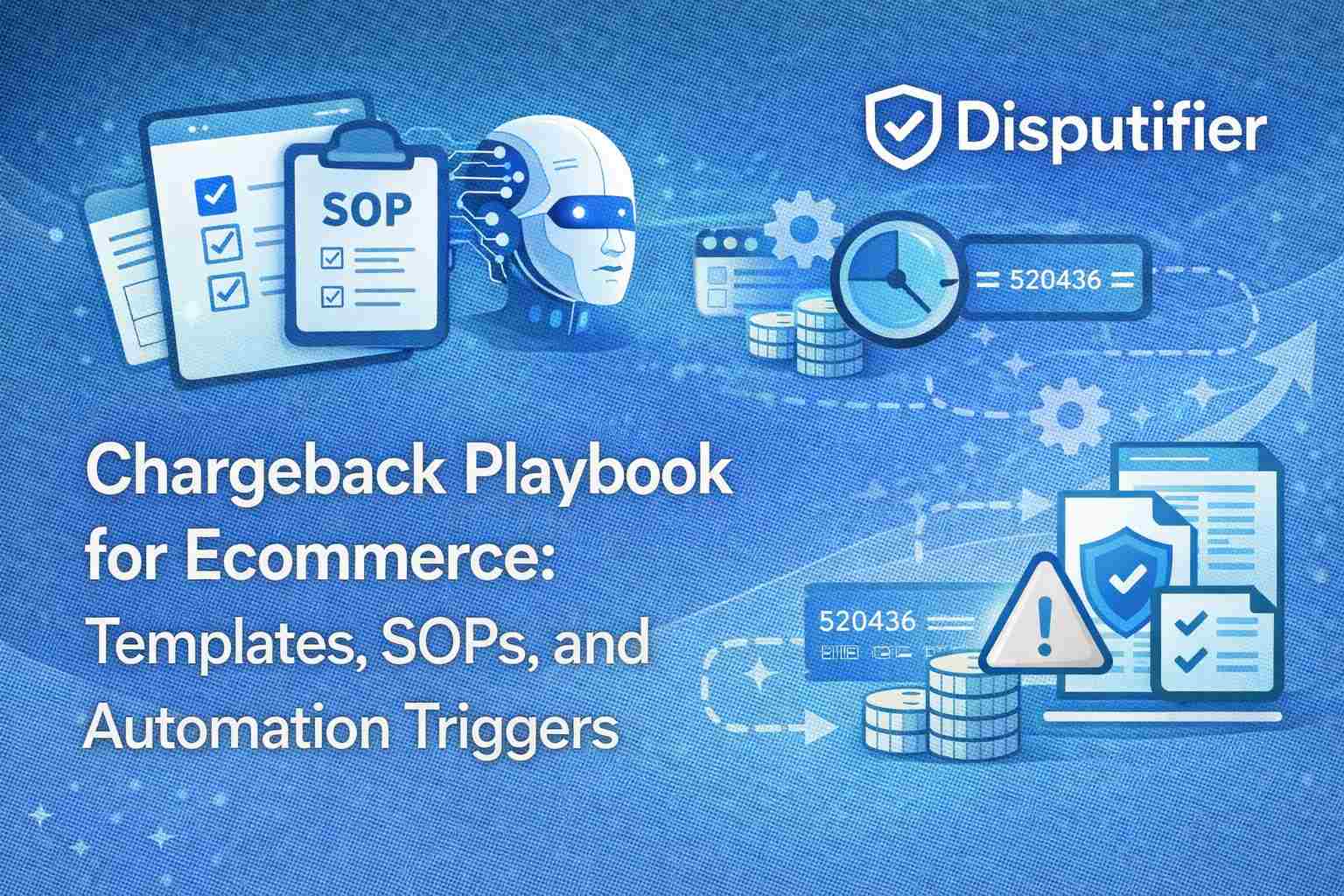
This guide shows exactly how to build a repeatable chargeback process for ecommerce, including templates, SOP ownership, escalation triggers, and where automation should take over. You’ll also see how Disputifier functions as the execution layer that runs this playbook consistently at scale.
What a Chargeback Playbook Actually Is
A chargeback playbook is not a policy document that sits untouched in a folder.
It is an operational system that defines:
- who owns each step of the chargeback process
- what evidence is required by dispute type
- when cases escalate or auto-resolve
- which tools trigger actions automatically
If your team cannot answer “who does what within the first 24 hours of a dispute,” you don’t have a playbook. You have improvisation.
Before building one, it’s critical to understand what happens when disputes are ignored or mishandled. This breakdown shows the real consequences of non-response:
What Happens If a Merchant Doesn’t Respond to a Chargeback
Core Roles in an Ecommerce Chargeback SOP
Every chargeback playbook starts with ownership. Even if one person wears multiple hats, the roles must be defined.
Dispute Intake Owner
Responsible for monitoring incoming disputes, alerts, and inquiries across payment processors.
This role ensures disputes are acknowledged immediately and routed correctly. Delays at intake create downstream failures.
Automation should flag disputes instantly so this role does not rely on manual dashboard checks.
Evidence Assembly Owner
Responsible for gathering and validating evidence based on the reason code.
This role should never guess what evidence to include. Evidence requirements vary by network and reason code, which is why teams need a standardized reference.
If your team is still debating what qualifies as compelling evidence, this guide is mandatory reading:
What Counts as Compelling Evidence by Reason Code
Submission and Deadline Owner
Responsible for ensuring evidence is submitted correctly and on time.
Deadlines differ by network, processor, and dispute stage. Missing them almost guarantees a loss.
This timeline overview explains why deadline tracking must be automated:
How Long Do Chargebacks Take: Real Timelines by Network
Analytics and Feedback Owner
Responsible for reviewing outcomes and feeding insights back into fraud prevention, customer support, and policy updates.
Chargebacks are not just disputes to win. They are data to learn from.
This is where analytics close the loop:
Chargeback Analytics: Find Root Causes and Reduce Fund Holds
Standard Evidence Templates Every Store Needs
A chargeback playbook should include pre-approved evidence templates so teams don’t rebuild submissions every time.
At minimum, ecommerce brands should maintain templates for:
- fraud or unauthorized disputes
- services not rendered claims
- no-show or cancellation disputes
- friendly fraud scenarios
For service-based disputes, this advanced playbook shows how evidence should be structured:
Services Not Rendered: Advanced Playbook
Evidence should pull from:
- order confirmation details
- delivery or access logs
- customer communication history
- IP, device, and transaction metadata
If evidence lives in multiple systems, automation is not optional.
Escalation Rules and Automation Triggers
The most powerful part of a chargeback playbook is deciding when humans should step in and when software should act automatically.
Auto-Refund Triggers
Disputes should auto-resolve when:
- the transaction amount is below a defined threshold
- evidence quality is objectively weak
- alerts arrive early enough to stop escalation
Real-time alerts make this possible. Without them, disputes jump straight to chargebacks.
This step-by-step guide explains how alerts fit into a prevention workflow:
Prevent Chargebacks With Real-Time Alerts: Step-by-Step Setup
Auto-Fight Triggers
Disputes should auto-fight when:
- evidence meets network standards
- prior win rates for the reason code are high
- transaction risk indicators support merchant claims
Win rate context matters. If your team doesn’t know how often merchants actually win disputes, start here:
How Often Do Merchants Win Chargebacks and How to Improve Your Odds
Escalation to Fraud Review
Escalate cases when:
- BIN data indicates issuer mismatch
- repeat patterns emerge
- international risk indicators cluster
BIN intelligence helps teams act before disputes repeat. This breakdown shows why it matters:
BIN Numbers Explained: How Banks, Regions, and Risk Scores Affect Your Payouts
You can also test transactions directly using Disputifier’s free BIN lookup tool.
Why Manual Playbooks Fail Without Automation
Many teams write SOPs and still lose disputes.
Why?
Because humans cannot:
- track dozens of deadlines across processors
- consistently apply evidence standards
- spot patterns across hundreds of cases
Manual workflows collapse under volume. This comparison shows where the breaking point usually happens:
Dispute Management Software vs Manual Workflows: When Ecommerce Brands Need to Upgrade
A playbook without automation is aspirational. A playbook with automation is enforceable.
How Disputifier Executes the Chargeback Playbook Automatically
Disputifier is designed to operationalize chargeback playbooks, not just manage disputes.
For ecommerce teams, Disputifier:
- centralizes disputes across processors and networks
- tracks deadlines automatically
- assembles evidence based on reason codes
- submits cases on time without manual intervention
- integrates alerts to stop disputes early
- layers in BIN intelligence and analytics
Instead of relying on memory or checklists, Disputifier executes the SOP every time.
If you want a practical view of what full automation looks like end to end, this walkthrough breaks it down:
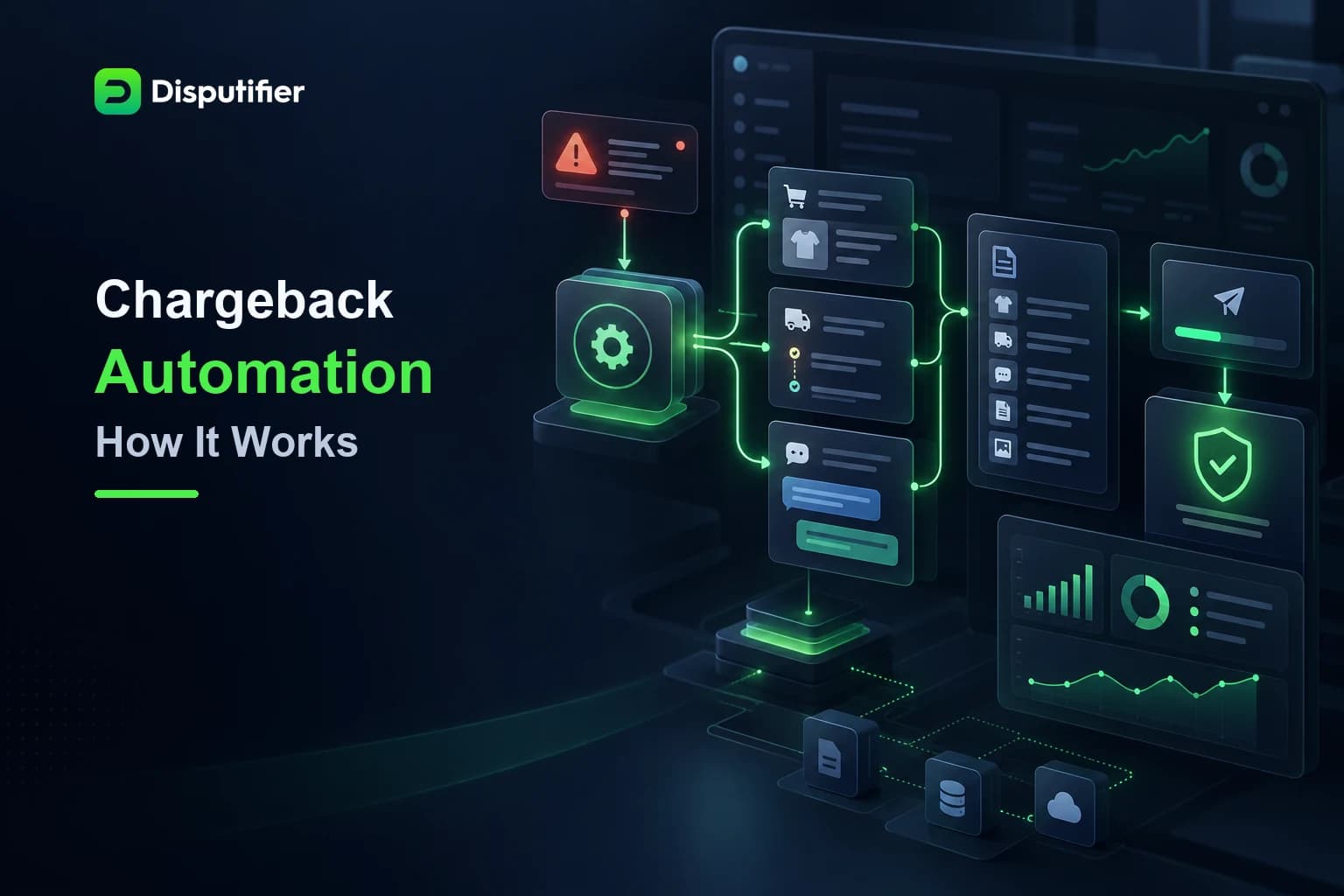
Chargeback Automation in Practice: From Dispute Detection to Evidence Submission
When Ecommerce Brands Need a Formal Chargeback Playbook
If any of the following apply, your team needs a documented and automated chargeback playbook:
- multiple payment processors
- international orders
- growing dispute volume
- chargeback ratio nearing thresholds
- inconsistent outcomes across cases
For teams evaluating what to automate first, this guide helps prioritize:
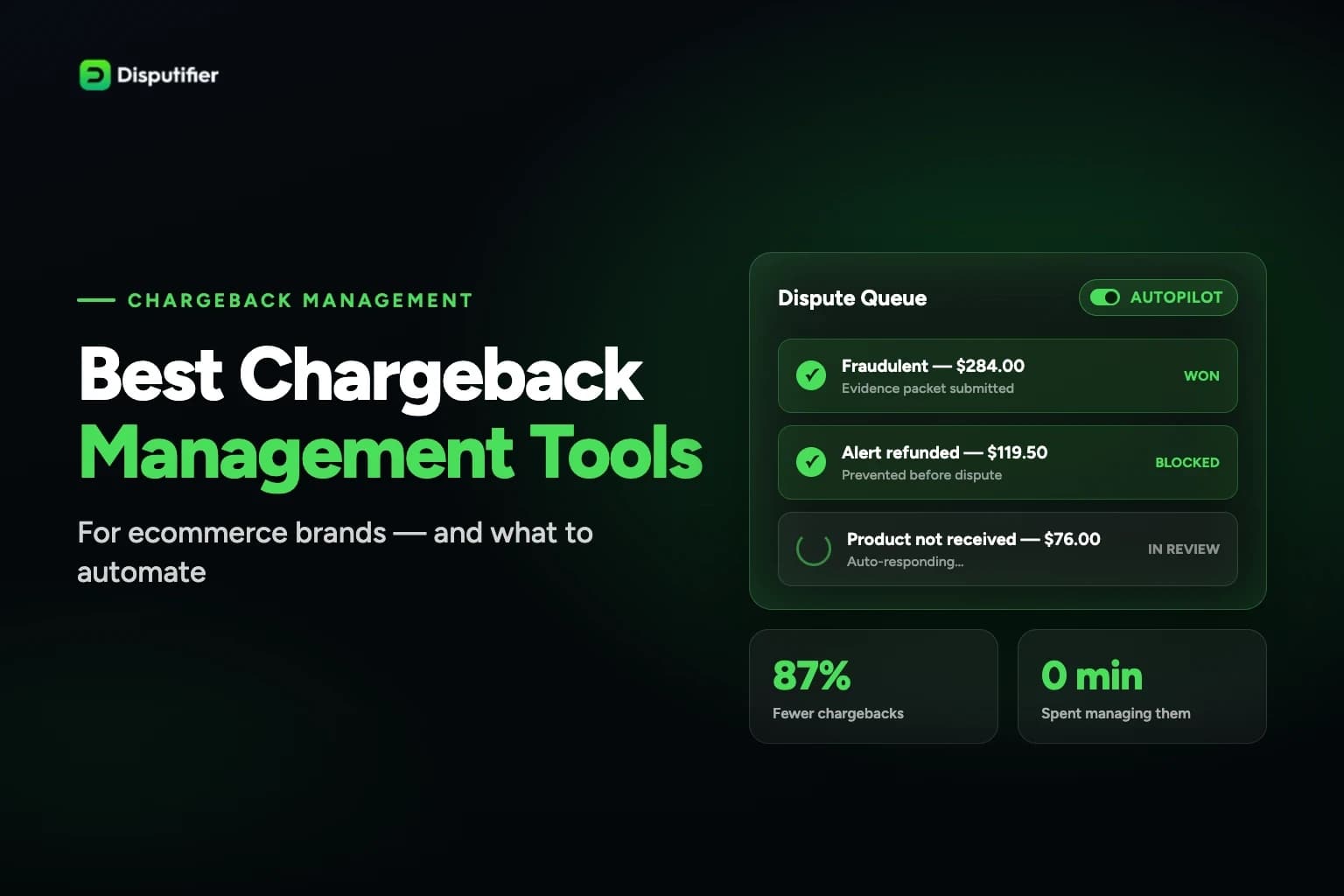
Best Chargeback Management Tools for Ecommerce Brands and What to Automate
FAQs
What is a chargeback playbook?
A chargeback playbook is a documented, repeatable process that defines ownership, evidence standards, escalation rules, and automation triggers for dispute handling.
Do ecommerce brands really need SOPs for chargebacks?
Yes. Without SOPs, outcomes depend on individuals instead of systems, which leads to missed deadlines and inconsistent results.
Can automation replace a chargeback team?
Automation does not replace teams. It removes repetitive work so teams focus on exceptions, strategy, and prevention.
How does Disputifier support chargeback playbooks?
Disputifier executes playbooks automatically by enforcing deadlines, assembling evidence, integrating alerts, and tracking outcomes across networks.
Are chargebacks always refunded to customers?
No. Merchants can recover funds if disputes are handled correctly. This guide explains when recovery is possible:
Are Chargebacks Always Refunded and When You Can Recover Funds
Turn Your Chargeback Process Into a System
Chargebacks are not a customer support issue. They are an operational risk.
A documented chargeback playbook backed by automation protects revenue, reduces stress on teams, and prevents scaling problems before they start.
Disputifier gives ecommerce brands the infrastructure to run that playbook automatically, consistently, and at scale.
If your team is ready to stop reacting and start operating, Disputifier is where that shift begins.